for the last……..i don’t know, 5 or so years, my m.o. regarding internet bisexual disourse has largely been to ignore it and encourage other bi people to do the same. it made sense to me because as far as i could see it was an issue that exclusively existed on this site. which isn’t to say i didn’t think it was harmful – i hated myself for years as a direct result of the things other lgbt people said about bisexual women on here – but i thought the harm could largely be avoided by blocking the few loudmouths who were trying to start shit and hanging with people who weren’t evil.
i no longer feel that way.
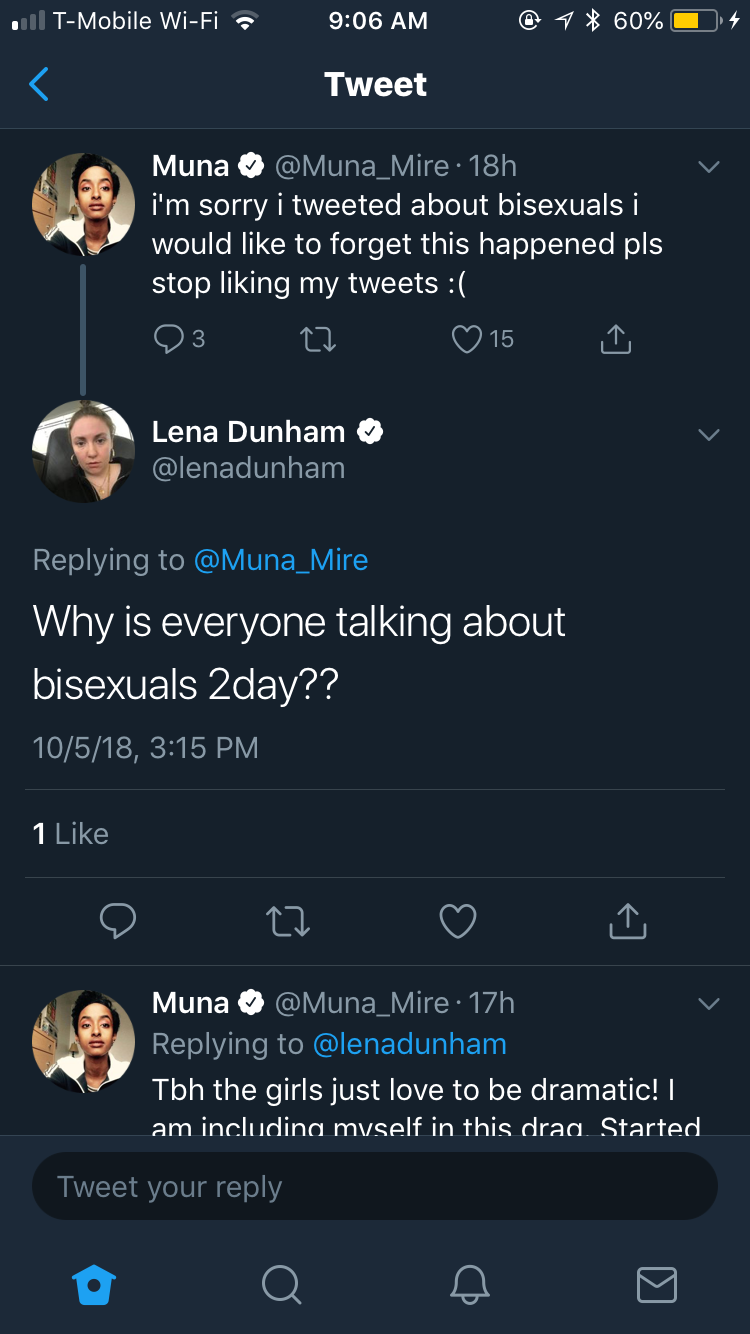
i no longer feel that way because, as of yesterday, you absolute fucking buffoons have ran your mouth so far that your fire new radical materialist feminist discourse so hot even fellow lgbts cant handle????????? has reached lena fucking dunham
do you want to know WHY your radical materialist feminist discourse reached lena dunham?????
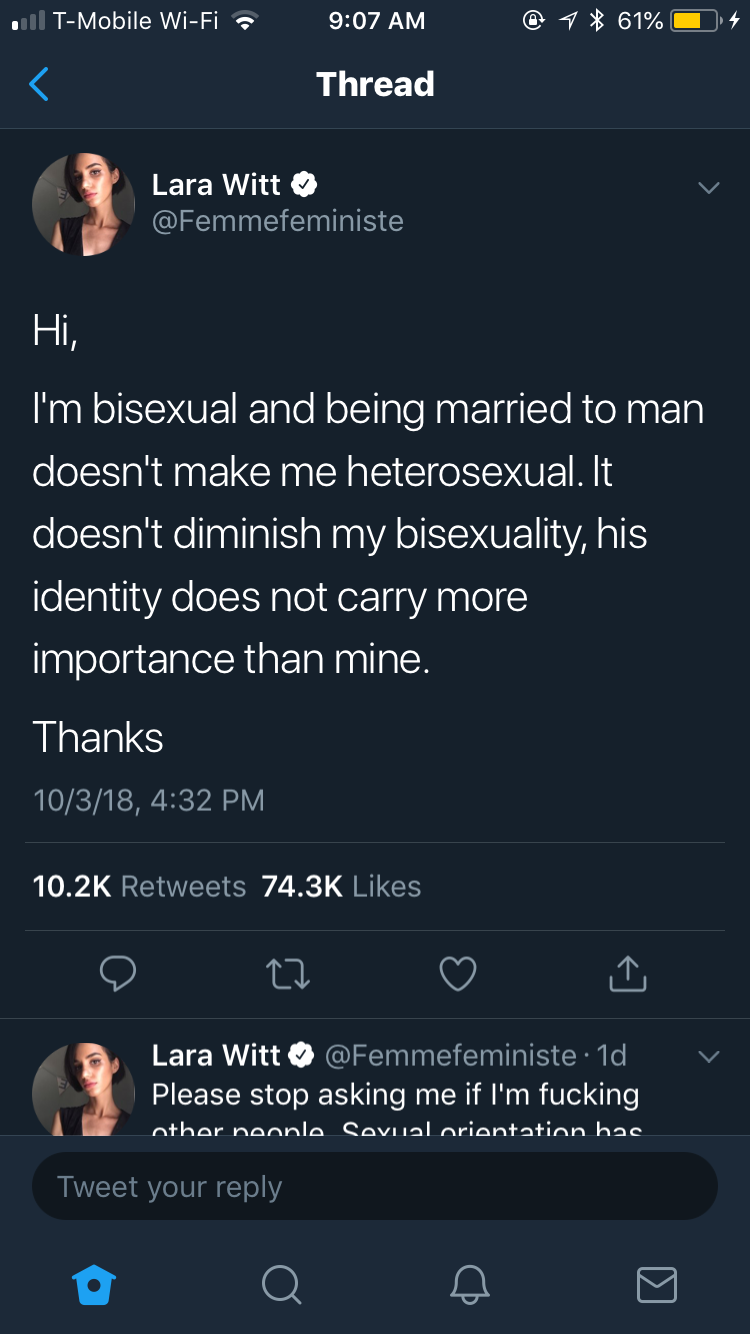
because a bisexual journalist made this simple ass tweet
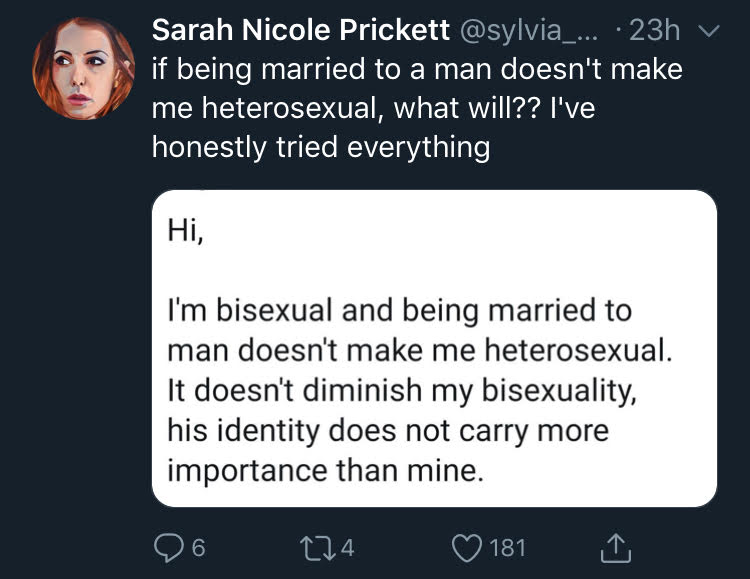
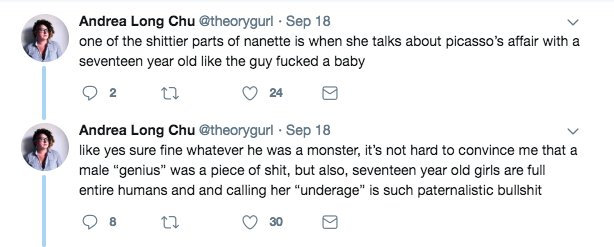
and in response, some straight white woman decided to tweet this
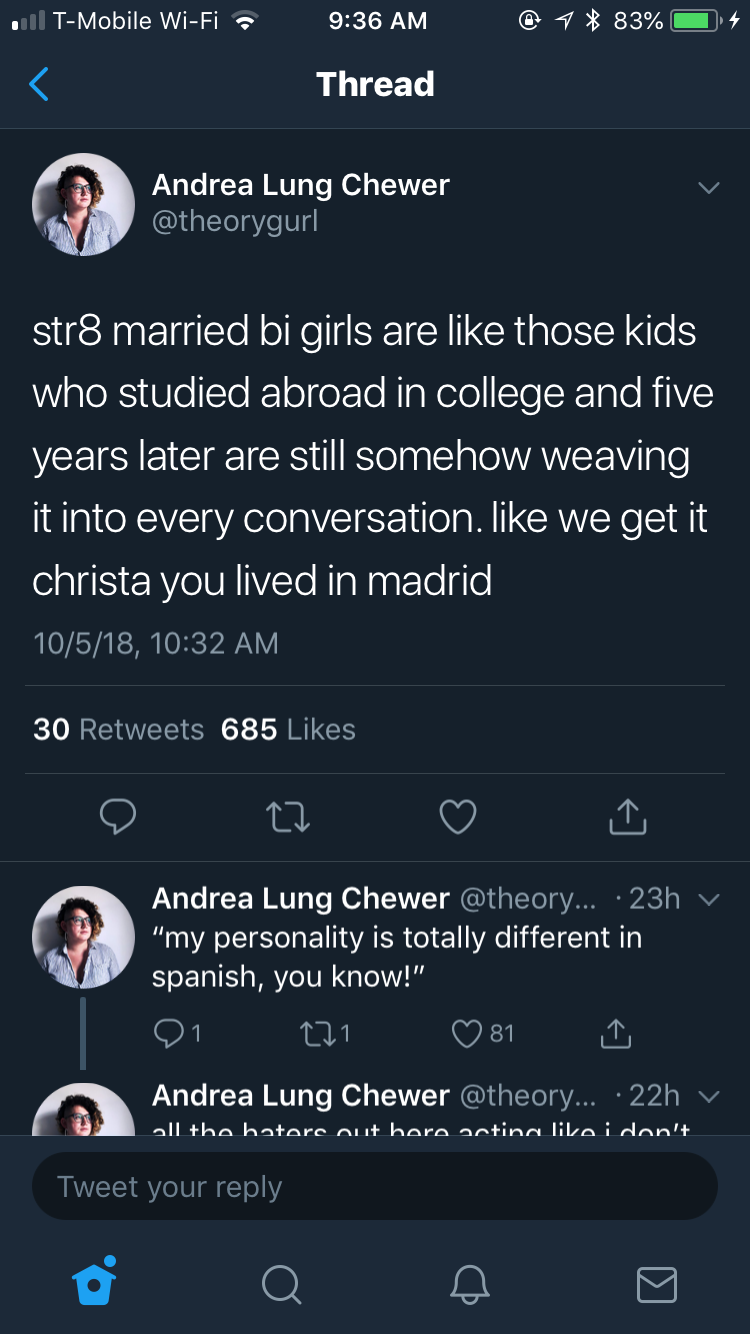
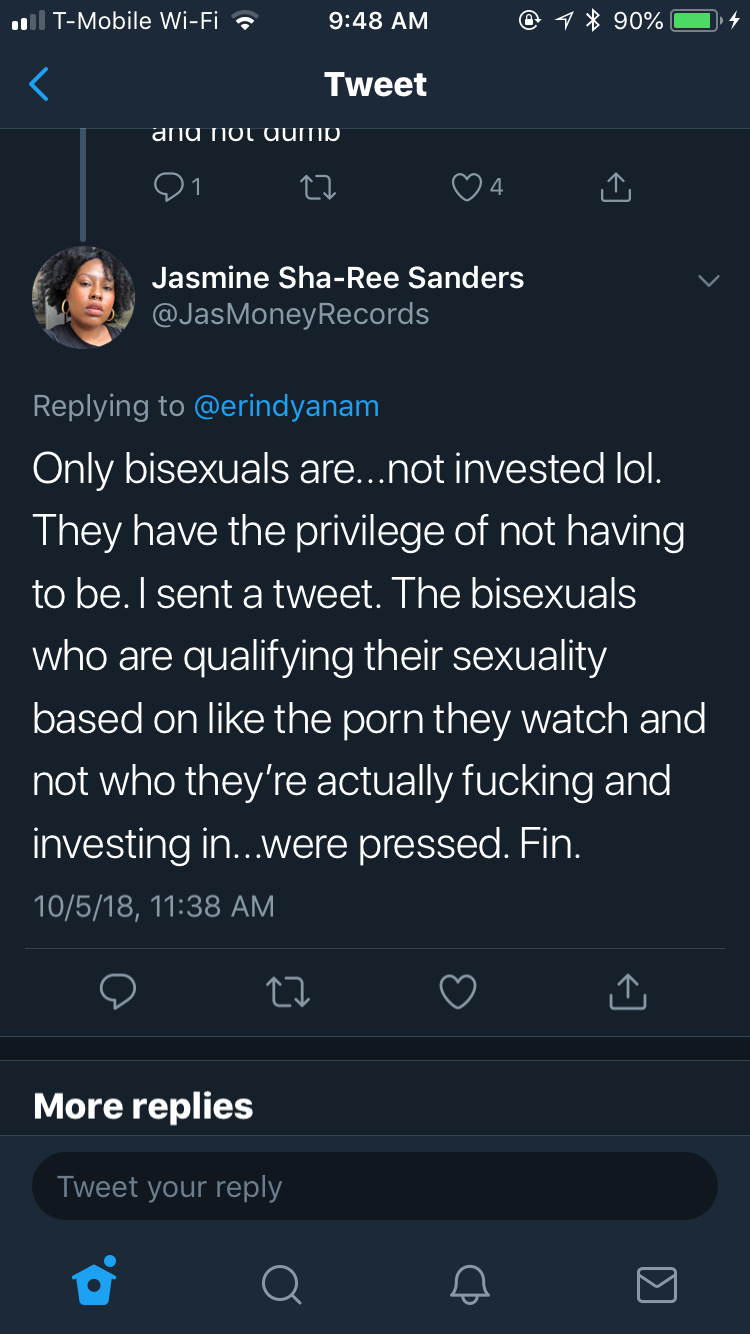
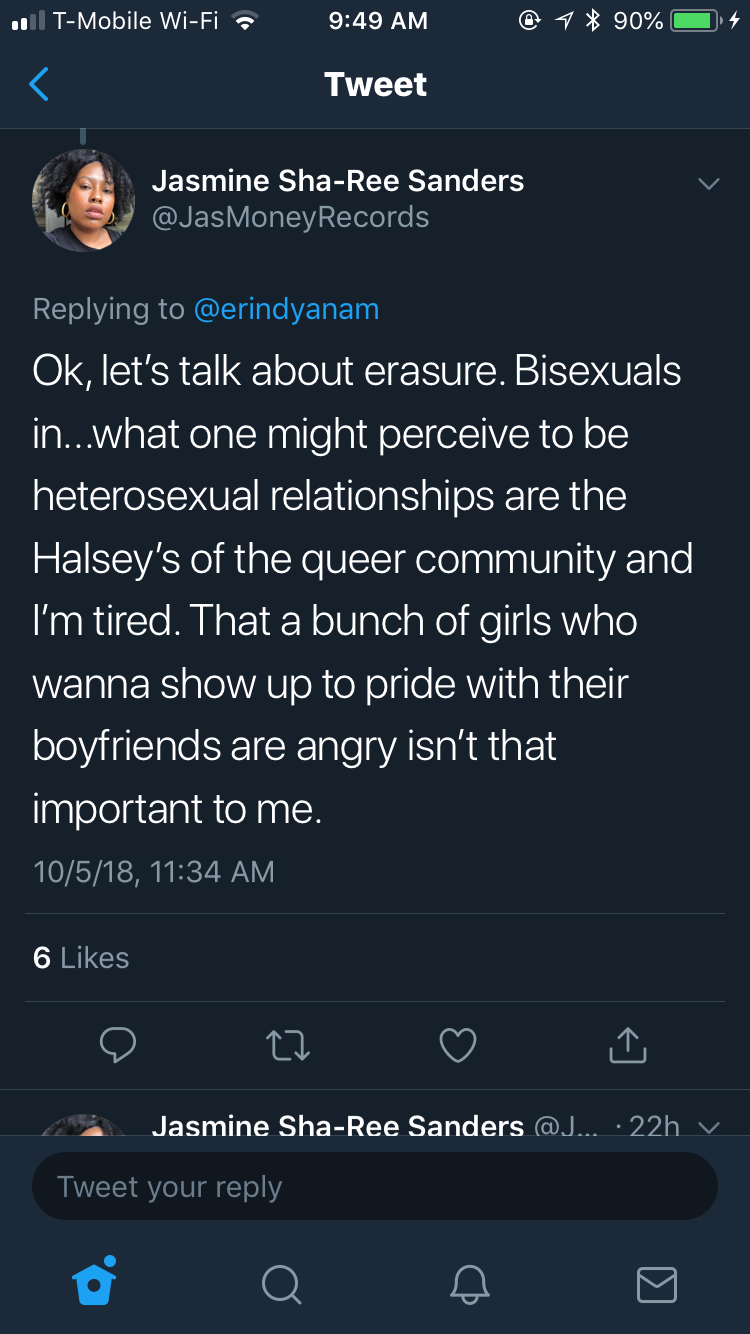
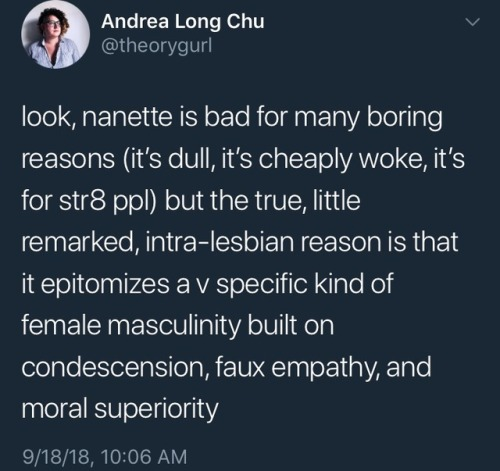
which would have just stayed straight nonsense if an extremely smart and clever white lesbian writer friend of hers hadn’t decided to join in with a searing hot take based on a radical perspective towards gender that could only have been achieved with her clearly useful phd in queer literature
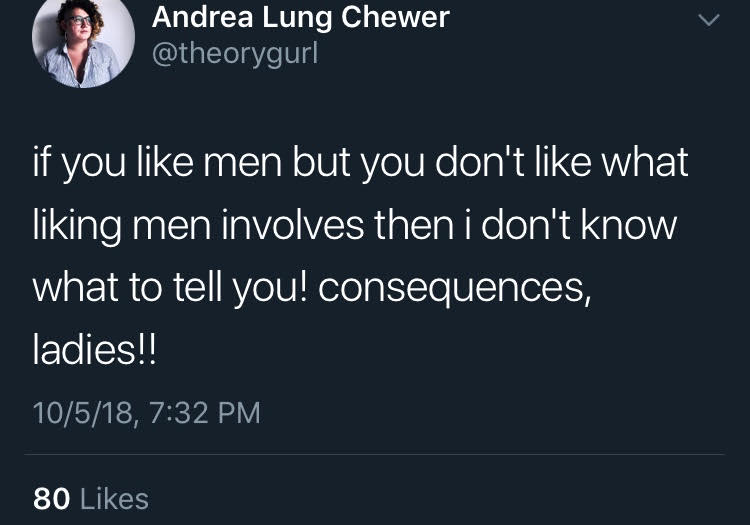
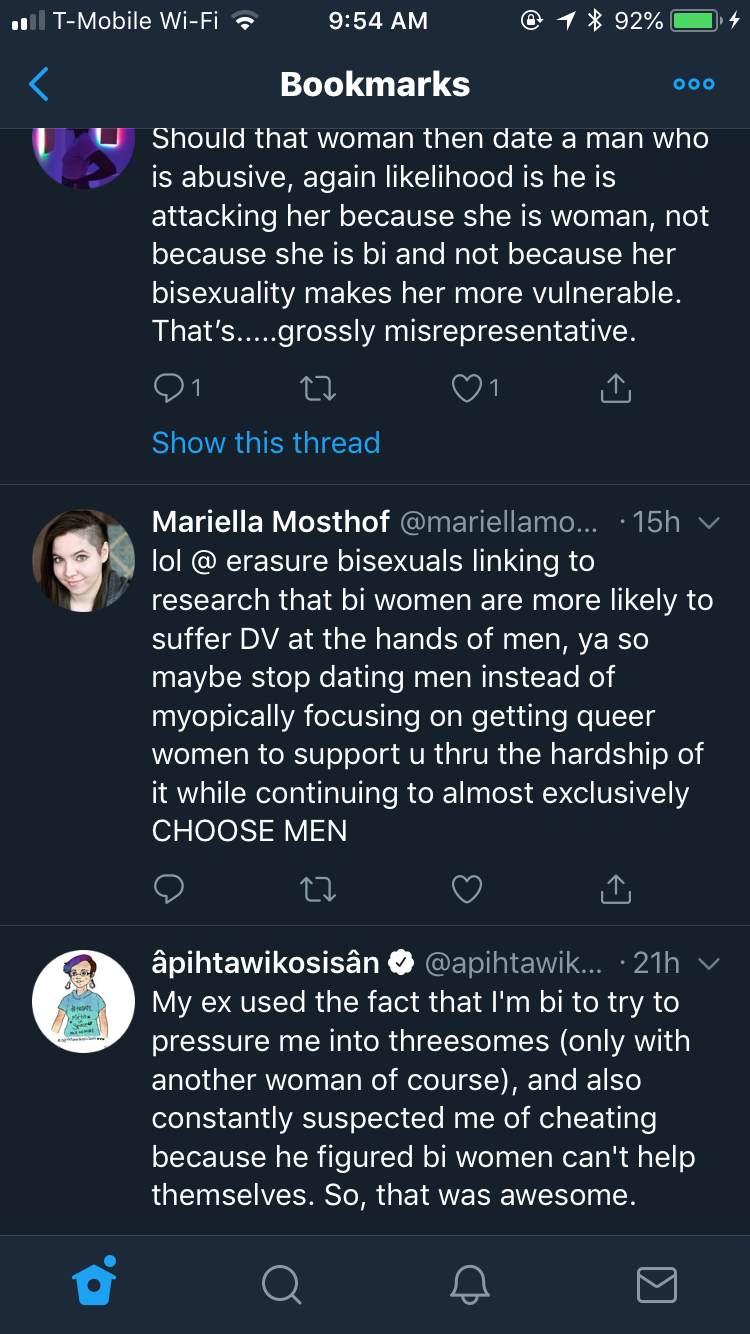
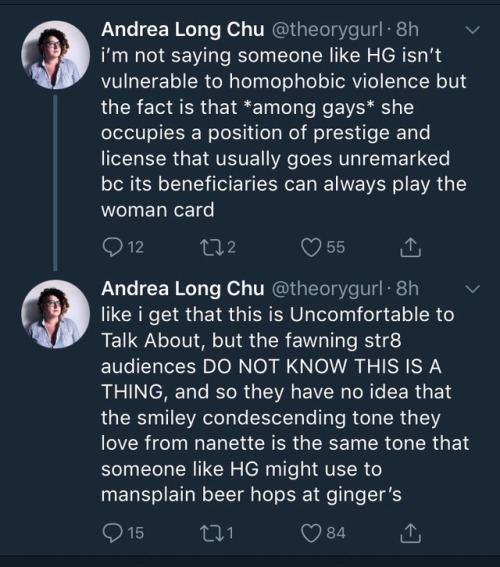
which would have just stayed mildly irritating if she and the rest of her friends hadn’t proceeded to defend themselves by arguing that bi women deserve rape and abuse actually
which would have only been horrifyingly offensive if all of these people weren’t 1.) people who make money writing about lgbt shit that 2.) were tweeting from their work accounts where 3.) they have enough reach to be followed by actually influential people such as comrade lena dunham
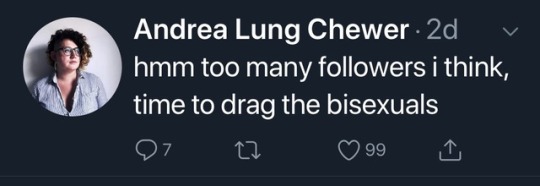
so seeing as the “close your eyes and maybe itll go away” method has CLEARLY failed, i am genuinely pleased to announce my new tactic. its called
Can I also just draw out here that their argument is LITERALLY that “women who sleep with men deserve what happens to them.”
Like.
This kind of person is, straight (haha) up, the kind of person who is only here for “I want mine”. If they’d been born a straight guy they’d be the worst kind of bros.
This is a thing that happens: I know PLENTY of straight white women whose grasp of feminism is limited strictly to “this affects me, so it’s important”. And of every other stripe of identity.
But never mistake it for anything than what it is.
I recognize one of the names there
This woman gets paid for writing her opinions, having hot takes like “bi women deserve to suffer because of their sexuality”, “Picasso dating a 17 y/o girl when he was 45 is not that bad” and some bullshit stupid about butch women having male privilege
As somebody from queer journalism twitter lemme just say fuck this bitch and I see this shit all the time
Also fuck that person for saying an autistic woman has ‘faux empathy’ tbqh.
I am not confined to my wheelchair. More than half of wheelchair workers can stand and walk at least a little. Quit harassing us when we do. But even for those who can’t stand at all, a wheelchair is not a metal cage or medieval torture rack. It’s a custom medical device that frees us, that allows us to live fuller lives.
I had to fundraise for my wheelchair because my insurance didn’t cover durable medical. While I waited to get a wheelchair, that’s when I was confined. People had to come to me. The only place I could go was the grocery store, because they had scooters. Once a week I got to spend an hour outside the home. Other than that, I was unable to leave the house.
My wheelchair freed me. I could work until I got too sick (but many people work full-time in wheelchairs). I can visit friends, go grocery shopping by myself, go to the park or museum, excercise, go shopping. I can live life. It’s a changed life, but it’s no less full than an abled person’s life. I can’t work anymore, and I need more sleep. I’m in pain all day and can’t visit for long periods. I can’t spend all day at the museum anymore. But that’s my ME/CFS and fibromyalgia, not my wheelchair. I’m not confined. Without my wheelchair, I wouldn’t be able to do anything but sit on my porch.
In truth, the only thing confining me is lack of accessibility. Sidewalks that are more crack than concrete. Entrances that are non-ADA compliant. The lack of ramps and accessible parking. And society’s lack of care. The people who harass me for standing up in my wheelchair to grab a bottle of shampoo. The people who make disability benefits so hard to get. The businesses that ignore the e-mails I send asking for a $49 fix to their entrances so I don’t have to rely on two strong folx to get me through the door. The ableds who spread myth and misunderstanding. When I can’t get a parking spot, I’m confined. When there’s no ramp, I’m confined. When I can’t get the benefits I need to live, I’m confined.
Wheelchairs are not a prison sentence. The first thing I did after my wheelchair arrived was drive (all by myself!) to Home Depot. I bought a set of Allen wrenches for the chair I named Loka and then just rolled up and down Home Depot’s long, tall aisles. I rolled until my arms ached. I did it because I could.
Don’t ever look at a person in a wheelchair and pity them. They’re lucky to have a wheelchair. Could Stephen Hawking have done all the great, world-changing scientific work he did without his wheelchair and voice synthethiser? No, of course not. His wheelchair meant greater freedom; the opportunity to travel and spread scientific learning and inquiry. It meant getting around Cambridge, doing interviews, meeting the public. It meant being a more active father and husband.
Our wheelchairs drive our lives forward, literally. We are no more confined to them than you are to your sneakers.
So there’s been a lot of discussion on my dashboard lately about TERFs And how their rhetoric works, and it made me think of something I remember from college years ago.
I don’t know if these people were specifically TERFs or not, As I don’t recall them talking specifically about trans women, but I do remember a presentation given by two older feminists who supposedly were famous thinkers. I don’t remember who they were, but I do remember something interesting about the rhetoric that I think would be familiar to anyone who is critical of radical feminism.
They began their presentation by explaining why they feel feminism is necessary. And what they said was that they believe the patriarchy is the root of all other oppressions. They said that studies have been done (I’m not sure what the studies are or how reliable they are) that showed that cross culturally, everywhere on the planet, you would find male humans oppressing female humans. They credited this to average size and strength differences, which made it easy for men anywhere on the planet to assert social and sexual dominance over women.
They spoke about how much this bothered them, and how in their estimation every group of feminists has had to wrestle and sit with the idea that this happened all over the planet, universally, and women were not able to fight for their rights until society became more about thinking than fighting.
it really did feel creepy to hear. But I remember sitting there listening to them and thinking about whether this was true. And it seemed to me that if the root of oppression was the physically strong dominating the physically weak, it would seem to me that ableism would be prior. Because males need females to reproduce (absent sufficiently awesome Science) but deformed or sickly kids? We can just leave those to die.
And I didn’t know the word back then, but I think this was my first encounter with the idea of intersectionality. The idea that some people were so focused on the specific oppression they experienced and knew about that they would actually openly assert that every other form of oppression was just some kind of strange derivative of theirs.
I didn’t know the words I know now, but I remember thinking something wasn’t quite right. And everyone else in the room just kind of seemed in awe of this truth that they just learned that had made them all somber and sad. And I was just sitting there like “does this work?“
I don’t know. And like I said, I’m honestly not sure what they might’ve thought of trans women either. But it does make me very suspicious of people who claim that the world works one way at bottom, and that one way happens to hurt them most of all.
Some of the woke wocs among my former associates said the same sort of thing about racism, especially anti-blackness.
Everyone seems to want oppression to have started with them. Idk.
(Still seems to me like it would have to be ableism but I’m probably doing the same thing…)
You’re not building a grand liberation movement out of it, tho
No, I’m just wondering which vulnerabilities mean humans notice first.
There’s definitely A Coherent Argument to be made for it being ableism that’s more of a “root” thing.
If sexism occurs because women are, on average, physically smaller and weaker than men
If racism almost always includes judgments upon various races’ capacity for intelligence or other skills
what else is that but an ability-based root to oppressions?
(i’m not saying that this argument is definitely The One True Thing, but, it at least makes some sense, and I can’t think of something else that seems MORE likely)
Not suggesting that it’s the same type of root thing at all; I’m pretty skeptical that there could be any single Base Oppression. (Which is definitely not what sie is trying to suggest, either.) But, so many other forms of oppression really do seem ro rely heavily on ableist ideas/assumptions to make value judgments.
Inch eresting how most of the labor-saving products that we’re supposed to give up in order to fight consumerism/save the environment/live more wholesomely/be natural and healthy/stop polio/etc are products that are made for labor typically done by women, but not with labor typically done by men.
You see way more pious thinkpieces scolding and saying that the way to be a truly virtuous and whole person who isn’t a cog in the machine is to cook all the meals from scratch and avoid pre-made foods, mend clothing by hand*, scrub the toilet to a sparkle with vinegar, and use cloth diapers, than you do pious thinkpieces telling us about the joys of using a push lawnmower instead of motorized, washing your (electric) car using natural™ cleaners you made yourself (because going to the car was is just unwhole!), and doing home repairs and yard work with hand tools instead of power tools.
*admittedly this is a really useful skill, as is cooking from scratch
& there’s a similar dealio with adaptive tech for disabled people
I write to supplement existing accounts of the disability community’s concerns surrounding Doe ex rel. Tarlow v. District of Columbia. Judge Kavanaugh’s opinion in Tarlow was not only damaging to the rights of people with intellectual and developmental disabilities – as existing accounts suggest – but display a disregard for norms surrounding judicial factfinding at the appellate level. I have serious concerns that, if placed on the Supreme Court, Judge Kavanaugh would continue this pattern of playing fast and loose with the facts of the cases before him.
Background
Three Jane Doe plaintiffs brought the underlying action in 2001. They challenged the DC government’s policy of authorizing elective surgeries, including abortions, on people who were receiving developmental disability services (DD services), without first considering the patients’ expressed wishes. Two of the Jane Does had received abortions without their consent.Another had undergone surgery to correct exotropia, a misalignment of the eyes that often causes only minor symptoms. Although all three plaintiffs had been deemed unable to independently provide informed consent to medical treatment, they could – and did – express clear desires regarding their care.
The Jane Does sought a court order requiring the District to consult with similarly situated people receiving DD services, prior to authorizing surgery. In 2005, the federal district court granted the plaintiffs’ request for a permanent injunction. Thedistrict court specifically found that the District’s “updated” policy on consent, which was issued in 2003, had not resulted in any meaningful changes to the District’s practices. Instead, the district court noted that it was “undisputed” that the District “continues to provide consent without making any subjective inquiry into the patient’s wishes or values, and without attempting to ascertain what the patient would do if competent.”
The judge ordered the District, when consenting to elective surgeries for people receiving DD services, to use the “substituted judgment” standard. This standard required the District to consider an individual’s expressed wishes and preferences in order to determine what the individual would want if he or she had the capacity to consent to the procedure.This standard does not, however, require the District to follow the individual’s expressed wishes and preferences in all cases.
The District appealed the injunction.
JudgeKavanaugh’s 2007 Opinion
In a 2007 opinion, Judge Kavanaugh reversed the district court, holding that the District had no obligation to consider the expressed wishes or preferences of people receiving DD services prior to consenting to elective surgery. As disability attorney Robyn Powell explained in her article in Rewire, this holding by itself is outside of the mainstream. It is so far outside the mainstream that it contradicts the recommendations of the National Conference of Commissioners on Uniform State Lawsregarding from 1998 with respect to decisions by guardians.
However, a review of the record in this case shows that, in addition to his alarming disregard for the rights of people with intellectual and disabilities to have their wishes considered, Judge Kavanaugh also disregarded important parts of the record, engaged in inappropriate fact–finding at the appellate level, and dramatically mischaracterized the lower court record.
Judge Kavanaugh inappropriately found that the District used the “best interest” standard for decisions.
Judge Kavanaugh’s 2007 decision includes repeated statements that the District used the “best interests” standard for its medical decisions on behalf of class members. However, the parties did not actually agree that the District was following the “best interests” standard. Instead, plaintiffs argued that the District’s admitted failure to consider the wishes of class members failed to live up to either the “best interests” or “substituted judgment” standard. Typically, even the application of the “best interests” standard requires some inquiry into an individual’s known wishes, feelings, and desires. For example, it is impossible to determine whether it is in the “best interest” of a patient to receive surgery to correct eye alignment, without knowing whether the symptoms of the underlying condition are actually bothering the individual.
It was undisputed that District employees made no independent attempt to ascertain the wishes of class members prior to consenting to elective procedures. Moreover, although the District claimed that class members’ wishes were considered by the doctors who recommended the procedure, this claim was also disputed. Yet in his decision, Kavanaugh claimed that MRDDA had a policy of discussing proposed treatment with the class members.
Judge Kavanaugh’s statements that the District’s policy and practice actually followed the “best interests” standard, and that all medical procedures were discussed with class members, are inappropriate. “Fact-finding” by an appellate judge is not normal; such findings are usually left to the district court. Strong judicial principles prevent appellate judges – who do not have the benefit of juries or other means of weighing competing evidence – from issuing findings on disputed facts outside of exceptional situations (such as situations in which the evidence is so overwhelming that no reasonable person would disagree).
This was not one of those situations. In fact, the parties had not even finished collecting evidence on this issue before Kavanaugh imposed his own take on the case.
The consequences of Judge Kavanaugh’s inappropriate fact–finding were significant. On remand, the district court was unable to consider plaintiffs’ evidence that the District was failing to meet the “best interests” standard, an issue that had not previously been considered relevant to the case. All further attempts to seek injunctive relief against the District were therefore foreclosed.
Kavanaugh repeatedly mischaracterized the district court’s order
As noted above, the district court had ordered the District to use a “substituted judgment” standard when consenting to medical treatment on behalf of class members. This standard requires the District to consider – but not necessarily adopt – the known wishes of the patient. Moreover, the district court’s order was limited to elective surgeries and did not cover decisions about urgent, life-saving treatment.
Nevertheless, at oral argument, Judge Kavanaugh repeatedly insisted that the District was being required to follow the wishes of class members. This assumption contradicted not only the district court’s order but also the statements of the District’s own counsel.
Judge Kavanaugh also repeatedly suggested, both at oral argument and in his opinion, that the district court’s order would affect decisions on life-saving, urgent care. At oral argument, Judge Kavanaugh posed hypotheticals involving surgeries that were urgent and life-saving, prompting plaintiff’s counsel to clarify that those decisions were not relevant to the case.
Despite these clarifications, Judge Kavanaugh’s written opinion continued numerous misstatements about the lower court’s order. He repeatedly stated that the lower court would require the District to follow a “known wishes” standard – even though this standard is dramatically different from the “substituted judgment” standard. He further opined that such “[c]onsideration of the wishes of a patient who lacks mental capacity to make healthcare decisions could lead to denial of essential medical care to a patient who purportedly did not want it.”
Conclusion
Instead of carefully evaluating the plaintiffs’ arguments and the record, Judge Kavanaugh went into the oral arguments in this case with a predetermined assumption that greater self-determination rights for people with intellectual and developmental disabilities were unreasonable and dangerous. He was unable to adjust those assumptions in light of plaintiffs’ counsel’s arguments at oral argument or careful review of the record and procedural history of the case. Instead, he substituted a careful understanding of the record with inappropriate findings of fact and significant mischaracterizations of the lower court record. This careless approach to the record is extremely disturbing and is likely to manifest in his future decisions, including other high-stakes decisions about the civil rights of people with disabilities.
Our substantive concerns about Judge Kavanaugh’s decisions – as discussed in further detail in the articles cited at the introduction and in ASAN’s statement on Judge Kavanaugh’snomination – remain vital and principal in our objection to Judge Kavanaugh’s nomination. However, his careless approach to appellate jurisprudence also poses a significant concern, which has the potential to affect cases outside the realm of disability rights as well.
Thank you for your consideration,
Samantha Crane, J.D.
Legal Director, Director of Public Policy
Autistic Self Advocacy Network
Because some of the righties who follow me were yelling at this and saying it’s not a big deal
People have no idea what I do to try and help the planet. They have no clue the lengths I go to to live in an environmentally friendly house and to minimize my impact on the earth.
I even wrote a god damn article about environmental activism vs performative activism in the Zero Waste movement, and gave examples on how to live a more eco-friendly life.
It’s ugh, it’s whatever. People are going to complain no matter what. At least I’ll be hydrated while they do it.
Are y’all five and can’t drink from a glass without a straw?
I have profound nerve damage in my face and throat that prevents proper muscle function. I also have cfs and other muscle problems. I recently discovered that using straws helps to alleviate some of the pain and difficulty out of being able to drink fluids, because it puts less strain on certain muscles. This means that for the first time in over two years, I have been able to finish a glass of water without choking. So no, not five. Just very fortunate to be alive.
Have a good day, and I hope life is kind to you.
Think about why toddlers and small children need straws to drink: their muscles and brain have not fully coordinated with each other.
Well, there are plenty of adults in this world, who either loose that coordination (due to stroke, or Parkinson’s or nerve damage, like @thebibliosphere mentioned), or we never had that coordination to begin with (like me – I have cerebral palsy).
And with our population aging, the proportion of people who are disabled will end up growing – no matter how advanced our medical interventions get. ‘Cause Sh##t happens, and the longer you live, the more chances that you’ll be standing in the wrong spot when the sh##t hits the fan.
(In my dream solar punk future, all “trash cans” at movie theaters and fast food places will sanitize, break down, and remake plastic straws and other tableware [3-d printing, anyone?] So they stay in-house, and out of oceans)
They were always the ones who wanted to go into nursing, or early childhood education lolol
And no wonder, with such great opportunities for power over people who can’t effectively fight back too well 😩
[Image description: screen shot of a tweet from lil d (@spaghettiinbed): Thinking about girls who were absolute demons in high school getting a degree in nursing makes me so nervous. Description ends]
^^^This^^^
I’ve tried, at various times, to explain to people that when you grow up with a disability, the worst of the bullying comes from adults rather than other kids. Because it’s the adults (The teachers, doctors, therapists, etc..) who have the actual power to try and force you to conform to their idea of “normal.” When kids bully, they’re generally just picking up on stuff adults have (unintentionally, perhaps) taught them.
laws about minimum wage should apply to disabled people
laws about minimum wage should apply to incarcerated people
everyone deserves a fair living wage for their labor
wait, they don’t???
Not even close. Disabled folks can be paid as little as $1 an hour in some cases at whats called “subminimum wage.” Prisoners are sometimes forced to work without pay at all.
Hi, I am an attorney in the disability field. Many disabled folks make well under $1 an hour in what are called “sheltered workshops”. There are only three states right now that require people with disabilities to be paid at least minimum wage, and they are Alaska, New Hampshire, and Maryland. Goodwill is a major offender, but there are many, many others.
Also minimum wage actually needs to actually be a fair living wage.
Another especially horrific thing about this:
Sometimes voc rehab counselors will… strategically avoid saying much about a sheltered workshop not having opportunities for advancement.
So people will assume that their low pay and dull tasks are temporary and that they can earn promotions or raises, when actually those things are pretty much nonexistent.
So you get people being like “I’ve done this for 20 years, why have I never gotten promoted?”
When I
graduated college in 1989 (with a Bachelor of Arts in English, with a
minor in Communications, and an overall GPA of 3.4 [A – A+]), my Office of
Vocational Rehabilitation case worker, called me up to tell me about an
employer looking to hire. I was expecting an entry-level job in data
entry or a receptionist. …As I was looking to become a professional
writer, my hope would be a job at a local magazine, or something.
Nope.
The only “employer” making offers was a factory looking for people to sort eggs on an assembly line and put them in cartons.
I have C.P., with poor balance and spasticity in my hands. I am not physically capable of working on any assembly line – much less handling raw eggs.
I said this to my case worker. I asked her if there were any employers who were offering work I could actually do.
She seemed incredulous at the very idea.
Since this employer would be paying subminimum wages, and I’d have to pay for wheelchair accessible transportation, it would have actually cost me money to take the job.
So I declined.
As
I recall from her tone, there was an undertone of threat that I’d be
marked down as “non-compliant” (this was 27 29 years ago, though, so my
memory may be embellishing this in my favor).
All
this time, I’ve thought this was absurd. But now that I’ve read about
the official government regulation on the matter, I see that it’s evil. Because if an employer deliberately hires an entire factory full of
workers who can’t keep up, 75% of their product can end up as a gooey
mess on the floor, and they’d still make a larger profit than if they
hired people who can do the work at minimum wage.
[Originally published 8 May, 2016; fresh emphasis added]
Can you say it with me, boys and girls? “Capitalism is evil.”


 Urocyon's Jaunts 2.0
You must be logged in to post a comment.