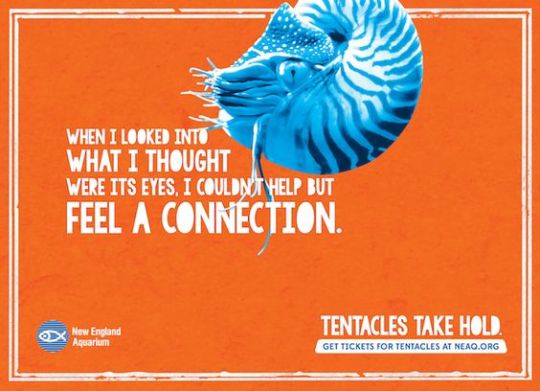
friends, you don’t understand. This ad campaign was goddamn HUGE. They bought out the entirety of multiple train stations in Boston with these. There are so many more, and they’re all this same beautiful combination of questionable/amazing.
It’s a self-perpetuating hole. Employers don’t want to hire disabled people in places where they’ll be interacting with “The Public,”* because it’ll make their customers “uncomfortable.”
And because people aren’t used to seeing us in their day-to-day lives, when they do see us, they get uncomfortable.
And then employers can point to that, and say: “See? We told you so!”
And then, there was this thing that was happening in late summer 2017, where YouTube was demonetizing YouTubers who made videos about Disability (maybe they still are), because it wasn’t “advertiser-friendly” (The fact that it barely made a ripple of response compared to the push-back over LGBTQ+ is rather telling, too).
Here’s a good video about that, from Jessica Kellgren-Fozard (She’s simultaneously signing in BSL and speaking English, and there are also closed captions):
And it’s not just YouTube/Social media, either. When was the last time you saw a disabled person in a fast food commercial, or a commercial for dish soap, or an office supply store? Or as an extra in a crowd scene on TV, or the movies (without turning out to be a secret plot point, just before the climax)?
And, yeah, yeah… not all disabilities are visible. But it’s awfully “convenient” for producers if the only Disability Representation we get is the invisible kind.
This has gotten a spike of fresh notes, lately, so it’s been showing up in my dash notifications. And that’s brought up a further thought:
I remember when I was kid (back in the 1970s) going to a meeting/protest to rally for more representation of disabled people in television commercials (like: why don’t you ever see someone in a wheelchair, washing the dishes? or someone with Down’s syndrome eating at a fast food place?). And the push back from the companies was generally: “But we don’t want people to think that our product will cause disability!”
But then, a bit later, say – early 80s (maybe it was 1981 – the International Year of Disabled Persons)you would see advertisers occasionally include a kid in a wheelchair in a breakfast cereal commercial, or something. But it was always a cartoon/animated commercial (not flesh and blood), and it was always aimed at kids – not adults. ‘Cause, you know: kids have to be taught not to bully each other, and be tolerant (meanwhile, the actual power dynamics they see all around them teach them the exact opposite).
The problem is: this ghettoizes disability as a “Children’s Issue,” when disabled people are routinely infantalized as it is.
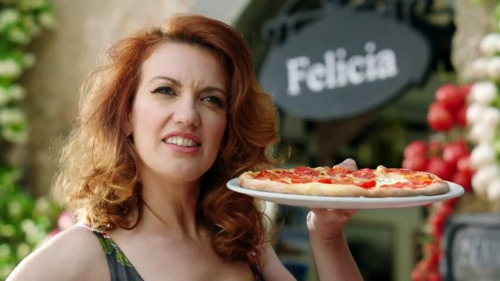
I’ll add that occasionally you see a disabled person, an actual, non-animated one, in an ad today… but it is invariably a small child, and almost invariably a small child with Down’s Syndrome. I think I saw an article about a model with Down’s who was not a small child, but again. Disability has more than one form, and I’m willing to bet Down’s Syndrome got made the (ahem) “poster child” for disabilities because of the reputation people with Down’s have for being sweet-natured and thus easy to pity/feel good that “they are achieving so much!”. It’s rather disgusting now that I’m thinking about it. At the same time, I’d rather think about it and work to change things than live in ignorance.
Also: Down’s Syndrome is easily recognizable as a disability, thanks to the common facial features that go with it (so the brand can tick off the “socially inclusive” and “morally upright” boxes), but unlike people in wheelchairs or with missing limbs, their bodies are not the “wrong shape.”
Meanwhile, actual people with Down’s Syndrome are still routinely bullied…
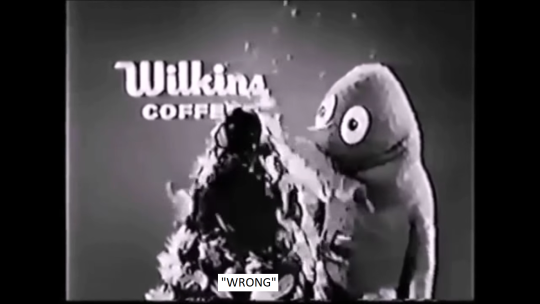
honestly you really need to see these things in motion because they’re buck wild
(also i’m gonna be That Guy and point out that wilkins wasn’t a prototype kermit as kermit already existed, although he was Kermit the Fucked Up Lizard Thing rather than Kermit the Frog at that point in time)
There is absolutely no attempt at seduction in these advertisements. We are given no reason to think this coffee is actually any good. The only motivation we are given to drink this coffee is fear.
THERE ARE MORE AND THEY GET WILDER
THERE ARE EVEN MORE AND THEY GET SO FUCKING THREATENING I AM GENUINELY STARTING TO FEAR FOR MY LIFE








 Urocyon's Jaunts 2.0
You must be logged in to post a comment.