I feel like the reason certain dog-lovers insist cats are evil is because they read their body language as if they were dogs. So here’s a very basic guide to common “mean” things cats do that actually aren’t mean at all if you know what they’re thinking.
Rolling and exposing belly- attacks you when touched Does not mean: Give belly rubs! – haha I tricked you! Actually means: I’m playful! If you reach for my belly I’ll grab your arm and bite it because I think we’re playfighting!
Lazily exposing belly – still attacks when touched Does not mean: tricked you again! Actually means: I’m showing you my belly because I trust you. Please don’t break that trust by invading my personal space. I might accept a belly rub if I’m not ticklish and I know you well.
Snapping at you while being pet Does not mean: I suddenly decided I dislike you! Actually means: You’re petting me in a way that gives me too much restless energy. Please focus on petting my head and shoulders instead of stroking the full length of my back next time.
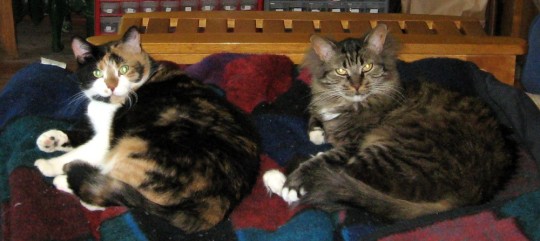
Is in the same room but makes no attempt to interact Does not mean: I’m ignoring you Actually means: We’re hanging out! I’m being respectful by giving you space while still enjoying your company.
Slapping/scratching your hand when you try to pet them Does not mean: I hate you! Actually means: You’ve failed to establish that we’re not playing, or the way you’re approaching me scares me. Be calmer, speak more gently, make eye-contact and blink slowly at me before you try again.
I love this post omg, thank you so much. As a lifelong cat person, dogs perplex me because they’re so completely different behaviourally.
I love dogs too but, I’ve been trying to tell people, you canNOT treat cats like you treat dogs. They arent the same animals and have very different personalities
P.s.: people often pet cats way too hard. Dogs like a firm pet or a pat on the belly, cats dont have the same bone structure and are more flexible than dogs so what you’re doing probably hurts them
Sitting and staring Does not mean: I am challenging you/plotting your demise/just generally evil and creepy. Actually means: I am a desert-adapted species, so my natural tears are very thick and keep my eyes moist for a nice long time. I do find people interesting and enjoy watching them. I just don’t need to blink very often!
Staring and blinking slowly Does not mean: I’m smug and think I am smarter than you. Actually means: I like you! But I don’t need to get up in your face to show it. I can just sit over here and blow kisses at you to show you I am glad you are around!
It’s very frustrating for me when people expect cats to act like dogs, or act like they’re deceitful. They aren’t! They just AREN’T DOGS.
Pour les chats 🐈💞
Get ready for “more reasons why I fucking love cats”
Yes, the legends are true. Cats headbutt you to show their trust and affection. They also do it to show “hey look I see you as family.” Lions do it with members of their pride to say the same. It’s not just because they want food.
Cats nibbling is indeed literally cats grooming you. It’s what mom cats do to their kittens. If a cat is gently biting and/or licking you, they’re now your mom.
Meowing can simply be for the mere fact they want to say hello, want to play or be pet. Again, not just for food.
They barely meow at other cats (except for kittens, they meow at mom cat), mostly just humans. There are exceptions but overall, meowing is almost always for us.
Cats squinting/slow blinking is indeed basically the equivalent of us smiling and/or kissing.
Cats, like humans, prefer to get things without having to work for it- which isn’t very common within other animals.
Cat massages or making biscuits is because they happy! Kneading is another way of saying “hey I like this moment here I enjoy you and my life.”
Cats recognize us by smell, sound, taste, and touch. They recognize us after years as their long term memory is extremely good. This is why abused or neglected cats are so easily scared or hard to connect with. If your scent changes over the years or just in the day, your voice will them it’s really you. Also, they will only remember you if you had impact on their life. If you just existed in the same house, they obviously won’t care.
And yes, they know our patterns in the day. You notice it when it’s beneficial to them (feeding time!). They will often wait for you to come home as well.
To remember: cats think we are interesting as hell. They watch us do everything because we’re fascinating!!!
They also want you to be around when eating because they feel vulnerable. They focus on eating so they hope you protect them. They do the same for you, all the time.
CATS 😍😍😍😍
when a cat turns their back on you, they’re not snubbing you. they’re trusting you to watch their back.
notice how when you’re unfamiliar but nonthreatening, they might loaf facing you and sorta halfway watch you. you’re not fully trusted, but you’re ok by them.
when you’re familiar and liked, they’ll often sit near you facing the same way. imitation of poses is a weird little way cats show solidarity. they do it to each other too. check out these bff’s:
they are doing this on purpose. it’s a buddy thing. so if you’re watching tv and a cat sits next to you and pretends to watch tv too, they are basically calling you bro and declaring friendship.
and if they really love and trust you, they’ll turn their back on you and go to sleep. they’ll sleep facing a wall in your presence, or lounge where they can’t see the room. this isn’t a snub, folks, this is true kitty love. they’re saying, “i feel safe when you’re around. i know nothing’s going to sneak up on me, because you’re here. i feel so safe i can stick my head under a pillow and snore with my butt pointed at you.”
farts aren’t an expression of love, though, as far as i know. they’re just farts.
I hear it almost every day during my consultations.
“But he’s wagging his tail, he must want to play!”
On Tuesday I saw a dog that was transferred from another vet behaviorist after moving to my area of the country. He was muzzled and lunged at me, barking, many times from across the room. Friends, his tail wagged every single time he barked and lunged.
I call a wagging tail the most misinterpreted dog body language sign. I encourage you to think of a wagging tail as a measure of energy level. I have so much energy! Do I want to play, am I anxious, am I terrified? It depends on the rest of the body language.
Yes, a dog can wag its tail curled over its back, and then bite you. I saw a dog just like this today, who was panting with very tight lips, ears back, looking from one car window to the other, and weaving back and forth. Anxious high energy.
Yup, a dog can wag its tail while tucked tightly under its body when approached by a stranger. Last week I saw a dog that tucked her tail, ears back, turning head away, frozen body, and urinated while her tail wagged during a physical exam. Fearful high energy.
Sure, a dog can wag its tail level with its back while running up to a person, jumping while their entire body wiggles loosely. I also saw this dog today! Happy high energy.
Behavior doesn’t happen in a vacuum. Make sure to look at the whole animal…yes, I want you to be holistic!
I’ll be the first to admit I thoroughly enjoy all the “holy shit, Australia” posts that circulate around here but I feel like there’s a very important caveat when it comes to the discussion of swooping season that no one seems to mention.
For those not aware, swooping season is when the magpies start to nest and turn into mini dive-bombers comprised of talons, feathers and spite. It’s not fun. I bled heavily after a particularly vicious swoop when I was a kid, and I’m definitely not the only one.
But here’s the thing: swooping is not an innate behaviour. It’s a learned one. I realised this the moment I moved out of home and began my decade long (entirely unintentional) habit of moving to a different suburb every two years.
I’ve met a lot of wildlife, walking everywhere as I do. And I’ve met a lot of magpies – hella intelligent creatures that are probably thinking “what the fuck is this chick doing” every time I say hi to them as I walk past.
When I first moved out of home, I automatically started taking notes on areas I saw magpies in preparation for swooping season. It was just the done thing. It wasn’t until September came and went and the magpies in my area continued their quizzical but otherwise completely non-aggressive behaviour that it started to twig with me.
The next few years of moving around solidified my suspicions.
Anytime I lived close to a school or in an area with a high concentration of families with young kids, the magpies would swoop. Any suburb (usually inner city) with a high concentration of childless households and/or share-houses: no swooping to be seen.
And it’s any goddamn wonder.
I’ve lost count of the number of times I’ve yelled at kids for messing with wildlife. I grew up in the outer suburbs, so there was no shortage of mini-assholes with an empathy shortage. Australian kids will poke anything they can reach with a stick, and throw rocks at everything else. Including birds nests.
Magpies are intelligent as hell, and they remember shit for GENERATIONS. Some human-shaped fucker throwing rocks at them and their nests? That’s something that’d stick.
So anytime you read one of those “lol the birds try to kill us here” posts, remember: it’s not the birds that started that shit – it was the asshole humans.
Adding on to the fact that magpies are super intelligent:
In primary school there were these really huge gum trees in which a family of magpies took up residence one year.
(an important thing to note is that I grew up in the country with A LOT of magpies -that were basically like relatives for the amount of time they spent on the veranda- and never encountered any swooping)
So one morning walking in to school I noticed that all the kids ahead of me were giving the really huge gum trees a wide berth, with other kids shouting warnings from the buildings. Being an airy-headed little kid, I wasn’t really paying attention to what they were actually saying, so I just kept walking straight under the trees.
Nothing happened.
I got to the buildings and asked why everyone was making a big fuss about the trees, and one of my friends just pointed back the way I came and said “the birds!”
And sure enough, any of the other kids that tried to walk under the trees got immediately swooped and chased to what the magpies thought was a good distance from their nests.
Magpies not only remember humans that are mean to them, but they recognise humans that have been given the seal of approval by other magpies.
I feel like the reason certain dog-lovers insist cats are evil is because they read their body language as if they were dogs. So here’s a very basic guide to common “mean” things cats do that actually aren’t mean at all if you know what they’re thinking.
Rolling and exposing belly- attacks you when touched Does not mean: Give belly rubs! – haha I tricked you! Actually means: I’m playful! If you reach for my belly I’ll grab your arm and bite it because I think we’re playfighting!
Lazily exposing belly – still attacks when touched Does not mean: tricked you again! Actually means: I’m showing you my belly because I trust you. Please don’t break that trust by invading my personal space. I might accept a belly rub if I’m not ticklish and I know you well.
Snapping at you while being pet Does not mean: I suddenly decided I dislike you! Actually means: You’re petting me in a way that gives me too much restless energy. Please focus on petting my head and shoulders instead of stroking the full length of my back next time.
Is in the same room but makes no attempt to interact Does not mean: I’m ignoring you Actually means: We’re hanging out! I’m being respectful by giving you space while still enjoying your company.
Slapping/scratching your hand when you try to pet them Does not mean: I hate you! Actually means: You’ve failed to establish that we’re not playing, or the way you’re approaching me scares me. Be calmer, speak more gently, make eye-contact and blink slowly at me before you try again.
I love this post omg, thank you so much. As a lifelong cat person, dogs perplex me because they’re so completely different behaviourally.
I love dogs too but, I’ve been trying to tell people, you canNOT treat cats like you treat dogs. They arent the same animals and have very different personalities
P.s.: people often pet cats way too hard. Dogs like a firm pet or a pat on the belly, cats dont have the same bone structure and are more flexible than dogs so what you’re doing probably hurts them
Sitting and staring Does not mean: I am challenging you/plotting your demise/just generally evil and creepy. Actually means: I am a desert-adapted species, so my natural tears are very thick and keep my eyes moist for a nice long time. I do find people interesting and enjoy watching them. I just don’t need to blink very often!
Staring and blinking slowly Does not mean: I’m smug and think I am smarter than you. Actually means: I like you! But I don’t need to get up in your face to show it. I can just sit over here and blow kisses at you to show you I am glad you are around!
It’s very frustrating for me when people expect cats to act like dogs, or act like they’re deceitful. They aren’t! They just AREN’T DOGS.
Pour les chats 🐈💞
Get ready for “more reasons why I fucking love cats”
Yes, the legends are true. Cats headbutt you to show their trust and affection. They also do it to show “hey look I see you as family.” Lions do it with members of their pride to say the same. It’s not just because they want food.
Cats nibbling is indeed literally cats grooming you. It’s what mom cats do to their kittens. If a cat is gently biting and/or licking you, they’re now your mom.
Meowing can simply be for the mere fact they want to say hello, want to play or be pet. Again, not just for food.
They barely meow at other cats (except for kittens, they meow at mom cat), mostly just humans. There are exceptions but overall, meowing is almost always for us.
Cats squinting/slow blinking is indeed basically the equivalent of us smiling and/or kissing.
Cats, like humans, prefer to get things without having to work for it- which isn’t very common within other animals.
Cat massages or making biscuits is because they happy! Kneading is another way of saying “hey I like this moment here I enjoy you and my life.”
Cats recognize us by smell, sound, taste, and touch. They recognize us after years as their long term memory is extremely good. This is why abused or neglected cats are so easily scared or hard to connect with. If your scent changes over the years or just in the day, your voice will them it’s really you. Also, they will only remember you if you had impact on their life. If you just existed in the same house, they obviously won’t care.
And yes, they know our patterns in the day. You notice it when it’s beneficial to them (feeding time!). They will often wait for you to come home as well.
To remember: cats think we are interesting as hell. They watch us do everything because we’re fascinating!!!
They also want you to be around when eating because they feel vulnerable. They focus on eating so they hope you protect them. They do the same for you, all the time.
CATS 😍😍😍😍
SO THATS WHY IM SAGE TO BRUSH HER WHEN SHES EATING!
Ive been wondering why she only puts up with it then. (My cats not evil shes just old. We never had to brush her extensively before but now her winter coat is still stuck in her summer coat so it needs brushed)
On a slightly different track, an interesting thing to note:
I’ve frequently repeated the old adage that an untrained dog is not stubborn, because stubborn implies a willful decision to do (or not do) something, and an untrained dog that’s not listening to you is usually just… a dog that doesn’t know what you want.
But I also frequently tack onto that another piece of advice:
If your dog is completely unwilling to be lured or shaped into a specific position, no matter how many different tricks you try to get them to choose to go into that position themselves… take a step back and observe them out of training. Do they take that position naturally when they’re just hanging around in the house? If the answer is no, you need a vet.
It’s a hard one for a lot of my clients to hear, because it seems completely off the walls. What does not sitting when told have to do with getting a shot from a vet? Of course, it’s a lot more complicated than that.
The first time I encountered this problem as a ~professional~, it was with a chihuahua mix rescue dog that my mentor had assigned me to train to an “adoptable” standard. This little guy would do everything I asked him, with a lot of enthusiasm. Except sit. No amount of luring or shaping would get him to sit. Observing him offleash in the play rooms and in his crate, he never sat. If he wanted to not be standing, he’d just lay down. Forcing him into position would “work”, sure, but his position was hardly natural. He was adopted before I could get the rescue to push through paperwork to get him to a vet, but I’d bet money there was something orthopedic going on there.
In the past several months since I moved, I’ve encountered a lot of this. Not surprising, considering I moved to an area with a very high rate of tick-born lyme, and lyme attacks the joints and makes certain movements painful. In dogs, lameness is one of the most obvious signs. I would say one of every ten new clients has a dog that absolutely refuses to sit. I’ve advised each of these clients just the same- observe your dog at home and tell me if they sit on their own. If they don’t, take them to the vet.
Upon following this protocol, my clients have found everything from lyme to bone spurs to impacted anal glands to hip dysplasia to destroyed kneecaps. One dog had a bullet lodged in a nerve on her thigh. She was a recent rescue from a Southern shelter with a lot of mystery scars (what looks like an acid burn on her shoulder) and zero backstory. One was a rottie who was estimated to be four years old, with joint damage so bad on her knees and hips that the vet now thinks she’s closer to ten. One young puppy had an old break in a leg that never healed right- an injury that was completely missed until that point.
None of these dogs are stubborn. They are all in varying amounts of pain, and said pain prevents them from performing the fairly simple task I’ve asked them to do. If solvable- once the pain goes away, the dog sits and downs without question.
I notice the same thing with wide-chested dogs, and dogs with dwarfism. They frequently struggle to sphinx-down. They’ll lay on their sides, or with their back legs kicked out, but not as a sphinx. It’s almost like they get “stuck” halfway down, and then either choose to try laying on their side if they want the treat badly enough, or choose to walk away if they’re too frustrated. I warn all of my brachy breed and dwarf breed clients about this problem, and invariably almost all of their dogs struggle to do it. There’s something to do with the very structure of the dog itself, not allowing them to take a specific position easily. Many of the puppies of these breeds will eventually figure out how to sphinx-down comfortably and the problem goes away, but not all. Similar to how many puppies will sit with their legs kicked out at funny angles, rather than folded beneath them.
If you’re having trouble getting your dog to take a specific position, consider that it might very well be something to do with the way your dog was put together in the first place. Consider there might be more to the story than just what you see on the surface.
That thing about how cats think humans are big kittens is a myth, y’know.
It’s basically born of false assumptions; folks were trying to explain how a naturally solitary animal could form such complex social bonds with humans, and the explanation they settled on is “it’s a displaced parent/child bond”.
The trouble is, cats aren’t naturally solitary. We just assumed they were based on observations of European wildcats – but housecats aren’t descended from European wildcats. They’re descended from African wildcats, which are known to hunt in bonded pairs and family groupings, and that social tendency is even stronger in their domesticated relatives. The natural social unit of the housecat is a colony: a loose affiliation of cats centred around a shared territory held by alliance of dominant females, who raise all of the colony’s kittens communally.
It’s often remarked that dogs understand that humans are different, while cats just think humans are big, clumsy cats, and that’s totally true – but they regard us as adult colonymates, not as kittens, and all of their social behaviour toward us makes a lot more sense through that lens.
They like to cuddle because communal grooming is how cats bond with colonymates – it establishes a shared scent-identity for the colony and helps clean spots that they can’t easily reach on their own.
They bring us dead animals because cats transport surplus kills back to the colony’s shared territory for consumption by pregnant, nursing, or sick colonymates who can’t easily hunt on their own. Indeed, that’s why they kill so much more than they individually need – it’s not for fun, but to generate enough surplus kills to sustain the colony’s non-hunting members.
They’re okay with us messing with their kittens because communal parenting is the norm in a colony setting, and us being colonymates in their minds automatically makes us co-parents.
It’s even why many cats are so much more tolerant toward very small children, as long as those children are related to one of their regular humans: they can tell the difference between human adults and human “kittens”, and your kittens are their kittens.
Basically, you’re going to have a much easier time getting a handle on why your cat does why your cat does if you remember that the natural mode of social organisation for cats is not as isolated solitary hunters, but as a big communal catpile – and for that purpose, you count as a cat.
cat socialism
Lack of behavior is not a goal in any training plan. Lack of behavior means something is seriously wrong. A good example is the dog who appears “completely fine” at the veterinary office, but is frozen out of fear instead. The illusion of “completely fine” is in actuality an absence of behavior.
I feel like the reason certain dog-lovers insist cats are evil is because they read their body language as if they were dogs. So here’s a very basic guide to common “mean” things cats do that actually aren’t mean at all if you know what they’re thinking.
Rolling and exposing belly- attacks you when touched Does not mean: Give belly rubs! – haha I tricked you! Actually means: I’m playful! If you reach for my belly I’ll grab your arm and bite it because I think we’re playfighting!
Lazily exposing belly – still attacks when touched Does not mean: tricked you again! Actually means: I’m showing you my belly because I trust you. Please don’t break that trust by invading my personal space. I might accept a belly rub if I’m not ticklish and I know you well.
Snapping at you while being pet Does not mean: I suddenly decided I dislike you! Actually means: You’re petting me in a way that gives me too much restless energy. Please focus on petting my head and shoulders instead of stroking the full length of my back next time.
Is in the same room but makes no attempt to interact Does not mean: I’m ignoring you Actually means: We’re hanging out! I’m being respectful by giving you space while still enjoying your company.
Slapping/scratching your hand when you try to pet them Does not mean: I hate you! Actually means: You’ve failed to establish that we’re not playing, or the way you’re approaching me scares me. Be calmer, speak more gently, make eye-contact and blink slowly at me before you try again.
I love this post omg, thank you so much. As a lifelong cat person, dogs perplex me because they’re so completely different behaviourally.
I love dogs too but, I’ve been trying to tell people, you canNOT treat cats like you treat dogs. They arent the same animals and have very different personalities
P.s.: people often pet cats way too hard. Dogs like a firm pet or a pat on the belly, cats dont have the same bone structure and are more flexible than dogs so what you’re doing probably hurts them
Sitting and staring Does not mean: I am challenging you/plotting your demise/just generally evil and creepy. Actually means: I am a desert-adapted species, so my natural tears are very thick and keep my eyes moist for a nice long time. I do find people interesting and enjoy watching them. I just don’t need to blink very often!
Staring and blinking slowly Does not mean: I’m smug and think I am smarter than you. Actually means: I like you! But I don’t need to get up in your face to show it. I can just sit over here and blow kisses at you to show you I am glad you are around!
It’s very frustrating for me when people expect cats to act like dogs, or act like they’re deceitful. They aren’t! They just AREN’T DOGS.
I have had Vision, a dwarf BCI and my youngest snake, for roughly 9 months now. He will be a year old in July, so by snake standards he is still very much a baby. In the past 9 months, he’s gone from, for lack of better words, a bitey defensive asshole to a relatively passive and trusting creature who simply has Rules ™ on how, where, and when he can be touched. I used the same method to produce these results as I do with all of my reptiles, including my young snake of a notoriously aggressive and defensive species (Amazon Tree Boas) and have frequently been asked how I manage to get these animals that instinctively bite first and ask questions never to allow handling and pictures without drawing blood.
On my dog blog I’ve mentioned the concept of body autonomy a few times in relation to training dogs, and how it crosses over into husbandry in other species. In these posts I’ve detailed how I tame the larger birds at my job, how I teach my snakes not to bite me when I take them out, how I can successfully convince a thrashing dog to accept grooming without a fuss, how I teach cats to not turn into screaming demons for nail trims, and more. I also cover this in many of my dog training lectures at work as my students teach their dogs to allow grooming, nail trims, and medically related handling to prevent injuries and incidents when interacting with these animals. All of this relates back to body autonomy, and how we as humans have consistently ignored other species’ instinctive need to be autonomous.
I am no master animal trainer and do not play one on TV. I train pet dogs and service dogs and have begun to venture into competition, at one point I specialized in rehabbing aggressive and reactive dogs. I have trained various common pet animals in occasionally unconventional ways to do things that make life easier for the both of us, but I don’t claim to be anything special, because what I’m doing is not all that special. It is, however, uncommon for people to make these considerations with their pets and then they call in someone like me to fix a problem that didn’t need to start in the first place.
An example being: frequently on this website and others, the solution for convincing a biting snake not to bite you is to hold it still until it stops biting you. The snake will learn that biting you does not produce the desired result (you letting the snake go or putting it back in its cage) and thus will eventually stop biting you when you pick it up.
In the dog training world, we call this flooding and learned helplessness. It “works” because it produces what we wanted it to. The snake no longer bites when you pick it up. But it failed to address the root of the problem, and frequently if regular handling is not maintained the snake will return to biting you every time you touch it. The snake had learned that there was nothing it could do in order to make you stop doing what it didn’t like, and so had learned that it was helpless against the much larger human. The snake in this situation still doesn’t really want to be handled, it is merely tolerating it because it sees no other option.
While snakes have a much more primitive brain than dogs and thus a much more limited scope of emotions, aggression and violence are always expensive measures to use and thus are frequently considered last resort measures to make an unpleasant situation stop. They are costly in body resources- they take large amounts of energy, stress, and time to resolve, and wounds obtained from violence can become deadly with infection or severity. As a result, a bite should always indicate that whatever you are doing is so unpleasant to the animal you’re doing it to that they’re willing to risk their life in order to make you stop. The common pet snake knows it cannot win against an animal as large as a human. It is hoping you have not come to the same realization, and will not call its bluff.
This creates a problem. Like with dogs, backing off from a situation that is required after a bite will teach the snake that all they have to do to get you to leave them alone is to bite you. If I need to trim my dog’s nails, give him a bath, brush him, or have him examined by a vet, sure I could put him in a muzzle and force him to do it anyway, but it is counter-intuitive to teach him that all he has to do is bite me in order to get out of doing those things he may consider unpleasant. I need to be able to handle my snakes. This is not negotiable, just like the above things I do with my dogs are not negotiable. If I cannot handle them, I cannot check them for injury, disease, or distress. Backing off because my snake, or dog, has threatened to bite me is thus not a viable option. I must be able to complete the task, and the animal in question must let me.
Dogs, by comparison, are relatively easy to convince in this problem. I need to be able to do my dog’s nails. If I give him amazing treats on a good reward schedule, shower him with praise, listen to his body language to give him a chance to calm down and destress before pressing on, and remove my own negative emotions from the equation, he will learn to let me do his nails and even offer the position required for the task within a relatively short amount of time. He does not have to like having his nails done, but I can convince him to like he benefits he gets out of it. Cats and birds and small mammal pets like ferrets, rabbits, and rodents may be slower, but follow much the same way.
I can’t give a snake a treat. That’s not really how snake digestive systems work. I can’t give them a toy. I can’t give them praise. The subtleties of snake body language are much harder to read due to a lack of eyelids, ears, and limbs. Dogs, cats, birds, ferrets, all of these are social creatures that practice social bonding and feel an emotion similar to love (in the dog’s case, actually do feel love). Snakes are not social creatures and their brain is not capable of producing the chemicals involved in the emotion we call love. I cannot convince a snake to love me or to like being handled. That is not something their biology is able to do. Does that mean I have to rely on flooding and learned helplessness in order to get them to let me handle them?
I keep stressy species. While all reptiles are more than capable of stressing themselves to death, my current list of exotic pets includes a special needs ball python with a severe neurological condition, a brazilian rainbow boa specifically purchased from someone who breeds minimally stressy snakes because he got tired of the species’ reputation for being bitey assholes, and a dwarf bci locality (read: like a subspecies, but not different enough to get their own scientific name) known for being defensive bitey assholes. Previously, I had a special needs corn snake that was a defensive bitey asshole, an amazon tree boa that was remarkably handleable despite the species’ reputation for being aggressive and defensive bitey angry assholes, and a few foster ball pythons that came from neglect situations and had never been handled before leading to them being defensive bitey assholes. Stress is common in situations where aggression or violence is utilized, even if it is being utilized by the animal and not the human. If the stress from moving can kill my beloved ATB Hydra, why would I intentionally expose him to situations where he would feel required to use violence again and again until he learned that that was not a way out of the situation?
I did not flood my snakes. I hold them. They do not bite me. It has been a long time since any of them have even struck at me, and the majority of the bites and strikes I have received have been from when I was learning the snake in front of me or from me intentionally ignoring their body language and handling them a way I knew they didn’t like for whatever reason. Snakes do not bite without cause. Whether you, a human, can see that cause or not, snakes do not bite because they are vindictive or mean. As said, their brains are far too primitive to feel such complex emotions. Even wild snakes do not bite without provocation- whether you intentionally provoked them or not does not matter, simply whether they felt provoked enough to need to defend themselves possibly with their lives.
Vision came to me unsure of my intentions and of whether I could be considered safe. He certainly didn’t believe I should be picking him up. At two months old, the world is a scary place to a baby snake where nearly everything is bigger than you and nearly everything wants to kill or eat you. I do not blame him for doubting the warm giant cooing over him with grabby hands. To him, I’m sure I am some baffling mixture of hawk, bear, and wild canine. All of these things readily kill and eat snakes, all of these things may be persuaded to not kill and eat this particular snake if he bites them.
Instead of picking him up and allowing him to spend precious resources stressing himself to the point of repeatedly biting me- which hurts, by the way, so I don’t really want to be bitten any more than I need to be- I allowed him to show me things about him. I let him show me what he does when he’s nervous, when he doesn’t want to be bothered. I let him show me what he does when he’s curious and feels like investigating what’s in front of him. I let him show me how he does and does not like to be touched. Like many snakes, he seems to enjoy being scratched lightly under the chin. Like many snakes, he doesn’t seem to appreciate being tickled on the stomach. He prefers to create a “foot” about 2/3 down his body and use it as an anchored perch when exploring my hands. He does not want his tail to be touched. When he is nervous or unsure of potential danger, he will retract and coil himself into a loose ball. If pressed before he recovers, he will “expand” the “ball” quickly and vocalize. If he continues to be pressured, he will threaten to bite and will begin to try. If he is allowed to relax, he will recreate his “foot” and resume quietly investigating his surroundings.
Today, I took the lid off of his enclosure and lifted him out without a fuss. While this is not a first- we accomplished this task about 4 weeks in- only in the past few weeks has he not immediately retracted into his loose ball and required me to wait a few minutes for him to relax before touching him. Instead, he immediately made his “foot” and began to investigate, leaned against my finger as I scratched his chin, and maintained his confidence throughout the time I handled him. Sure, I could possibly get a similar result through the first method of flooding and teaching him that he is helpless against me, but I don’t need to. I can get a confident content snake that is not only tolerating my handling but also showing curiosity and intelligence without forcing him to accept my hands as things he has to deal with in his life.
The people espousing these methods always ask me how I managed to take such nice, interesting pictures of Hydra without bleeding- or joke about how much blood they think I lost inbetween shots- and are always surprised when I tell them that I don’t get bit because I understand a snake’s need for autonomy and allow the snake to tell me their “rules” for being touched and then follow those rules or understand if I break them I will get bit. As a result, I don’t break their rules unless I have to, and thus I don’t get bit unless I have to. This allows me to handle and investigate my snakes, look in their mouths, check their vents and between their scales, touch their heads, and rescue them from fluke accidents such as Quetzal’s injury with his decor without the snake taking their frustrations out on me. It also allows me to take some pretty pictures of them outside or on props without worrying how I will retrieve them without being bitten when I’m done.
My Brazilian has always been a sweety, but I have a JCP that is quite testy about coming out of her cage. Never been tagged by her yet, but I have been contemplating how to get her to settle. In my understanding, carpets are notoriously territorial about their cages, which seems to be true of her.
Any advice on how to get her to come out and settle? As is, I distract her with one hand and grab her fron behind with the other. But I do feel like she is being forced to deal with me rather than being interested in some outside time.
Less grabbing! Grabbing is still flooding, and thus still contributes stress. If you have not already, try leaving her alone outside of general cage cleaning, food, and water for a little bit. I’m talking a couple weeks or up to two months. Let her settle in her cage and understand where she is safe and does not need to worry about being grabbed. Humans with grabby hands are too similar to birds of prey with grabby talons, that is scary and she is going to immediately be on the defensive. Also try to remember that snakes aren’t really interested in “outside time”, especially those more inclined to be territorial. Outside time is mostly for human benefit- they should have everything they want and need in their enclosure. If you are looking to add enrichment, then adding things for her her to do, explore, climb on, etc would be far better than treating handling like enrichment. I like taking my snakes out and playing with them as much as the next person, and I like watching their curiosity as they investigate and explore, but I also understand that when I take them out of the cage anything outside of me checking them over for medical concerns is purely for me and something they’ve just learned to accept.
My experience with the carpets at work, my roommate’s JCP, and my late ATB is that the semi arboreal snakes are very defensive of their cages (and somewhat territorial) as well as very reluctant to be forcibly unwrapped. If she is draped on/around/in something, cut your losses and accept that she probably does not want to be bothered. This was one of Hydra’s rules and remains one of Feanor’s- do not unwrap me from my branches or plants or I will bite you. If you *really* have to get her out, then you can take what she is wrapped on/in/around out and let her untangle herself from there, but I only do this in cases where it is medically necessary or when I need to sanitize and am working on a time crunch and can’t just come back later when the snake is not entangled with something its likely to guard.
The above mentioned snakes were/are always far more willing to be peaceful about coming out if we were doing this in the late afternoon and they were either in their hides, at/in their water bowls, just after misting (note: these guys have all enjoyed misting and have come out to bathe and drink just after, but Vision my dwarf BCI HATES misting and is MORE likely to bite me after misting, so YMMV), or while they were noodling around from one spot to the next. Timing is a big concern as my roommate and I both feed our snakes late at night and they have come to expect cage open at night = food, so they are mostly all in strike position when their cages are open and it’s dark.
Also as a general rule, please consider species in this too. I could handle my ATB, get him out, and perch him on things without him biting me, but I didn’t play with him like I do my BP or my BRB. If I want a snake to sit around the house and play videogames with, I’m not grabbing the biggest asshole in the house and asking him to sit and be still while I flail around with a WiiMote. I’ll grab my BP for that and stick him in my shirt and call it a day when he makes it clear that he doesn’t want to stay in my shirt anymore. That’s just not the kind of snake my ATB was and I went into owning him knowing he would never be at that standard. I just didn’t want him to bite me. I achieved that goal, but he was never a “take out and hang out” snake. He was a “take out, put on a thing, take a picture, put away” snake and likely he would have always been like that as the species is, as a whole, much more defensive and ornery than a BP. Feanor, my roommate’s JCP, is much like him. Valinor, her GTP, is much happier to just relax while out, but she takes him out once every couple months and again doesn’t pry him off his perch, just lets him come off on his own time and if he doesn’t show signs of wanting to come off 5 minutes after being taken out, oh well, he’s put back because he clearly doesn’t want to be bothered.
I’ve also had my BP longer- he’ll be 6 soon and I’ve had him since he was 5 months old. My ATB I had for two years before my move to Maryland killed him, something I will always regret. I didn’t have the same amount of time with him as I’ve had with Quetzal, and that makes everything much harder. Vision I’ve had roughly 9 months and he is only out for 5-10 minutes at a time. Will he eventually be a “take out and hang out” snake? I don’t know, some BCIs are and some BCIs aren’t. He’s not as busy as my BRB but he’s not as placid as my BP. He’s not as inclined to snap as Hydra, but he’s definitely made a few passing attempts to bite especially in the early days of us getting to know each other. Only more time will tell if we will ever move past the point we’re in now, but I also didn’t get into snakes because I wanted a cute cuddley social creature that loves me. I have a dog for that. I’m okay with a snake that doesn’t really want much to do with me as long as I can check it for medical needs without bleeding myself, and that’s why I avoid certain species and am deliberately choosey when purchasing from species known to be bitey assholes.
Oh, wow, absolutely. We’ve talked a lot on the blog previously about how to incorporate the idea of body autonomy into working with dogs and cats, but not much with other species. This is a beautiful write-up that is practical and not anthropomorphic.
THIS IS WHAT IM TALKING ABOUT WHEN I TELL DINGDONGS TO HANDLE WITH CARE



 Urocyon's Jaunts 2.0
You must be logged in to post a comment.