WILL BE BLOCKED BECAUSE of SOME OLD POLITICIANS “that know the youth and the internet the best then anyone else” IN THE SENATE THINKING THEY KNOW BETTER SHUTTING DOWN YOUTUBE AND OTHER SOCIAL PLATFORMS FOR ME AND PEOPLE LIVING IN THE EU FOREVER!
PLEASEEEEEEEEEEEEEEEEEEEEEEE I REPEAT THE ARTICLE HAS BEEN CHANGED COMPLETELY NO FUCKING JOKE GUYS! LAST TIME IT WAS ALL ABOUT PROTECTION NOW THEY ADDED SOME STUPID STUFF AND THEY WILL BE TAKING AWAY MY YOUTUBE; SOCIAL MEDIAS AND EVERYTHING!
PLEASE SIGN UP IN THIS PETITION IF WE DON´T HIT 5 MILLION GERMANY AND SO MANY EUROPE COUNTRIES WILL LOSE THEIR SOCIAL AND MORE!
SHARE THIS POST AND SIGN UP AND VOTE THE MORE THAN BETTER! Let’s SHOW THESE OLD PEOPLE THAT YOUTUBE, TUMBLR, INSTAGRAM AND ALL THESE GREAT OTHER SITES AREN´T FUCKING USELESS AND SHET BECAUSE THEY DO NOT KNOW WHAT SOCIAL MEDIA IS! INSTEAD OF TAKING THESE PRECIOUS THINGS THEY SHOULD WORRY ABOUT OTHER.STUFF ( Migrants, new school system) BUT NAH THEY WANT TO TAKE AWAY OUR SOCIAL MEDIAS
I REPEAT article 13 HAS COMPLETED CHANGED AND IN A FEW MONTHS IT WILL TAKE AWAY OUR SOCIAL media LIKE TUMBLR AND YOUTUBE HERE IN EUROPE PLEASE SIGN UP FOR US GUYS I BEG YOU!
PLEASE HELP US GUYS I BEG YOU and PLEASE! reblog IT ISN´T ANYMORE A JOKE THEY HAVE COMPLETELY TURNED THE ARTICLE AROUND FOR THE WORST THIS WEEK!
YO NON-EUROPEANS CAN ALSO SIGN GET IN LINE FOR YOUR EURPOEAN HOMIES GUYS CMON
PLEASE HELP THEM
Yo OP you’re a real piece of artwork, ya know that?
So, first of all, this is pure hyperbole, but i’ll get to that in the end. What I find especially bad is that you only link to the change.org petition that is really vaguely worded.
These above links have on the left side the original text and on the right the most updated version as of september 12.
All good? Nice, let’s take a look inside them!
TL;DR: The Directive’s new amendments on Articles 11 and 13 have actually enstrenghtened consumer rights and defused to a large degree the ticking time bomb that was the bots. Also, the EU has no Senate!
So, first off, Article 11 – the apocalyptic attitude of the OP is already disputed because we see right in Section 1a that, and to quote:
“
The rights referred to in paragraph 1 shall not prevent legitimate private and non-commercial use of press publications by individual users.
“
Which means, if you’re not making money off it, then it’s all good – you can share it online, or keep it for yourself on your phone or computer.
This is further corroborated by Sections 2a, 4 and 4a, which in turn talk about sharing hyperlinks (aka links from websites), how long the rights are retained for commercial use (which number has been reduced from 20 years to just 5 years – a bit much, but not apocalyptic again), and about the Members of the EU having to accomodate for these compensations.
To quote again:
“
2a. The rights referred to in paragraph 1 shall not extend to mere hyperlinks which are accompanied by individual words.
“
4. The rights referred to in paragraph 1 shall expire 5 years after the publication of the press publication. This term shall be calculated from the first day of January of the year following the date of publication. The right referred to in paragraph 1 shall not apply with retroactive effect.
“
4a. Member States shall ensure that authors receive an appropriate share of the additional revenues press publishers receive for the use of a press publication by information society service providers. “
This is a good time to remind that Articles 11 and 13 and the entire legislations ARE NOT LAWS. They are DIRECTIVES, which is basically EU law from what i know for making a list of rules that member countries can check, see if they comply, and then choose for themselves if they find their current laws adequate or need to update them to fit the definitions set by the directive. For more on that, check an actual law student’s post on the subject here – she honestly tells it much better than i could ever hope to do so:
Right, now onto Article 13. So, the big important boi here is Section 2b, which, to quote a brief excerpt:
“
Members States shall ensure that online content sharing service providers referred to in paragraph 1 put in place effective and expeditious complaints and redress mechanisms that are available to users in case the cooperation referred to in paragraph 2a leads to unjustified removals of their content. Any complaint filed under such mechanisms shall be processed without undue delay and be subject to human review. Right holders shall reasonably justify their decisions to avoid arbitrary dismissal of complaints.
“
THIS RIGHT HERE PROTECTS YOUR RIGHTS FROM CORPORATIONS FROM CLAIMING IT AS THEIR OWN.
It also serves another purpose as it demands that all content that has been claimed MUST be reviewed by a HUMAN PERSON, not a bot. This is monumental news, for the mere fact that what we feared with Article 13 was that the directives was gonna utilize bots like YouTube and Google do exclusively, and mandate they be used. This section basically says “yo, whatever you use, if something is claimed, you gotta have a human review”.
These views are further strengthened by the rest of Section 2, 2a and 3, which goes in length about how current streaming and video/content-hosting services’ code of conducts will be enforced. This is where the argument about how the EU will go full dictatorship and will censor the internet falls apart. To quote briefly again:
“ 2. Licensing agreements which are concluded by online content sharing service providers with right holders for the acts of communication referred to in paragraph 1, shall cover the liability for works uploaded by the users of such online content sharing services in line with the terms and conditions set out in the licensing agreement, provided that such users do not act for commercial purposes.
“ 2a. Member States shall provide that where right holders do not wish to conclude licensing agreements, online content sharing service providers and right holders shall cooperate in good faith in order to ensure that unauthorised protected works or other subject matter are not available on their services. Cooperation between online content service providers and right holders shall not lead to preventing the availability of non-infringing works or other protected subject matter, including those covered by an exception or limitation to copyright.
“ 3. […] When defining best practices, special account shall be taken of fundamental rights, the use of exceptions and limitations as well as ensuring that the burden on SMEs remains appropriate and that automated blocking of content is avoided.
“
So, in conclusion, Article 13 and Article 11 is not the devil it once was, and its recent amendment has made it a lot more user-friendly!
Now, I wanna address the original post directly, cuz the language used is very telling. First of all, it’s all caps, so, unless you’re @factsinallcaps, your credibility is automatically lowered imo. Secondly, the lack of direct links to either articles, or even news pieces from websites about net neutrality is very telling. The fact that only the link to the change.org petition is linked is highly suspicious.
Now, let’s go into details; First of all, the EU has no Senate. This isn’t the United States. And there was never any talk about shutting down social media – this is not a situation like in Turkey, where YouTube has been taken down and replaced with a local one.
The wording especially of the final phrase, “
INSTEAD OF TAKING THESE PRECIOUS THINGS THEY SHOULD WORRY ABOUT OTHER.STUFF ( Migrants, new school system) BUT NAH THEY WANT TO TAKE AWAY OUR SOCIAL MEDIAS
“, also has me severely troubled. The EU cannot implement a pan-european EU-licensed new school system. That’s just not how it functions! This is up to each individual country comprising the EU to make up.
Also the migrants crisis and the way they’re thrown nonchalant here reads like a very reactionary right-wing talking point. And this is a big deal when it comes to the Article 13 debacle – the talking points have been hijacked by anti-eu personas (like Computing Forever) who espouse views that are anti-semitic, islamophobic, sexist, transmisogynist and racist. So, despite Article 13 being a really obvious sticking point and in need of proper debate, especially after the tragedy that was the rollback of net neutrality in the United States, we had the discourse surrounding the Article and what it does poisoned by Far-Right discourse, which in turn has produced the meme about the EU coming to censor all memes and, in this post’s case, take down all social media.
And it’s sad.
And I’m tired of it.
Now, what is happening with Article 13 right now? Because, remember, these amendments happened in early September, and it is November the 8th right now, 40 minutes past midnight in Greece. So, according to Julia Reid, the head of the EU pirate party and overal extreme badass is in negotiations with the rest of the EU council, discussing further amendments, and judging from her twitter, things are going pretty good!
(quoting the tweet in case you can’t open the link:
Good news, Council did not insist on its wording on the relationship with existing #copyright exceptions in Article 17a today. It looks like we may be able to solve this problem in the next round of negotiations. #FixCopyright )
(I’ve never looked into Article 17, so I can’t speak about that, but I trust her)
And that’s about it! Votes are set to come in like early 2019, which will finalize the Articles, and then the directive will be shipped to each member state, where each parliament will decide on how to implement those articles
Don’t fall for the reactionaries tumblr, and research before you reblog! The current version has 20k notes and it tells a grossly misleading version of the Directive, one influenced by anti-EU, far-right reactionary elements.
And sorry for the long post! Have a good evening ^_^
please do reblog this version of the post if you see it, cuz the post has 30k notes and it’s still misdirecting people as to how art13 has changed
Thank you for your explanation. I’m French, I practice law and I can guarantee that your rectifications are accurate. Those shortcuts that people are making are getting more and more dangerous. This directive is actually doing something against the GAFAs and it’s incredibly important. It’s maybe a little clumsy and obviously not perfect, but the way to go is to speak to your representative at Parliament because they are the ones voting. Take advantage of the fact that for those matters, the EU is a democracy. And inform yourself, read the directive it’s available online on the EU website, they even write as an introduction what they intend to do in the directive, what their goals are.
Plus as it was said, directives are not laws, they must be transcribed into local legislations, and only if countries legislations aren’t already providing the same laws.
Please stop believing everything you read and do research first, especially on subjects such as these. We speak of fake news enough everyday, don’t be naive when you have so many ways to check information.
OTW Legal has an update on what the September 12th vote on EU copyright legislation–including Article 11 and Article 13–means for fans and for AO3. Learn more, including how you can help, here: https://goo.gl/SB73Wv
Also, I’m in Europe and ngl, had no idea this was even an article up for debate let alone it being fucking passed.
Don’t panic! This was expected at this stage and it is only the beginning. If you are a European and feel passionate about this, please keep on reading and help!
So what has happened so far … the Commission has drafted up a long overdue copyright reform. https://eur-lex.europa.eu/procedure/EN/2016_280 It contains a lot of good, and some bad: mainly Article 11 and 13.
This was put forward as a whole to the European Parlament, where it was voted down on the 5th of July 2018
This meant, this will not go through the fast way, and will be subject to scrutiny and change.
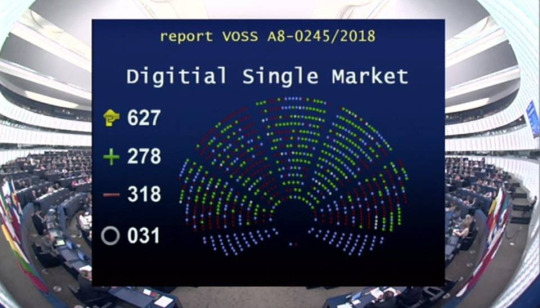
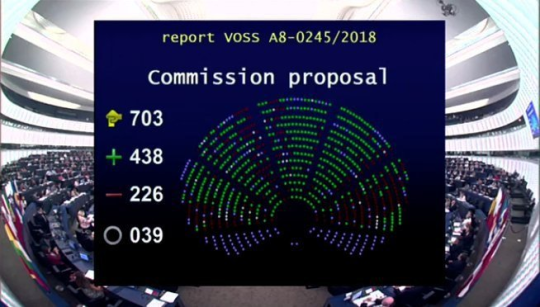
The Commission made some alterations https://eur-lex.europa.eu/procedure/EN/2016_280 and put it forward again. If Parlament would have voted it down again, it probably would have meant back to the drawing board, but most people (including me) agree that Europe does need copyright reform, so on the second vote it passed the first step:
So what happens now?
This will now go into what is called the Trilogue, where Commission, Parlament and representatives of all national governments will sit together to make alterations until everybody is happy implementing the regulation.
This means we can now influence this via our MEPs and our National Government!
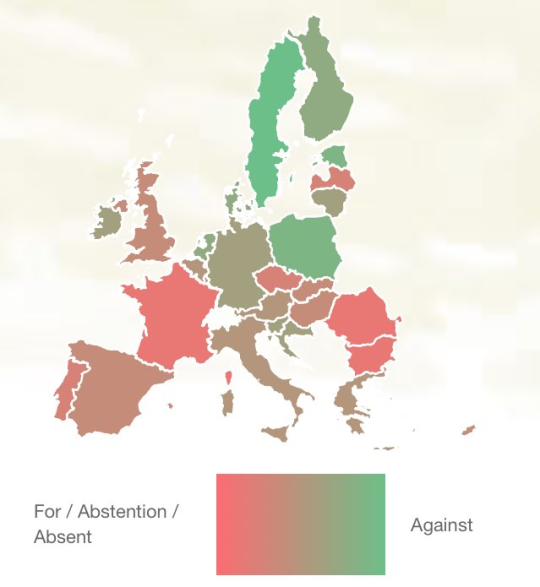
In countries that are red your government is likely to support Article 13.
What to do now?
There are a lot of organisations that organise actions against article 13. Check out their websites and get in touch with your MEP or local government and let them know you are unhappy about this.
… and many many more, just google to find one in your country.
Also, as @asthesea-breezehitsmylungs pointed out, a lot of people are not aware of this going on. So make them aware! Share the memes and point them to the petitions. And don’t just complain how shit this is, get in touch with your politicians!
This summer thanks to help from everyone, the European Parliament decided not to fast track Article 13 a copyright law banning fan culture and memes. But the fight is not over yet..
ON WEDNESDAY 12TH SEPTEMBER (aka Next Wednesday)
The Parliament will vote again.
CONTACT YOUR MPS, SIGN THE PETITION AGAIN, MAKE SOME NOISE.
To all my followers; please note I will be reblogging stuff like this until the decision is made on Wednesday, if Articles 11 and 13 are passed as law, my blog will likely be marked as copyright infringement. As well as this, the articles benefit major news companies and give them full power over what is broadcast – smaller ones will likely be suppressed due to a new payment that’s must be made in order to report on news events.
PLEASE HELP GET EVERYONES ATTENTION BY MAKING AWARENESS OF THIS
Signal boosting for EU peeps.
Wish I could sign those petitions. If you can, do it for all of us.
THE RESULTS FOR THE VOTE ON EU CENSORSHIP AND LINK TAX.
This it the breakdown of MEPs via their country of origin.
ORANGE is GOOD.
GREEN is BAD.
BLUE is abstain.
PLEASE SPREAD AND REBLOG SO THAT PEOPLE CAN SEE HOW THEIR COUNTRY PERFORMED – EVEN IF YOU ARE NOT IN THE EU. THIS IS NOT AN EASY THING TO FIND.
France and Romania did the worst. If you live in these countries, your representatives were all for destroying the internet. You will need to work twice as hard campaigning your reps when this goes back for a second discussion in September.
Congratulations Sweden, Poland, Netherlands, Lithunania and Estonia.
THIS IS NOT OVER.
The legislation goes back for a re-do in September before we’ll have to fight this battle again.
HOLY SHIT, POLAND, SOMETIMES I LOVE MY COUNTRY SO MUCH ❤
As we have been covering in the last couple of weeks, a controversial EU
Copyright Directive has been under discussion at the European
Parliament, and in a surprising turn of events, it voted to reject fast-tracking the tabled proposal by the JURI Committee which contained controversial proposals, particularly in Art 11 and Art 13. The proposed Directive will now get a full discussion and debate in plenary in September.
I say surprising because for those of us who have been witnesses (and
participants) to the Copyright Wars for the last 20 years, such a defeat
of copyright maximalist proposals is practically unprecedented, perhaps
with the exception of SOPA/PIPA.
For years we’ve had a familiar pattern in the passing of copyright
legislation: a proposal has been made to enhance protection and/or
restrict liberties, a small group of ageing millionaire musicians would
be paraded supporting the changes in the interest of creators. Only
copyright nerds and a few NGOs and digital rights advocates would
complain, their opinions would be ignored and the legislation would pass
unopposed. Rinse and repeat.
But something has changed, and a wide coalition has managed to defeat
powerful media lobbies for the first time in Europe, at least for now.
How was this possible?
The main change is that the media landscape is very different thanks to
the Internet. In the past, the creative industries were monolithic in
their support for stronger protection, and they included creators,
corporations, collecting societies, publishers, and distributors; in
other words the gatekeepers and the owners were roughly on the same
side. But the Internet brought a number of new players, the tech
industry and their online platforms and tools became the new
gatekeepers. Moreover, as people do not buy physical copies of their
media and the entire industry has moved towards streaming, online
distributors have become more powerful. This has created a perceived
imbalance, where the formerly dominating industries need to negotiate
with the new gatekeepers for access to users. This is why creators
complain about a value gap between what they perceive they should be getting, and what they actually receive from the giants.
The main result of this change from a political standpoint is that now
we have two lobbying sides in the debate, which makes all the difference
when it comes to this type of legislation. In the past, policymakers
could ignore experts and digital rights advocates because they never had
the potential to reach them, letters and articles by academics were not
taken into account, or given lip service during some obscure committee
discussion just to be hidden away. Tech giants such as Google have
provided lobbying access in Brussels, which has at least leveled the
playing field when it comes to presenting evidence to legislators.
As a veteran of the Copyright Wars, I have to admit that it has been
very entertaining reading the reaction from the copyright industry lobby
groups and their individual representatives, some almost going
apoplectic with rage at Google’s intervention. These tend to be the same
people who spent decades lobbying legislators to get their way
unopposed, representing large corporate interests unashamedly and
passing laws that would benefit only a few, usually to the detriment of
users. It seems like lobbying must be decried when you lose.
But to see this as a victory for Google and other tech giants completely
ignores the large coalition that shares the view that the proposed
Articles 11 and 13 are very badly thought-out, and could represent a
real danger to existing rights. Some of us have been fighting this fight
when Google did not even exist, or it was but a small competitor of
AltaVista, Lycos, Excite and Yahoo!
At the same time that more restrictive copyright legislation came into
place, we also saw the rise of free and open source software, open
access, Creative Commons and open data. All of these are legal hacks
that allow sharing, remixing and openness. These were created precisely
to respond to restrictive copyright practices. I also remember how they
were opposed as existential threats by the same copyright industries,
and treated with disdain and animosity. But something wonderful
happened, eventually open source software started winning (we used to
buy operating systems), and Creative Commons became an important part of
the Internet’s ecosystem by propping-up valuable common spaces such as
Wikipedia.
Similarly, the Internet has allowed a great diversity of actors to
emerge. Independent creators, small and medium enterprises, online
publishers and startups love the Internet because it gives them access
to a wider audience, and often they can bypass established gatekeepers.
Lost in this idiotic “Google v musicians” rhetoric has been the threat
that both Art 11 and 13 represent to small entities. Art 11 proposes a
new publishing right that has been proven to affect smaller players in
Germany and Spain; while Art 13 would impose potentially crippling
economic restrictions to smaller companies as they would have to put in
place automated filtering systems AND redress mechanisms against
mistakes. In fact, it has been often remarked that Art 13 would benefit
existing dominant forces, as they already have filtering in place (think
ContentID).
Similarly, Internet advocates and luminaries see the proposals as a
threat to the Internet, the people who know the Web best think that this
is a bad idea. If you can stomach it, read this thread featuring
a copyright lobbyist attacking Neil Gaiman, who has been one of the
Internet celebrities that have voiced their concerns about the
Directive.
Even copyright experts who almost never intervene in digital rights affairs the have been vocal in their opposition to the changes.
And finally we have political representatives from various parties and
backgrounds who have been vocally opposed to the changes. While the
leader of the political opposition has been the amazing Julia Reda, she
has managed to bring together a variety of voices from other parties and
countries. The vitriol launched at her has been unrelenting, but
futile. It has been quite a sight to see her opponents both try to
dismiss her as just another clueless young Pirate commanded by Google,
while at the same time they try to portray her as a powerful enemy in
charge of the mindless and uninformed online troll masses ready to do
her bidding.
All of the above managed to do something wonderful, which was to convey
the threat in easy-to-understand terms so that users could contact their
representatives and make their voice heard. The level of popular
opposition to the Directive has been a great sight to behold.
Tech giants did not create this alliance, they just gave various voices
access to the table. To dismiss this as Google’s doing completely
ignores the very real and rich tapestry of those defending digital
rights, and it is quite clearly patronizing and insulting, and precisely
the reason why they lost. It was very late until they finally realized
that they were losing the debate with the public, and not even the
last-minute deployment of musical dinosaurs could save the day.
But the fight continues, keep contacting your MEPs and keep applying pressure.
Hope this will spread as much as save net neutrality posts
it’s way worse than that law actually, in US they “just” wanted your money, here the EU goverment wants to take our freedom without even giving a choice
SPREAD THIS
I’m just speechless. Dudes, this is wayyyy worse then The Net Neutrality bullshit in the US. Spread this like a wildfire! I don’t wanna lose everything I have thanks to this law!
Oh my gosh why am I only hearing about this now? Please everyone, spread this! Most of the time we talk about problems that are happening in the US but this time it’s in the EU and we need to stand against it!!
Please help if you can it’s going to make so much damage! Just for an example, both of my blogs will disappear if it isn’t stopped, ao3 will also disappear for european countries just like every website like these ones.
So please, help!!
Actually reblogging that one because 1) I checked the original poster and 2) I felt doubt when no french media outlet that wasn’t obviously alt-right dwelved on the subject, so here I go with a list of reasons this post is dead wrong.
1) made by a self-proclaimed fascist with a blog called “Think-critically” whose blog is full of racist, transphobic, fascistic, mysoginist content. Allow me to doubt.
2) the guy in the video is a friend of the EDL. You can see another of his videos from 2 days ago where Tommy Robinson, leader of this islamophobic group which is on numerous hate watch list, supports this channel’s messages.
3) EDRI and Techdirt are also websites associated with the alt-right.
4) From everything I’ve gathered about said article 13. It’s actually meant to stop, block and disable fake news campaigns. Like the ones Russia did in France in 2017, the UK during brexit, Italy, Germany, Poland, etc…. It’s a way to also put responsability on websites that host the information (YouTube, Twitter, Facebook. All 3 having a pretty tulmutuous relationship with European countries (Read: don’t comply with the law and refuse to pay taxes)) as a deterrent to make sure they’re careful during election season (Which, to their credit, they were during the Irish referendum, blocking foreign media outlets). That means
5) The alt-right just got 30k Tumblr users to sign a petition against blocking Russia’s interference in our elections, dressed it up as a brave struggle for freedom (This will END the internet guys. Trust me on this one. They want to destroy it because….. BAD. Not GOOD.) And y’all not checking your damn sources played right into their hands.
In conclusion: Fuck Putin and fuck the Alt-right, go out and vote, check your sources.
The EU are not going to shut the Internet down omg! You just got trolled by the alt right. The only thing in the UK and Dutch press with regards Internet access is over GDPR – which is a good EU regulation designed to protect consumers. If there’s no news about it, then there’s a reason for that???
The English Defence League (EDL) are such a nasty racist bunch of fuckers, and now many tens of thousands of you have just given them and their fascist, xenophobic cronies at places like InfoWars your support because you didn’t spend 5 fucking minutes Googling the truth behind this post.
They deliberately put shit together that sounds legit. Don’t people think anymore??? Read up on something before you mindlessly hit the reblog button! There’s no excuse to not check something out!
Seriously people please research things yourself when you see them. A very quick google search brings up 1 article from a website I’ve never heard of. If international news sites like, to name a few, BBC and Al Jazeera, aren’t reporting it, it is probably not an issue.
(I know I joked about it earlier but, honestly, please do your own research)
okay these guys are obviously a terrible source for the information and they surely warped it, but article 13 is potentially still not great?? Cause I did doubt this shit too, and I DID put in the time to read parts of the proposal and more specifically Article 13.
Like it says in the image above, Article 13 is about the use of protected content (meaning copyrighted stuff?), and stopping people that don’t have the rights to it to post said content. If they implement upload filters to catch copyrighted material this could be the end of memes (okay not a great reason to not strengthen copyright laws, but man the internet would sure be a lot duller) and anything that uses copyrighted material to create something new? it could be a huge encroachment on many creative things i and most of us enjoy on the internet, and on things people on here use to make money
The proposal in itself is a great thing and a good step towards keeping things like fake news from happening, but Article 13 itself is not really part of that??
Agreed. I’ve both researched and contacted my MEPs about this and I’m still concerned. Yeah, the guy in the video is a pro-Robinson, ‘free speech’ conservative dude.That doesn’t mean the Digital Single Market legislation doesn’t have masses of flaws (also GDPR has had quite a few flaws already with EU residents being blocked from quite a few sites that have decided to just block EU users rather than deal with it).
I’m also not sure how so many people think no one is reporting it.
Some parts of the Digital Single Market might deal with fake news, but the concern is specifically with Article 11, dubbed the ‘link tax’ and Article 13, partially linked above which will either massive change how some websites and/or EU residents will be blocked.
My pro-Article 13 Conservative MEP had this to say about it:
“I appreciate your concerns regarding the new Copyright reform proposals. However, the objective of Article 13 is to make sure authors, such as musicians, are appropriately paid for their work, and to ensure that platforms fairly share revenues which they derive from creative works on their sites with creators.
In the text under discussion, if one of the main purposes of a platform is to share copyright works, if they optimise these works and also derive profit from them, the platform would need to conclude a fair license with the rightholders, if rightholders request this. If not, platforms will have to check for and remove specific copyright content once this is supplied from rightholders. This could include pirated films which are on platforms at the same time as they are shown at the cinema. However, if a platform’s main purpose is not to share protected works, it does not optimise copyright works nor to make profit from them, it would not be required to conclude a license.
Closing this “value gap” is an essential part of the Copyright Directive, which Secretary of State Matthew Hancock supports addressing (https://www.gov.uk/government/speeches/matt-hancocks-speech-at-the-alliance-for-intellectual-property-reception) . The ECR supports the general policy justification behind it, which is to make sure that platforms are responsible for their sites and that authors are fairly rewarded and incentivised to create work. Content recognition will help to make sure creators, such as song writers, can be better identified and paid fairly for their work. Nevertheless, this should not be done at the expense of user’s rights. We are dedicated to striking the right balance between adequately rewarding rightholders and safeguarding users’ rights. There are therefore important safeguards to protect users’ rights and to make sure only proportionate measures are taken.
As regards to Article 11 and the “link tax”, this remains under discussion. The objective is to enable the publishing industry and journalists to be given their fair share of revenue. However, as currently drafted it is too far reaching for the ECR to be able to lend its support to it.”
There is nothing in that on dealing with fake news or Russia and even the Conservatives – the profit focused authoritarians that they are – think Article 11 is too far.
For those interested in researching further, https://eur-lex.europa.eu/legal-content/EN/TXT/?uri=CELEX:52016PC0593 is the legislation in question so you don’t have to scroll back up and https://saveyourinternet.eu/ gives scripts for contacting MEPs because seriously the wording of the legislation butchers the fair use of creative works that many of us rely on. It’s like youtube’s copyright claims issues (which has already been used by abusers to try to get personal details of people) on all the steroids from what I can see.
OTW Legal and our allies have been active in fighting on fan-unfriendly legal proposals in the EU. Since these proposals were introduced in 2016, OTW Legal has submitted comments opposing them and has joined in calls for action against them. We’ve managed to hold them off so far and encourage some revisions, but a key vote will be happening in the European Parliament’s JURI committee on 20/21 June that could have a significant impact on the Internet and fan sites. In particular, two provisions of the current proposal would be bad for fans. Article 11 would impose a “link tax” that would make it more expensive for many websites to operate, and Article 13 would impose mandatory content-filtering requirements on websites that host user-generated content. These provisions have been hotly debated and revised a bit since the last time we reported on them. (For more on recent revisions and debates, see these discussions by the Electronic Frontier Foundation and the Hogan Lovells Firm) But despite revisions, they’re still bad deals for fans. Importantly, they don’t preserve the “safe harbors” that websites rely on to operate, and they don’t include user-generated content exceptions.
Without safeguards for user-generated content, Article 13 would require your favourite websites to implement systems that monitor user-generated content and automatically remove any content that could potentially infringe upon copyright, giving publishing giants the power to block your online expression. Sites like YouTube, Tumblr, GitHub, Soundcloud, etc., could be required to block the upload of content based on whether it has been “identified” by big corporations, rather than based on its legality. The law is still being debated, and it is difficult to predict how it would impact the OTW’s projects, including the Archive of Our Own, if it is passed. Regardless of how this vote comes out, the OTW will work as hard as we can to keep the Internet fan-friendly. But we need your help. The most effective thing you can do right now is contact your Member of European Parliament. You can use one of these tools to e-mail your MEP or call your MEP to tell them that having user-generated content on the internet is important to you.
Here’s what you can tell them: Without safe harbors for user-generated content, Article 13 of the Copyright Directive would stifle free expression on the Internet. We don’t want mandatory filtering. Algorithms don’t understand limitations and exceptions to copyright like parody, public interest exceptions, fair use, or fair dealing, and we don’t want our non-infringing videos, website posts and art blocked because of a biased algorithm created by big corporations. We want the law to protect user-generated works, not harm them.
OTW Legal will keep fighting for fan-friendly laws!
Please signal boost if you can’t help directly!
If any of my followers are in Europe, please help protect the AO3 (and other fannish archives as well)!



 Urocyon's Jaunts 2.0
You must be logged in to post a comment.