I have been avoiding calling my doctor’s office to schedule a physical out of social anxiety, but I know it’s getting close to time for one. I was planning to do it on my birthday, since it’s a weekday and I’m off work.
I just got a text from the doctor’s office telling me to schedule it and giving me a link to click or a phone number to call. If I click the link and that results in me being able to schedule it without having to call a stranger, I will get down on my knees and thank the universe.
Seriously, more places need to let you schedule things through texts or online. I’m not the only person out here with horrible anxiety about calling strangers on the phone.
Seriously though. Besides for deaf/HOH/APD people. Plenty of reasons voice calls might not be accessible.
(Including combo deals. My hearing and auditory processing make voice calls a really miserable experience most of the time now, so of course I get nervous whenever there’s no more accessible choice. Especially considering how crappy too many people on the other end will act when you’re obviously struggling and need to ask for repeats/hear something wrong.)
Can rarely make myself do that unless it’s an emergency situation anymore. And patients/customers should not be placed in that situation, when they’re basically having to work at not implementing any more accessible communication options by now.
Apparently needed to rant some, but definitely wishing you luck dealing with the doctor’s office!
When someone just repeated themselves for the third time and you still have no idea what they said
Some tag commentary I ended up adding on the last reblog:
#people do get impatient and actively shitty with me #a lot #stupid foreigner bonus #since i moved here #i just don’t do voice calls if there’s literally any other choice
Some of that is down to significant further hearing loss (which also gives less info for the screwy auditory processing to work with!)–but not all of it.
I also refuse to call the anxiety component “phone phobia”, precisely because it is a secondary thing. The anxiety has gotten worse in direct response to actual shitty behavior trying to deal with people on the phone. Not every time, of course, but people do turn just plain rude and insulting frequently enough that it really is a problem.
Another thing where it’s often kinda hard to sort out the ableism from the xenophobia, tbqh. I mean, I did already run into the “stupid hillbilly” reactions before. If anything, that makes me more frustrated just trying to go about my business. Not much win possible.
Reblog if you believe phone call anxiety is real and it isn’t childish bad behavior.
Trying to prove a point to this job helper.
Phone calls can be harder on your anxiety bc you cant pick up on the other persons behavioral cues as you talk with them
^^^^
After 10+ years of psychotherapy, almost all of my social anxiety triggers are now at a manageable level—even academic public speaking, which was my #1 worst trigger for most of my life—except for my phone anxiety. It’s literally the one and only thing I’ve never been able to significantly improve.
I have to talk the whole conversation through with my friends beforehand.
I have to get explicit confirmation from my friends that “yes, you really need to ring that person right now”.
I have to write scripts.
I have to take anti-anxiety meds, or get drunk.
I only ever ring someone as the very last resort, when all other methods are unavailable.
I hyperventilate and cry afterwards.
I’m also a 28-year-old scientist with three degrees and a teaching position. I’m normally a logical (albeit emotional) person. But anxiety is not logical.
Anxiety is due to inability to correctly perceive threats—more specifically, due to both increased expectation and increased frequency of false recognition of threats in response to neutral stimuli (this is called “pessimistic bias”). Social anxiety simply means that this inability to correctly perceive threats is specific to social interactions, rather than generalised to all aspects of life. (For example, a resting facial expression or lack of verbal acknowledgement
is more likely to be perceived as anger, disgust or rejection by a
socially anxious person than a neurotypical person. But a socially anxious person is not particularly more likely to worry throughout the day that they’ve left their stove on.)
Therefore, socially anxious people learn to cope with this bias by becoming hypervigilant to social cues such as posture, hand gestures, nodding, eye contact, eyebrow position, mouth tightness, tone of voice, talking speed etc., and then using all the available information to attempt to be logical and “talk down the anxiety”. We also learn to be high self-monitors, which means that we closely observe our audience and constantly (subconsciously) monitor their responses in order to ensure that they accept us and deem us “appropriate”.
But non-verbal social cues aren’t available
during phone calls!
There isn’t any body language to read, or eyes to look into. You can’t monitor your audience for approval. They don’t follow the script you prepared. All you have is their voice, which is usually masked (everyone seems to have a “phone voice”, “customer service voice” or “professional voice”) and distorted by the phone and is therefore useless. All of a sudden you’re back to relying on a single neutral stimulus, and the pessimistic bias kicks in, and you start to panic because you’re not getting constant feedback.
It’s a Recognised Psychological Thing™.
Phone anxiety (actually, phone phobia) is one of the most common, most recognised and most treated phobias in the world. Social anxiety—of which phone phobia is an extremely prevalent trigger—is one of the most common, most recognised and most treated
anxiety disorders in the world.
It’s most definitely real, most definitely not “childish”, and you’re not alone.
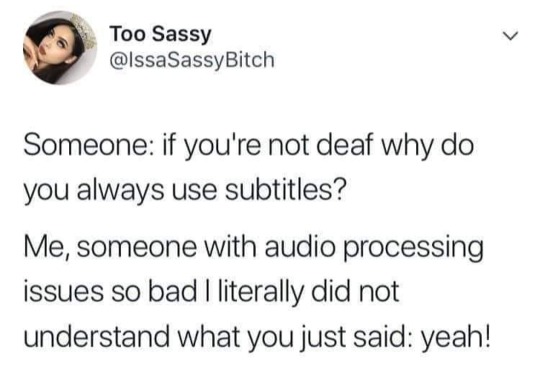
also, if you have any degree of sensory processing disorder, difficulty processing language, or hearing problems – which aren’t limited to just ‘volume too quiet’ but also include things like being unable to pick out speech from background noise, or distinguish phonemes when someone has an accent or talks too fast – then voice calls are legitimately REALLY DIFFICULT.
it’s like trying to read semaphore in a snowstorm while having an allergy attack.
yes, that is hard.
no, it’s not just you.
no, you’re not making it up for attention, being a baby, or lazy.
voice calls are simply not as good as text.
the fact that most businesses will not communicate via text is a combination of inertia and ableism, not a sign that everyone but you loves voice calls and you’re a weirdo. frankly most people kinda hate them unless it’s a loved one whose voice you want to hear.
Auditory processing is a major part of phone anxiety for me.
I’ve dealt with more calls than I’d like where, even after asking someone to repeat themselves, I just could not catch what they were saying. It got to be frustrating for both me and the other person as I kept asking for repetition and struggling to understand. And it’s totally luck of the draw if I’m calling anywhere new, or answering a call from an unknown number, so the anxiety skyrockets in both of those cases. (Will the pitch and timbre of their voice be something that I can hear clearly, or something that gets distorted by the phone line? What accent do they have? How fast will they talk?)
My auditory memory is not that great even when I can hear clearly, and it gets even worse when I’m using up mental processing cycles trying to decipher what I’m hearing, so any call that’s really information-heavy is probably going to result in some information getting lost in transmission. And it’s only worse if the information is numeric (like prices, product codes, times, or credit card numbers), because all the contextual cues that I typically use for disambiguating what I’m hearing are not really useful. (“Sorry, was that six fifty or six fifteen?”)
Another problem for me, though slightly less of one, is worrying about being misunderstood by the other person. This is especially true for any call where I would need to give my name and/or address, because it feels like every time I try to give this information over the phone, it gets misspelled or mistranscribed in new and interesting ways.
And then there are the times my brain just glitches out and I end up saying something completely different than what I meant to. This happens to me in person too (like the time I meant to order chocolate chip cheesecake ice cream and said “cookies and cream”), but it feels like I’m even more prone to this kind of mistake over the phone. (Probably because I’m using so much more in the way of mental resources to follow the conversation, I guess?)
if you have hearing loss & ask me to repeat something & I say ‘nevermind’ I promise it’s not cause I’m a jerk treating you like an inconvenience, it’s cause I realized what i said was fucking stupid
Okay but like, please repeat it anyway, and then add that you realize it’s stupid? Or at least say “I’ve realized it was stupid, so I’d like not to repeat it”. Please don’t just say “nevermind”.
Yes PLEASE do this. I’m hard of hearing and when someone says “nevermind” it always feels like they’re actually saying “ugh your hearing loss is such a pain in the ass, it’s not worth the damn effort” even if that isnt the truth. I don’t care how dumb it is, the clarification makes me feel so much better.
this is really important feedback, thank you! From now on I will make certain to either repeat myself or explain respectfully why I prefer not. You deserve to feel comfortable and respected in all conversations. My insecurities and self-consciousness is a issue, but it’s my issue to deal with.
Tip when talking to people who are deaf or hard of hearing.
When they ask you to say something again. Stop getting annoyed. The worst is when you say never mind and drop the conversation.
Just repeat what you said instead of making that person feel bad for not hearing you mumble.
Not deaf or hard of hearing myself but people who are have told me that repeating using different words and facing the person to facilitate lip reading can be helpful.
Facing the person and making sure your mouth is clearly visible can definitely help.
I’m HOH, with a side order of auditory processing problems. Repeating with different phrasing isn’t necessarily going to be helpful in that case, if the person is still trying to process and mentally fill in the blanks in what was said the first time. It can really scramble my brain sometimes, when I know people are trying to make things easier.
That’s probably more likely to help people who aren’t dealing with significant auditory processing weirdness too. If you’re not sure, it may be better to ask what would help most?



 Urocyon's Jaunts 2.0
You must be logged in to post a comment.