argumate:

The story of William Barak and the Wurundjeri people in Victoria is instructive. Adopting British language, customs, religion, and becoming successful farmers got them precisely nothing: the Victorian state punished them for their success by withholding the fruits of their labour, giving their farmland to white farmers and forcibly relocating them to poor land much further away from Melbourne.

killerbeeswithattitude:

thedurvin:

gelana78:

eruditionanimaladoration:

itwashotwestayedinthewater:

littledeludeddupes:

those snakes are not fighting they are fucking. im very sorry

while two snakes FUCK to the death

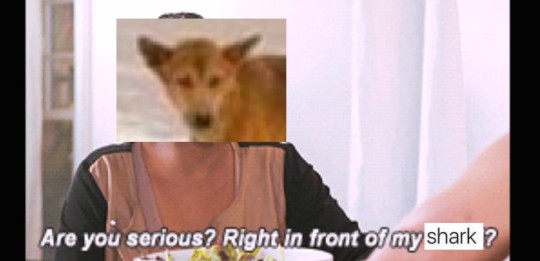
That dog looking at the snakes like why you gotta do that while I’m eating

Metal as snakes fucking.

Sadly that picture is photoshopped, the snakes are not in fact fucking in front of the dingo and its lunch. They are fucking on the side of an unrelated road.

However, the dingo is in fact eating a shark. Because Australia.

scribblings-of-a-madcap:

thefuzzhead:

aspacelobster:

goddammitstacey:

I’ll be the first to admit I thoroughly enjoy all the “holy shit, Australia” posts that circulate around here but I feel like there’s a very important caveat when it comes to the discussion of swooping season that no one seems to mention.

For those not aware, swooping season is when the magpies start to nest and turn into mini dive-bombers comprised of talons, feathers and spite. It’s not fun. I bled heavily after a particularly vicious swoop when I was a kid, and I’m definitely not the only one.

But here’s the thing: swooping is not an innate behaviour. It’s a learned one. I realised this the moment I moved out of home and began my decade long (entirely unintentional) habit of moving to a different suburb every two years. 

I’ve met a lot of wildlife, walking everywhere as I do. And I’ve met a lot of magpies – hella intelligent creatures that are probably thinking “what the fuck is this chick doing” every time I say hi to them as I walk past.

When I first moved out of home, I automatically started taking notes on areas I saw magpies in preparation for swooping season. It was just the done thing. It wasn’t until September came and went and the magpies in my area continued their quizzical but otherwise completely non-aggressive behaviour that it started to twig with me.

The next few years of moving around solidified my suspicions.

Anytime I lived close to a school or in an area with a high concentration of families with young kids, the magpies would swoop. Any suburb (usually inner city) with a high concentration of childless households and/or share-houses: no swooping to be seen.

And it’s any goddamn wonder.

I’ve lost count of the number of times I’ve yelled at kids for messing with wildlife. I grew up in the outer suburbs, so there was no shortage of mini-assholes with an empathy shortage. Australian kids will poke anything they can reach with a stick, and throw rocks at everything else. Including birds nests.

Magpies are intelligent as hell, and they remember shit for GENERATIONS. Some human-shaped fucker throwing rocks at them and their nests? That’s something that’d stick.

So anytime you read one of those “lol the birds try to kill us here” posts, remember: it’s not the birds that started that shit – it was the asshole humans.

country magpies don’t swoop

@enthusispastic

Adding on to the fact that magpies are super intelligent:

In primary school there were these really huge gum trees in which a family of magpies took up residence one year. 

(an important thing to note is that I grew up in the country with A LOT of magpies -that were basically like relatives for the amount of time they spent on the veranda- and never encountered any swooping)

So one morning walking in to school I noticed that all the kids ahead of me were giving the really huge gum trees a wide berth, with other kids shouting warnings from the buildings. Being an airy-headed little kid, I wasn’t really paying attention to what they were actually saying, so I just kept walking straight under the trees.

Nothing happened.

I got to the buildings and asked why everyone was making a big fuss about the trees, and one of my friends just pointed back the way I came and said “the birds!”

And sure enough, any of the other kids that tried to walk under the trees got immediately swooped and chased to what the magpies thought was a good distance from their nests.

Magpies not only remember humans that are mean to them, but they recognise humans that have been given the seal of approval by other magpies.

sleepsykid:

pseudo-euphoria:

Sorry for the ugly post (I’m on mobile) but Behrouz Boochani is a refugee being held in an internment camp by the Australian govt in a country that’s treated as a de facto colony and there’s now a penalty of up to 25 years prison for any reporter who covers the internment of refugees so this is a hugely important book. Manus is basically a black zone

Link to the article

https://www.theguardian.com/commentisfree/2018/jul/31/writing-from-manus-prison-a-scathing-critique-of-domination-and-oppression?CMP=soc_567

Boochani had to dictate a lot of this book over the phone and phone access is incredibly difficult. There’s a group that collects donations to buy credit for refugees on Manus and Nauru and I can personally vouch for them. You can donate here

https://giftsformanusandnauru.org.au

you can buy it from here https://www.panmacmillan.com.au/9781760555382/

Uproar in court as coroner delays David Dungay inquest for almost a year

class-struggle-anarchism:

This is utterly shameful and emblematic of the total lack of regard for indigenous Australians ingrained into the racist “justice” system of this shit country

Dungay died at the Long Bay jail mental health ward during a cell transfer after he refused to stop eating a packet of biscuits. Five immediate action team officers physically restrained him in the prone (face down) position and he was injected with a sedative by a Justice Health nurse.

In footage shown to the court and partly released to the public, Dungay said 12 times that he couldn’t breathe. An expert medical witness testified on Tuesday there were a number of points during the restraint when a medical professional could have recognised the warning signs of asphyxia and stopped the onset of what he believed was a fatal cardiac arrest.

Uproar in court as coroner delays David Dungay inquest for almost a year

Cockatoo discovery reveals flourishing medieval trade routes around Australia’s north

archaeologicalnews:

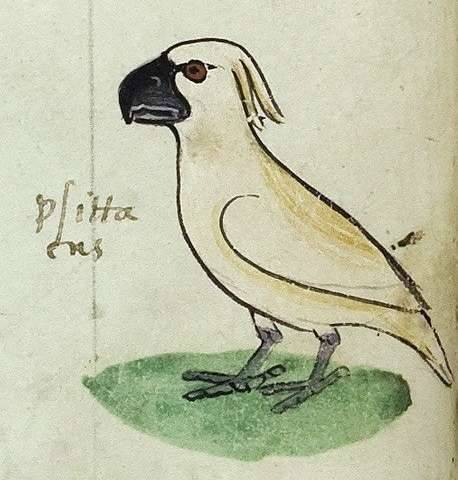
Images of an Australasian cockatoo have been discovered in a manuscript dating from 13th century Sicily, now held in the Vatican library.

This finding reveals that trade in the waters in and around Australia’s north was flourishing as far back as medieval times, linked into sea and overland routes to Indonesia, China, Egypt and beyond into Europe.

The four images of the white cockatoo feature in the Holy Roman Emperor, Frederick II of Sicily’s De Arte Venandi cum Avibus (The Art of Hunting with Birds), which dates from between 1241 and 1248.

These coloured drawings pre-date by 250 years what was previously believed to be the oldest European depiction of a cockatoo, in Andrea Mantegna’s 1496 altarpiece Madonna della Vittoria.

Faculty of Arts School of Historical and Philosophical Studies Honorary Research Fellow Heather Dalton in 2014 published an article about the cockatoo in Mantegna’s 15th century painting.

This article captured the attention of three Finnish scholars at the Finnish Institute in Rome, who were working on De Arte Venandi cum Avibus and who realised they had found much older depictions. Read more.

Ecosystems across Australia are collapsing under climate change

rjzimmerman:

Ominous……

Excerpt:

Our research, recently published in Nature Climate Change, describes a series of sudden and catastrophic ecosystem shifts that have occurred recently across Australia.

These changes, caused by the combined stress of gradual climate change and extreme weather events, are overwhelming ecosystems’ natural resilience.

Despite land clearing, mining and other activities that transform the natural landscape, Australia retains large tracts of near-pristine natural systems.

Many of these regions are iconic, sustaining tourism and outdoor activities and providing valuable ecological services – particularly fisheries and water resources. Yet even here, the combined stress of gradual climate change and extreme weather events is causing environmental changes. These changes are often abrupt and potentially irreversible.

They include wildlife and plant population collapses, the local extinction of native species, the loss of ancient, highly diverse ecosystems and the creation of previously unseen ecological communities invaded by new plants and animals.

Australia’s average temperature (both air and sea) has increased by about 1°C since the start of the 19th century. We are now experiencing longer, more frequent and more intense heatwaves, more extreme fire weather and longer fire seasons, changes to rainfall seasonality, and droughts that may be historically unusual.

We identified ecosystems across Australia that have recently experienced catastrophic changes, including:

    • kelp forests shifting to seaweed turfs following a single marine heatwave in 2011;
    • the destruction of Gondwanan refugia by wildfire ignited by lightning storms in 2016;
    • dieback of floodplain forests along the Murray River following the millennial drought in 2001–2009;
    • large-scale conversion of alpine forest to shrubland due to repeated fires from 2003–2014;
    • community-level boom and bust in the arid zone following extreme rainfall in 2011–2012, and mangrove dieback across a 1,000km stretch of the Gulf of Carpentaria after a weak monsoon in 2015-2016.

    Of these six case studies, only the Murray River forest had previously experienced substantial human disturbance. The others have had negligible exposure to stressors, highlighting that undisturbed systems are not necessarily more resilient to climate change.

  • Ecosystems across Australia are collapsing under climate change