“They break into our country, steal resources, then do shit like this” continues to be the best accidental description of Mount Rushmore I’ve ever read
Some people act like european colonialism all ended over a century ago. Like … just read the Wikipedia article at that point.
“Just before France conceded to African demands for independence in the 1960s, it carefully organised its former colonies (CFA countries) in a system of “compulsory solidarity” which consisted of obliging the 14 African states to put 65% of their foreign currency reserves into the French Treasury, plus another 20% for financial liabilities. This means these 14 African countries only ever have access to 15% of their own money! If they need more they have to borrow their own money from the French at commercial rates! And this has been the case since the 1960s.”
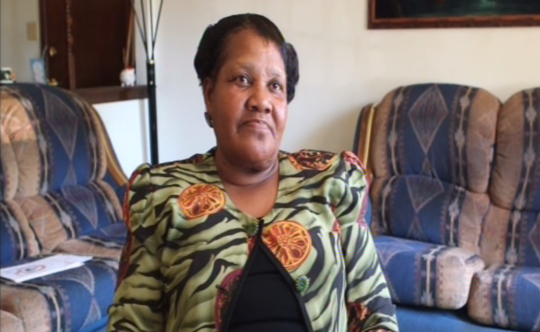
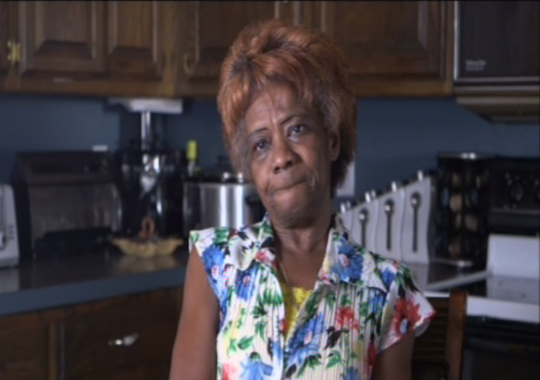
“It’s about color, and when it comes down to it, they don’t want the black people to have anything” – Opal Jackson, Freedmen descendant
A little discussed past
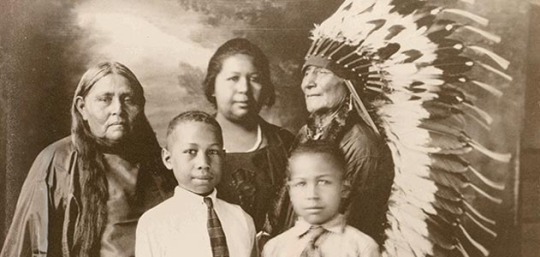
Every summer at Tahlequah, Oklahoma, the Cherokee Indians sponsor their Trail of Tears pageant. The story of how the US government robbed the five tribes of their homelands in the south and moved them by force to Oklaholma. They don’t tell of the thousands of black slaves the tribes brought with them.
A history of slave ownership and African-Natives
Most of the ‘Five Civilized Tribes’ were slave holding nations.
Slavery was introduced by white slave owners into the upper echelons of Native nations. Most full-blooded Natives weren’t slave owners, rather the ‘mixed-bloods’, the people who lived like white planters, were. Masters frequently raped their female slaves. Those slaves had children who would go on to be known as the Freedmen.
After the Civil War and the abolition of slavery, a treaty was signed with the federal government in 1866. In this agreement, four of five tribes guaranteed full tribal citizenship for former slaves.
The treaty clearly says that former slaves ‘shall have all the rights of Natives’.
Despite this, the Freedmen are still fighting for their rights to this day.
Current struggles of the Freedmen
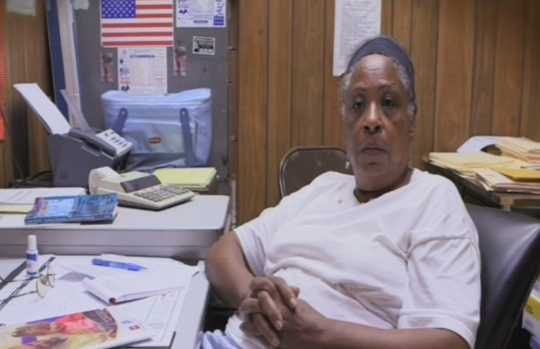
“We are still being treated the way that they was treating us back then. This is something that needs to come to an end” – Sylvia Davis, Seminole Freedmen.
Sylvia is proud of her Native heritage and sits on the Seminole tribal council. Despite this, she has encountered constant racism and hostility.
In tribal meeting, Sylvia says “I had a tribal member sit across from me using the word ‘nigger’ and then the Chief of the Seminole Nation, standing at the podium, with a smile on his face. I do have a name. My momma didn’t name me no ‘nigger’. My name is Sylvia and you can address me by that name”.
Theola Jones is a “proud member of the Seminole Nation”. Her two sons were recruited and accepted by the Haskell Indian Nations University because of their talents in football and basketball and their Seminole heritage but were denied access to the library and infirmary because they have black ancestry.
Despite being awarded “all the rights of Natives” in 1866, Freedmen continue to struggle for their rights and recognition.
Many are now being denied tribal citizenship, especially by the Cherokee Nation, and are purposefully excluded from any of the benefits, opportunities and revenue that are extended to all other recognised tribal citizens.
There are roughly 30,000 Cherokee Freedmen descendants today.
“When you know what you really are and you haven’t been embraced or acknowledged, it’s horrible’ – Kenneth Payton, Freedmen descendent
The removal of rights after 117 years of citizenship
From 1866 Freedmen were generally considered to be full tribal citizens. In the late 1970s federal services and benefits such as free health care were awarded to federally recognized tribes.
As members of the Cherokee Nation, federal benefits and services were also provided to the Cherokee Freedmen.
Efforts to block the Freedmen descendants from the tribe began in 1983, after over a century of recognition. The Principal Chief of the Cherokee Nation issued an executive order stating that all Cherokee Nation citizens must have a “Certificate of Degree of Indian Blood” card in order to vote and be recognised.
The One-Drop Rule
The CDIB cards were made to be based on a specific federal census taken between 1902 and 1906. The problem is, this census was conducted under the ‘one drop’ rule.
They would simply look at the people being registered, and if they seemed like they had any black blood whatsoever they were classified as being strictly of African descent, even though they were socially, culturally and genetically Native.
Everyone else was put on a ‘blood roll’ where their quantum, or amount of native blood compared to white blood, was recorded.
It should be noted that like many people, the Cherokee Chief at the time was one-eight native and seven-eights white, yet on this treaty he would be regarded as a full Native with all the rights that the status brings with it.
This meant that no Freedman could possibly be allowed citizenship, even if they could document their heritage, and led to the completed the disfranchisement of the Cherokee Freedmen descendants, which was the intention.
This is all lies. Native americans saved the black slaves, especially the Seminole tribe. Afterwards they helped fight against europeans.
It’s not lies. Please watch this documentary when it comes around. It’s one of the few on this little discussed topic. All of the interviews and quotes are from there. Yes the Seminole tribe absorbed escaped slaves. But all of the other tribes held slaves.
anti-blackness is something we as a people need to stop in our native communities and I know we can do better. to acknowledge the truth of slavery in the tribes that had it (mine included) is the first step, so please fellow ndns, do not lie just to make yourself feel better.
I’ve known this for the longest, since I’ve been told theres blood on both sides but I haven’t really investigated it because…well thats because lol. The Five Civilized Tribes:
Cherokee, Chickasaw, Choctaw, Creek and Seminole . There’s also a whole ass documentary on this from 1990 called Black Slaves, Red Masters
*looks at my Blackfoot native ancestry sideways*
So everyone was with the shits hmm. Disgusting.
Knew this but reblogging for those who dont know
One book I would recommend: Claudio Saunt’s Black, White, and Indian: Race and the Unmaking of an American Family. That looks specifically at how some of this stuff played out in the Creek Nation, but a lot of it applies too well elsewhere under the divide-and-conquer “Civilizing” policies.
Plenty of ugly history there, and it makes me mad to see it continuing to hurt people after all this time.
“Colonialism tried to control the memory of the colonized; or, rather, in the words of Caribbean thinker Sylvia Wynter, it tried to subject the colonized to its memory, to make the colonized see themselves through the hegemonic memory of the colonizing center. Put another way, the colonizing presence sought to induce a historical amnesia on the colonized by mutilating the memory of the colonized; and where that failed, it dismembered it, and then tried to re-member it to the colonizer’s memory—to his way of defining the world, including his take on the nature of the relations between colonizer and colonized.”
— NGŨGĨ WA THIONG’O – SOMETHING TORN AND NEW (via mehreenkasana)
“Colonialism tried to control the memory of the colonized; or, rather, in the words of Caribbean thinker Sylvia Wynter, it tried to subject the colonized to its memory, to make the colonized see themselves through the hegemonic memory of the colonizing center. Put another way, the colonizing presence sought to induce a historical amnesia on the colonized by mutilating the memory of the colonized; and where that failed, it dismembered it, and then tried to re-member it to the colonizer’s memory—to his way of defining the world, including his take on the nature of the relations between colonizer and colonized.”
— NGŨGĨ WA THIONG’O – SOMETHING TORN AND NEW (via mehreenkasana)
Reminder that our people never had a bias against two spirit or wiŋkte (trans) people, and that most tribes thought wiŋktes were sacred!
Keep calling your relatives out on their colonized homophobia.
In my tribe people who are gay and ppl who are somewhere that’s unconventional on the gender spectrum are considered to be more spiritual and it’s like not a bad thing
The effect of the colonial administration was reinforced by the missionaries and
mission schools. Christian missions were established in Igboland in the late 19th
century. They had few converts at first, but their influence by the 1930’s was
considered significant, generally among the young. A majority of Igbo eventually
“became Christians” – they had to profess Christianity in order to attend mission
schools, and education was highly valued. But regardless of how nominal their
membership was, they had to obey the rules to remain in good standing, and
one rule was to avoid “pagan” rituals. Women were discouraged from attending
mikiri [meetings] where traditional rituals were performed or money collected for the rituals,
which in effect meant all mikiri.
Probably more significant, since mikiri were in the process of losing some
of their political functions anyway, was mission education. English and Western
education came to be seen as increasingly necessary for political leadership –
needed to deal with the British and their law – and women had less access to
this new knowledge than men. Boys were more often sent to school, for a variety
of reasons generally related to their favored position in the patrilineage. But
even when girls did go, they tended not to receive the same type of education.
In mission schools, and increasingly in special “training homes” which dispensed
with most academic courses, the girls were taught European domestic skills and
the Bible, often in the vernacular. The missionaries’ avowed purpose in educating
girls was to train them to be Christian wives and mothers, not for jobs or
for citizenship.62 Missionaries were not necessarily against women’s participation
in politics – clergy in England, as in America, could be found supporting
women’s suffrage. But in Africa their concern was the church, and for the church they needed Christian families. Therefore, Christian wives and mothers, not female
political leaders, was the missions’ aim. As Mary Slessor, the influential Calabar
missionary, said : “God-like motherhood is the finest sphere for women, and the
way to the redemption of the world.”
Though, reminded again with that last link on the (rather recent) history of US immigration law? I do get tired of the idea that colonialism suddenly ended in what’s now the US, in 1776/1783/whatever.
It’s very convenient. And requires an amazing amount of cognitive dissonance.




 Urocyon's Jaunts 2.0
You must be logged in to post a comment.