Help me save this wilderness! Learn more about this forest, and my mission to create a nature preserve here ! Donate through paypal: ccnaturepreserve@gmail.com
or Ko-Fi: ko-fi.com/ccnaturepreserve
Help me save this wilderness! Learn more about this forest, and my mission here ! Donate through paypal: ccnaturepreserve@gmail.com
or Ko-Fi: ko-fi.com/ccnaturepreserve
Help me save this wilderness! Learn more about this forest, and my mission here ! Donate through paypal: ccnaturepreserve@gmail.com
or Ko-Fi: ko-fi.com/ccnaturepreserve
Help me save this wilderness! Learn more about this forest, and my mission here ! Donate through paypal: ccnaturepreserve@gmail.com
or Ko-Fi: ko-fi.com/ccnaturepreserve
Help me save this wilderness! Learn more about this forest, and my mission here ! Donate through paypal: ccnaturepreserve@gmail.com
or Ko-Fi: ko-fi.com/ccnaturepreserve
The I’iwi was once one of the most common forest birds in the Hawaiian Islands.
Today, the ‘i’iwi — also known as the scarlet honeycreeper — is
protected as a threatened species. Ninety percent of the ‘i’iwi
population is now limited to a narrow band of forest on East Maui and
the windward slopes of the Island of Hawaii.
In an “extremely rare” discovery, scientists have found three previously unknown species of toads living in the Great Basin of Nevada. It’s rare enough to find new amphibians native to the U.S. — where only three frog species have been discovered since 1985 — but new U.S. toads are especially unusual. The last one was the Wyoming toad, which was found in 1968 and is now extinct.
Unfortunately, the scientists who discovered these toads are worried a similar fate may await one of their newfound trio.
The three species were found by biologists from the University of Nevada, Reno (UNR), who named them the Dixie Valley toad (pictured above), the Railroad Valley toad and the Hot Creek toad. Their habitats don’t overlap, and they’ve been isolated from other toad populations for more than half a million years, according to UNR biology professor and project leader Dick Tracy.
“We’ve found the toads in small, wet habitats surrounded by high desert completely cut off from other populations,” Tracy says in a statement. “These are absolutely new, true species that have been separated from other populations for 650,000 years.”
The [Center for Biological Diversity] will submit a petition asking the U.S. Fish and Wildlife Service to protect Dixie Valley toads — and thus their habitat — under the Endangered Species Act. “If this power plant goes in and the habitat is dried up, this recently discovered species could go extinct,” he says. “It’s a good candidate for an Endangered Species Act listing.”
As for the other new species, the Railroad Valley toad inhabits Tonopah Basin in the central Nevada desert, while the Hot Creek Toad lives about 35 miles away in Hot Creek Mountain Range. All three are endemic to the Great Basin, a watery wonderland during the Pleistocene Epoch that’s now one of the most arid regions in the country. And since these toads managed to stay hidden until now, their discovery suggests we still have a lot to learn about this ancient American landscape.
“Our goal has been to understand the relationships among toad populations in the Great Basin,” Tracy says. “We’ve found that our knowledge of amphibian diversity in the western United States remains incomplete and that novel discoveries continue to occur, even in unlikely settings. This is really, really neat; an exciting thing, to find something not known to exist before.”
SOMEONE INFORM ME EXACTLY HOW I MISSED THAT THE BADASS KEW PLANT GOD PUBLISHED A BOOK ABOUT HIS BADASS PLANT ADVENTURES???????????????????????????????????????????????????????????????????????????????????????????????????????????????????
i ordered it bc i have no self control
update: this shipped out today but it’ll take 8-12 days to get here and im dying. carlos magdalena why must u do this to me
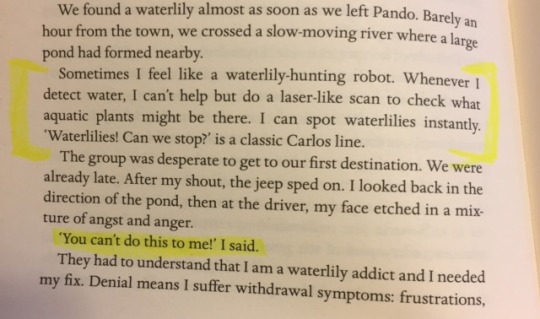
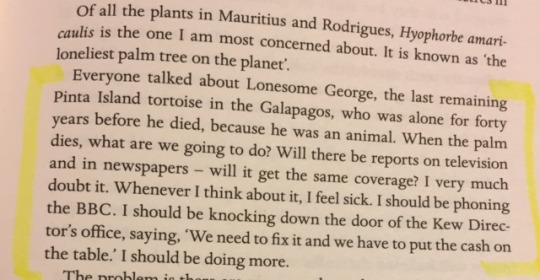
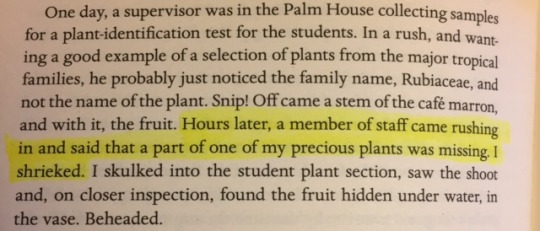
okay so i got this book today and spent like 6 hours reading it and im almost done but i really wanna talk about this plant nerd and his many endangered plonts that he loves and protects with all his heart and soul
carlos magdalena, kew botanical horticulturalist, is honestly an unproblematic fave
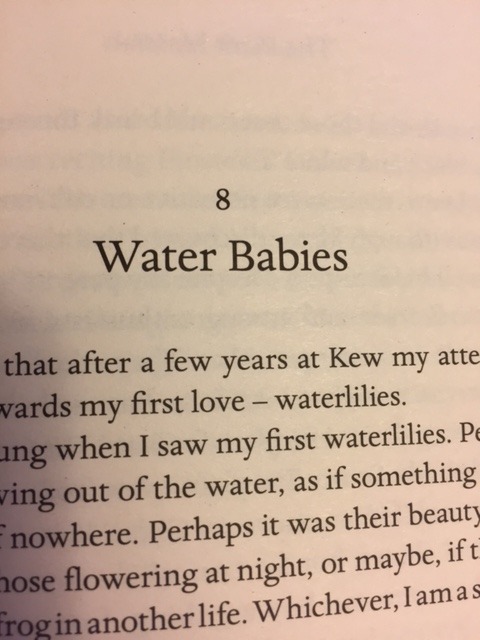
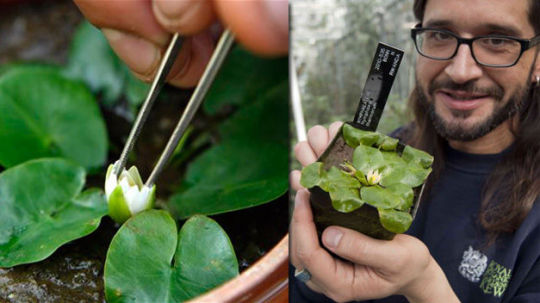
also btw heres some pics of carlos with the smallest water lily in the world, which he saved from extinction. he talks in the book about how he learned later on that at the time he finally figured out how to propagate this species in cultivation, rats had broken in and killed the only other specimens in the world at the german conservatory they were being kept at, and the habitat where the 1 or 2 wild plants had been living had been destroyed for a concrete company. he had been working with the last seeds in literal existence without knowing it (he had assumed they were still alive) and the other scientists and botanical horticulturalists in germany had been living in grief over having lost this plant to apparent extinction. he originally had 200 seeds recruited for trying to cultivate the species, and by the time he realized how to do cultivate it, he had been working with the last 5 seeds in the world. he didn’t know at the time. (x)
holy hell.
he definitely deserves the nickname plant messiah for that.
In addition to the destruction of a national refuge, the construction of the wall through the refuge will be destroying the habitat for the endangered ocelot, 400 species of birds, 450 types of plants, and half of the butterfly species found in North America. According to Think Progress, “A U.S. Fish and Wildlife report from 2016 found that more than 100 animals that are listed as endangered, threatened, or candidates for protection under the Endangered Species Act could be affected by the border wall.”
The planning and preparation for the construction has been done in secret by the U.S. Customs and Border Protection Service and its private contractors.
I am not saying the following…..I have no control over my fingers as they float across my keyboard……..doing this is fucked up, doing it in secret is triple fucked up, trump’s minions doing this is beyond fucked up.
Excerpt:
For at least six months, private contractors and U.S. Customs and Border Protection (CBP) officials have been quietly preparing to build the first piece of President Trump’s border wall through the Santa Ana Wildlife Refuge in South Texas. The federally owned 2,088-acre refuge, often called the “crown jewel of the national wildlife refuge system,” could see construction begin as early as January 2018, according to a federal official who has been involved in the planning but asked to remain anonymous.
“This should be public information,” the official told the Observer. “There shouldn’t be government officials meeting in secret just so they don’t have to deal with the backlash. The public has the right to know about these plans.”
On Friday afternoon, several workers were drilling into the existing earthen levee on the wildlife refuge and extracting soil samples to prepare for the construction. A security guard watching over the site asked me to leave when I started asking questions.
Established in 1943, the Santa Ana Wildlife Refuge is one of the top birding destinations in North America. Home to at least 400 bird species and 450 species of plants, it also hosts both the rare Sabal palm and the endangered ocelot. The refuge is located on the Texas-Mexico border about 10 miles southeast of McAllen in the Rio Grande Valley.If the levee wall is constructed, it will essentially destroy the refuge, the official said. The proposed plans call for building a road south of the wall and clearing refuge land on either side of the wall for surveillance, cameras and light towers.
Some of the species who will be adversely affected by this:
Conservationists say the case involving 70 spotted turtles and 100
eastern box turtles confiscated on May 9 is a troubling example of how
China’s appetite for turtles has grown to include relatively common
native species in the United States.
“This case signals a new and
distressing trend: poachers in the U.S. willing to swap our own wildlife
for a few dollars from Chinese collectors,” Paul Gibbons, chief
operating officer of the nonprofit Turtle Conservancy’s Behler Chelonian
Center in Ventura County, said…




 Urocyon's Jaunts 2.0
You must be logged in to post a comment.