I WOULD PAY TEN TIMES AS MUCH FOR CHOCOLATE IF IT MEANT REDUCING THE AMOUNT OF SLAVES IN THE WORLD? HOW IS THIS ANY KIND OF PROBLEM.
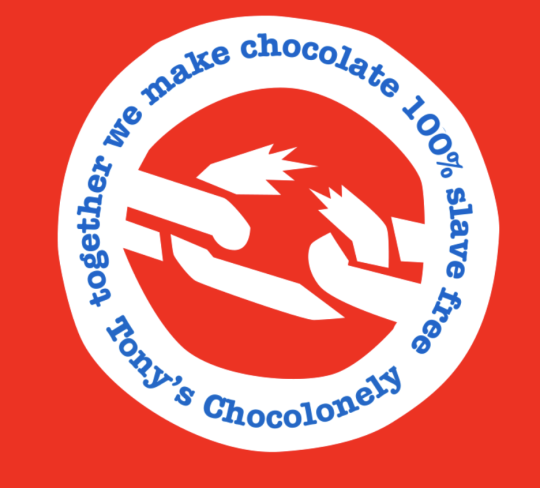
good news, you can! the company’s called Tony’s Chocolonely and their entire purpose is to make slave-free chocolate and reform the chocolate industry.
Whole Foods carries it. If you don’t want to support an Amazon-owned company, World Market carries it. You can also buy it directly from the company.
It’s the best chocolate I’ve ever had and it’s 100% slave free. Tony’s Chocolonely works really hard to push for transparency within the chocolate industry and actually has and is following an action plan to eliminate slavery within cocoa production. They’re good people who make good chocolate.
Couney never charged parents for the care he provided, which also included rotating shifts of doctors and nurses looking after the babies. According to historian Jeffrey Baker, Couney’s exhibits “offered a standard of technological care not matched in any hospital of the time.”
I mean
Horn’s father, who had seen one of Couney’s exhibits on his honeymoon, bundled tiny Lucille up and took her out of the hospital. “I’m taking her to the incubator in Coney Island. The doctor said there’s not a chance in hell that she’ll live, but he said, ‘But she’s alive now,’ and he hailed a cab and took me to Dr. Couney’s exhibit, and that’s where I stayed for about six months.”
This is really incredible.
well holy shit, carnies savin’ lives and shit too
[Image description: a text post from Ultrafacts.tumblr.com (Quote): “Martin Couney, an owner of a freak show in the early 1900’s invented an incubator to exhibit premature babies, in doing so he saved thousands of lives and marked the start of advanced prenatal care for preemies.” (end quote) below this is a black and white photo of a woman looking at an exhibit of three tiny babies sharing a single incubator in Couney’s exhibit. End description.]
As someone who was born as a tiny preemie in 1964,* who spent her first five weeks of life in an incubator, I have mixed feelings about this. On the one hand, yes: I’m grateful this technology was invented to save my life, and all the lives before me, and all the lives that came after.
On the other hand, it makes me feel kind of icky that these advancements came at the (moral) price of turning real live babies into freak show exhibits for the amusement of the Normies. And as part of a for-profit endeavor, too.
*(born 9 weeks early, and at 3 lbs 14 oz [1.76 kg], a full pound underweight for my gestational age)
This article starts with the rather arresting sentence, “Most people see about 4–5 lions each day — as toys, on television, in logos.” It goes on to discuss that this overrepresentation has caused people to think that there are generally a lot of lions in the world, with repercussions for conservation.
I’ve seen 2 lions already today – a toy that Glassbab had this morning, and the one in the article. Today, I am going to keep track of how many lions I see.
no, but really: flytraps use up a LOT of energy closing their traps. You know a lot of other plants that move that much? Tricking them into closing when there isn’t food there is indeed mean.
B-but… they’re plants… they’re devoid of sentience, right? They don’t “feel,” they’re more like little wind-up machines. Right? They don’t act on instinct, they’re… well… traps. You can’t actually be mean to a plant. Right??
I’m of the opinion that meanness is about the nature of the action, not awareness on the part of the target of the action.
Tricking them into closing their traps is actually harmful to them, since the energy expended in closing and then re-opening the trap isn’t replenished by having a tasty insect to digest.
I’m of the opinion that meanness is about the nature of the action, not awareness on the part of the target of the action.
A little more context (and expansion) for that Barbara Mann quote I posted earlier. Also the other quote from that talk which came up earlier and prompted me to look at the transcript again.
(Source through those links. There’s more of interest in that talk.)
I don’t have a lot of spoons to comment right now. But, what she’s talking about here is relevant to way too much.
Including some of my frustrations dealing with some people who are coming at things from some very different base assumptions, in a variety of contexts.
Also had to think about that rather disturbing bizarro assertion from a while back that “inclusionist ideas are much more abstract and harder to understand” 🤔
Anyway, long quote time:
And one of the things that tells us is that the One Good Mind of consensus actually requires the active participation of everybody in the community, that it can’t be done without active participation by all. So, everybody matters, everybody counts. And I remember my mother specifically saying, “Don’t leave anyone out, don’t leave anyone out”. And if anything was ever counted up and somebody was left out, you started counting again, from the very beginning. Why? Because somebody was left out. And that’s not acceptable, because exclusivism destroys community. It’s the first and best way to destroy community. Inclusivism, on the other hand, is very important to creating community; it hears absolutely every comment, it hears everything that’s going on, and it hears it in the voices that raised the issue. That’s pretty important.
I think one of the most damaging misunderstanding of Good Mindedness is something that, something that Heidi was just talking about, is the assumption that because everyone is equal, everyone possesses equal amounts of wisdom and talent–and, therefore, everyone should share equal amounts of power. OK, well this is a prescription for disaster if I ever heard one. [laughs] Because people simply do not have the same type or amount of talent or wisdom; everybody has a different thing. That’s why, in the words before all else, we acknowledge the special things that each one is bringing. If everybody was bringing the same thing, there’d be no need for those words. It’s basically patriarchal monotheism that thinks that everybody looks alike. You know, seen one seen ‘em all. That’s a patriarchal idea.
Instead, everyone has a limited amount of wisdom, and a limited amount of talent, and the idea is to make it all work together for the good of everybody. No one person is going to be able to do this alone. And each spirit has a limited amount of knowledge; that goes for human beings, that goes for any of these spirits. For example, if you want to know about corn, what do you do? Well, you go ask Sister Corn, that’s what you do. She sure knows a lot about being corn, she knows more than you and I do. She knows more about being corn than Sister Squash does. But, guess what: if you ask her about Brother Tobacco, she might know a little bit about him, but she doesn’t really know about Brother Tobacco. If you want to know about him, you’d better go and ask him.
And one of the important points spiritually about this is that there’s nothing that’s all-knowing. There’s no all-knowing spirit anywhere. Everything is a collective attempt, we all dump it into the center and see what we’ve got when we’re done collecting up all of what we have…
So, there’s no omniscience… [P]eople have frailties, they have failings, and that’s understood and recognized without any prejudice. It’s just something you’re going to work around. So, no one council arrogates the right to dictate to anybody else, it just is not going to happen, it better not happen… [B]asically claiming more wisdom than you have is actually a crime. It’s actually a crime against the people. And all that’s going to happen is that it’s going to create havoc in its wake.
The fact that this isn’t more well-known is astounding when you consider that Bayer introduced HIV into countries that previously had no recorded HIV cases at all like Japan and Iraq.
At the same time when the US media was spreading the homophobic myth that ‘gay flight attendants’ were taking the epidemic across the world, US corperations were actually spreading HIV contaminated medication with FDA approval.
OK but I need to correct some misinformation on this post: Bayer is a German corporation, not American.
White supremacy and capitalism are not specific to the US. For purposes of decolonisation worldwide, it’s important to keep this fact in mind. X
ETA: Bayer was the major player in the IG (Interessengemeinschaft) Farben cartel, which was responsible for much of the human experimental atrocities
committed in Nazi concentration camps.
During Bayer also directly bought 150 women Auschwitz prisoners:
Bayer also chose Fritz der Meer — the convicted Nazi war criminal who oversaw cartel operations at Auschwitz and developed the Zyklon B gas that killed millions of Jewish, Romani, and gay people — to serve as its Chairman AFTER the Holocaust.
Re-watching Tucker and Dale vs. Evil (the parody movie where the rednecks in the woods are the hapless protagonists and its the bunch of paranoid college kids causing all the problems.)
I’d forgotten how much the situation was escalated by the one teenager who was clearly looking for an excuse to hurt people. The college kid that, at the beginning of the movie, explicitly declares himself a better person than those around him.
Chad.
He’s the one who tells his friends “what’s really going on here is worse than you think.” He’s the one who insists they handle it themselves and not through official channels. He’s the one who casts his opponents as “pure evil” and says “we finally have a chance to fight back without rules.” When some of the other teenagers express uncertainty he’s the one that says if they can’t handle what needs to be done, maybe they deserve to die, too.
“We have to burn this place to the ground. Destroy it completely. You have no IDEA what this is all about, do you Allison? These freaks are evil. And they deserve everything that’s coming to them.”
I’d never realized before how closely every single plot point in the movie mirrors the way mob culture instigators will rile up the masses under the guise of “social justice”:
You assume bad faith in your opponents.
You declare your opponents subhuman and acceptable to hurt by any means.
You discourage the use of peaceful or official methods to address the issue.
You keep your followers in line through fear of the “other” and threats of ousting them into that group if they become “contaminated.”
You revel in as much chaos and pain as you can inflict–
–after all, you’re the good guy.
If I’m stepping out of line, please let me know, and callout culture has definitely been super bad lately, but..
….this applies just as much to anti-social justice stuff, racism, oppression of all kinds, etc. It’s mob violence, period. I’m incredibly, incredibly uncomfortable with this being used explicitly as a “look at this people using social justice as a weapon” thing when the exact same tool is used in the protection of
family values
nationalism
against ‘war on Christianity’
masculinity
capitalism
…etc. It just seems in very bad faith in me to take a very common mob violence issue and make it all about those ‘pesky SJWs’. It doesn’t mean it’s not a problem. It just… puts a lot of the blame on the shoulders of people operating within a functionally flawed culture. Where do you think callout culture even came from? We live in a world that’s finally starting to come around to the concept that being gay shouldn’t be a death sentence for your life or career. It’s not like ‘SJWs’ exist in a vacuum.
I don’t think you’re out of line.
I 100% agree with you that this is a lens that affects all those issues. We like to frame ourselves as the good guys and we are very susceptible to issues being placed into the black and white of moral certainty. An article that has stuck with me hard through the years pointed out how people use their value structures to justify their actions–whether good or bad–rather than the other way around. (Hilariously, it was written by Orson Scott Card. I assume the irony was lost on him.)
I think you have misread my issue when you frame it as a complaint against “those pesky sjws.” I consider myself to be highly involved in social justice issues. I consider this to be a social justice issue. What I specifically wanted to point out was the instigators. The way in which abusers can use our blind spots to manipulate us and our movement. Cloaking oneself in the language of righteousness is a VERY common abuser tactic.
We need to learn to recognize warning signs of the people that want to herd us into being their weapons. We need to recognize the danger of ever applauding ‘this group is okay to enjoy hurting.’
The idea that we can be the heroes in the story where the other party are “pure evil” and “real monsters” and all the answers are really simple and easy is a very, very appealing narrative. And one that shelters and feeds abusers.
I guarantee you there are plenty of young people on tumblr doing their very best to Be A Good Person and make change for the better, and they are learning what is a healthy, safe, constructive method for going about this by watching the rest of us. We NEED to make sure they are hearing voices that point out “anon hate campaigns are harmful.” “Here are some warning flags.” “People that show up in your inbox and tell you to shun someone or you’ll be contaminated and shunned too are NOT THE GOOD GUYS.”
It just seems in very bad faith in me to take a very common mob violence issue and make it all about those ‘pesky SJWs’.
If I frame a broader issue around a specific way it COMMONLY and DIRECTLY affects me and people I care about, I promise you it is neither out of bad faith, nor out of any desire to minimize the importance of other ways in which this issue manifests. (Some of which also affect me. Some of which I have argued against on other platforms.) ((This, by the way, is the only portion of your post I take issue with. I’m totally cool if anyone wants to springboard off this to apply it to other issues or contexts. It’s a neat topic.))
And, since you asked, and I think it’s a pretty interesting and valuable question–personally, I think call out culture came from a very reasonable push to encourage people with more privilege in a situation to not remain silent and to speak up in situations where people are being harmful. It just, like many useful principles, goes awry when stripped of nuance and dogmatized into a black & white cure-all for humanity.
There’s also some really interesting ways call out culture (and more extreme SJ culture in general) parallels the way a lot of us were taught to approach moral issues in conservative evangelical Christianity. (Namely: you assume personal moral culpability for other people’s behavior if you don’t proselytize or chasten them constantly; all people are sinners/prejudiced; all sins are equal; and any sin can lead to hell/ small wrongs contribute directly to a culture which leads to deaths of innocents so all issues are ultra high stakes where anything could be fair game.). I reallllly want to write a post about that some day when I can get my thoughts straight.
Thank you for such an eloquent response! I think that part of my post was influenced by the amount of pushback in my particular part of the community, e.g. “SJWs are telling us we’re awful people for shipping this so we’re going to be deliberately homophobic/racist/etc. in response”, etc.
What I specifically wanted to point out was the instigators. The way in which abusers can use our blind spots to manipulate us and our movement. Cloaking oneself in the language of righteousness is a VERY common abuser tactic.
We need to learn to recognize warning signs of the people that want to herd us into being their weapons. We need to recognize the danger of ever applauding ‘this group is okay to enjoy hurting.’
Thank you so much for this. You’re right, I read your post in a specific way, but as somebody who is still suffering the consequences of this exact tactic, this is very important. One of my most common things that I tell people is that the one posting publicly, the one asking you to choose, the one giving you an ultimatum – that has to be the person you look at with a critical eye instead of whoever they’re directing you towards.
(The ‘all sins are equal’ thing is definitely resonating with me as well. I would love to read that post once you have the energy to write it.)
As a point of how right you are that this is applicable to mob culture in general, I realized tonight that every single one of the five points I listed above….
….can be found in Gaston’s Mob Song from Beauty and the Beast.
Gaston is a *Chad*
“the one asking you to choose, the one giving you an ultimatum – that has to be the person you look at with a critical eye instead of whoever they’re directing you towards.”
This, a hundred times. Since I reframed part of my personal ethical system (still a work in progress of course) to place the highest suspicion and burden of proof on the person demanding I choose, I find it easier to identify/avoid certain types of nastiness.
(It also threw into painful light certain tactics being used on certain family members. But I can’t do anything about that, much as I’d like to.)
I was thinking about Jon Ronson’s book about public shaming and about recent debates about political tactics and something came together:
When making arguments about ethics, white men consistently ignore power as a lens of analysis. For many of them, actions are either right or wrong regardless of power differentials between the people involved, the stakes for those with less power, and the options they have available to them.
Protesting to have Milo disinvited from your campus therefore becomes *just as bad* as Milo’s own actions towards marginalized people, despite the vast disparities in harm done and options available. (This is not a strawman. When y’all say, “This makes you just as bad as them,” that’s literally what you’re saying.) That Milo’s talk, as planned, would’ve caused serious, measurable, and irreparable harm to specific students, and that protesters had exhausted all “proper” channels for months beforehand, doesn’t seem to matter in this analysis.
All that matters is the specific action taken. “Preventing a person from speaking.” “Destroying property.” “Public shaming.” These actions are seen as unethical regardless of who did them and why, what consequences they face if they do not take these actions, and what other options–if any–they have available.
I keep coming back to MLK’s quote about riots being the language of the unheard. For the most part, people resort to tactics that fall into ethical grey areas because other tactics are unavailable or have already failed. I’m sure that there are people who do so despite having better options, just as there are always people who act unethically in other ways.
But unfortunately, for an outside observer with no skin in the game, it’s very hard to tell whether or not that’s the case. I saw so many posts patronizingly chiding Berkeley students for not trying other tactics before protesting and/or destroying property (although most did not destroy property, and the oft-used phrase “violent protest” implies much more than that). They had no idea of the lengths to which the protesters went to utilize “appropriate” means to keep themselves and their community safe. It didn’t work. They remained unheard.
Any ethics that ignores the role of power will privilege the powerful. Our Republican members of Congress don’t need to riot, set fires, and block the streets in order to get what they want. They do appropriate, ethical things like draft policies and have debates and vote. Because they have the power to. The specific actions they take–drafting policies, debating, voting–are not seen as inherently unethical things to do. Yet they’ve destroyed lives, families, and communities. They’ve achieved a level of destruction that even the rowdiest masked protesters never could, not that they’d want to.
the people who made the 5 love languages test made another about your apology language
Mine is MAKE RESTITUTION which is so dramatic but it’s more accurate that mine is all of them combined with this gesture being the most important
Mine is make restitution and honestly yeah you have to pay when you make mistakes whether that be with contrition swallowing pride or money and eventually changed Behavior which ties into accepting responsibility which was number 2
“For a mate who speaks this apology language, if an apology does not admit fault, it is not worth hearing.“
6 Accept Responsibility
6 Make Restitution
5 Expressing Regret
3 Genuinely Repent
0 Request Forgiveness
Sounds about right.
(Where "expressing regret” goes along with “accepting responsibility”, at least. Acknowledging not only that they did you wrong, but that it matters.)
I don’t have much use for a lot of people’s ideas about forgiveness, anyway. But, there are very few ways of making me madder than to basically just expect people to let something go, without acknowledging the impact or that you even understand what was wrong there or why it was harmful.






 Urocyon's Jaunts 2.0
You must be logged in to post a comment.