Some close ups of fancy goldfish they had at the goldfish/koi farm we visited.
PSA: Obviously this is not how you keep fish properly, the way that they are housed in these pictures is temporarily – please don’t take these pictures as an example on how to stock your tank/pond!
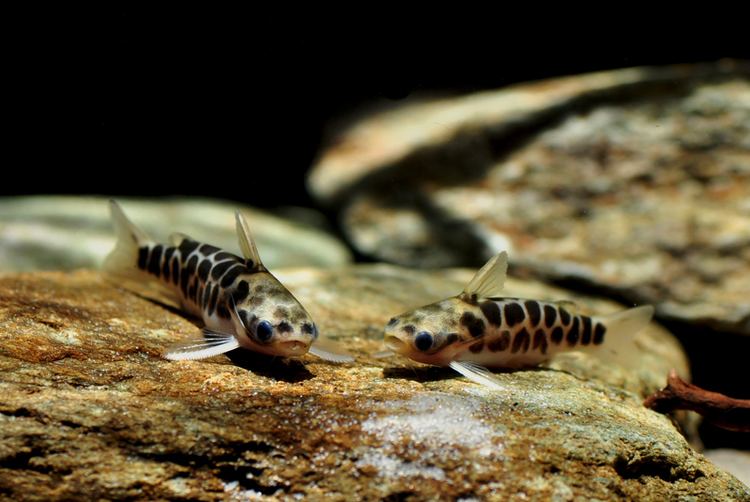
girl: come over me: i can’t, i’m using my sensitive barbels scour the riverbed for morsels of food girl: i hollowed out a nesting cavity under a flat stone me:
The fish to be protected by the prescribed burn is the Owens speckled dace. Here’s what it looks like. Kind of grumpy.
Excerpt:
It may seem strange to burn the area around the wetland as a habitat restoration technique, and even more oxymoronic to do so in order to save an aquatic creature in the desert. But for a nearly extinct species of fish in the arid Owens Valley, a prescribed burn is exactly what the doctor ordered.
After years of planning, the Eastern Sierra Land Trust, the California Department of Fish and Wildlife, and Cal Fire executed a prescribed burn this past December in order to create a sustainable habitat for the Owens speckled dace, a small fish that is listed as “threatened” under the Endangered Species Act.
Fish in the desert might sound impossible, but there are several species of desert fish in California. During geographically transformative events that occurred thousand of years ago, these fish found their way to tiny pools and streams that punctuate the dry landscapes during wet periods. As landscapes changed over time, the desert fish have adapted into unique species specialized for their environs. According to Peter Moyle, a biologist at University of California, Davis, genomic testing suggests that the Owen speckled dace’s prehistoric ancestors came from around the Mono Lake basin, where volcanic activity blew out the waters and dropped the common ancestor of the Owens speckled dace and other dace species into surrounding areas.
“These fish have been going their own way for a very long time and adapted to very difficult conditions,” Moyle says. “If we can restore the speckled dace, you’ll have brought back a significant part of the fish fauna in that region. It just belongs there.”
Over the past 80 years, the Owens speckled dace has been in steep decline due to water mismanagement, pressures from agriculture, and encroachment by non-native species. Streams and seasonal ponds in the Owens Valley are expected to decline further with climate change-related temperature increases and less snowpack, and what has not evaporated will continue to be diverted for agricultural use. Thirsty cattle, a linchpin of the valley’s ranching history, are especially hard on area streams. The little water that does remain is often overrun with invasive plants and non-native fish species.
Spring cleaning, 365.25 days a year! Bluespotted jawfish keep busy building and remodeling their den no matter the season, using their mouth to shovel and arrange sand and bits of coral. Nice work, jawfish!


 https://embedr.flickr.com/assets/client-code.js
 https://embedr.flickr.com/assets/client-code.js
 Urocyon's Jaunts 2.0
You must be logged in to post a comment.