The Froglog helps save frogs from
drowning in swimming pools. Wildlife
biologist Rich Mason created the small,
floating ramp, which attaches to the side
of your pool so frogs can climb out when
they get stuck. It has also helped save
other small animals, like snakes, mice,
lizards, and ducklings. SourceSource 2
This is an albino gray tree frog (Hyla versicolor) which is normally – you guessed it – gray in color. The lack of melanin gives it this pink hue… which to me makes it look like it’s made out of BUBBLE GUM!
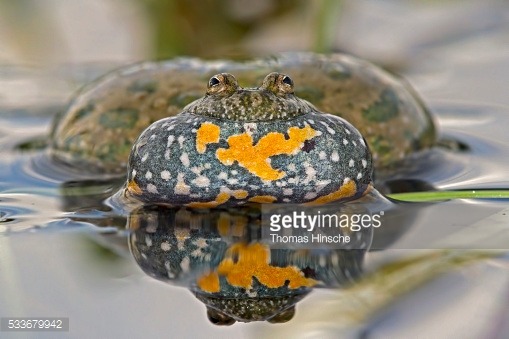
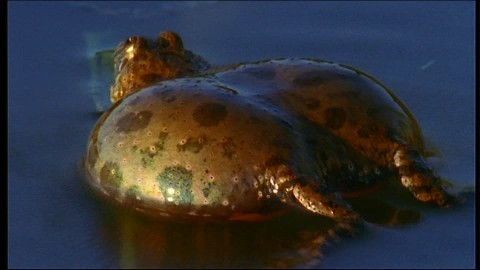
How did I not know that fire-bellied toads [in this case Bombina bombina] look like this when calling for females? I thought the frog in this video was sick, because although most frogs inflate themselves to keep from sinking while calling I’ve never seen one so bloated, but it turns out this is just a thing fire-bellies do sometimes. So much work for a call that’s just a tiny hoot.
The humble frog has been hiding a secret – like most birds, mammals, and a handful of reptiles, it has a kneecap.
This newly discovered piece of amphibian anatomy is barely a tiny blob of squishy cartilage, so nothing fancy, but the discovery could roll back our best guess on when kneecaps evolved.
A small team of Argentinian researchers were inspired by relatively recent discoveries of structures called sesamoids in species thought to be lacking in bony joint covers.
Sesamoids are bony material embedded in connective tissue such as the tendons over a joint. Knee caps, in other words.
They analysed the skeletons of 20 species of frog and found rudimentary structures that weren’t quite sesamoids, but weren’t like the surrounding connective tissue.



 Urocyon's Jaunts 2.0
You must be logged in to post a comment.