The Yakutian horse, sometimes called the Yakut horse, Yakut pony or simply the Yakut, is a rare native horse breed from the Siberian Sakha Republic (or Yakutia) region. It is large compared to the otherwise similar Mongolian horse and Przewalski’s horse. It is noted for its adaptation to the extreme cold climate of Yakutia, including the ability to locate and graze on vegetation that is under deep snow cover, and to survive without shelter in temperatures that reach −94 °F.
The breed averages 13.3 hands in stallions and 13.2 hands in mares, and shares certain outward characteristics with other northern breeds like Shetland pony, Fjord horse and Icelandic horse including sturdy stature, thick mane and heavy hair coat.
Do you know how many dogs I’ve met that get scared or anxious around men because in their previous home men hit them? A lot, and they are very protective of the women who have adopted them now.
Men who are violent towards women are often violent towards animals as well. They think we’re all chattel. If a man wants you to choose between your dog or cat or him, dump the guy. Those animals will love you for the rest of your life, loyal and true.
Actually, I have something to add.
The other day I saw a story where a woman was asking why her dogs had suddenly started growling at her boyfriend whenever he was in the same room as her son.
And my immediate thought was ‘that boyfriend has hurt the kid somehow.’
Spoilers: that was exactly the case.
Trust ur dogs when they say something is off.
The first time my sister came to visit, via plane, after I got my dog, pupper growled at her and wouldn’t go near her for the first day. Next visit was by car (two day drive)and pupper LOVED my sister. They snuggled and played and none of us could figure out why the change. We thought maybe the scent of my sisters cat had lingered on her clothes, making that first visit a rough one. Whereas when she came by car, the scent had had time to wear off. Well that was partially true…
Fast forward about six months when I went north to visit my family. My sister walked into my parents’ house and pupper ran to greet my sister. Stopped dead in her tracks and started growling and barking. Hackles raised, full protection mode. My sisters husband had just walked in behind her.
My precious puppy wanted NOTHING to do with him. She barked, growled, ran away, and sat between him and my sister. Y’all my dog had spent maybe a weekend a half around my sister but protected her like this was her flesh and blood.
Eventually, my sister filed for divorce on grounds of “Extreme and repeated mental, emotional, and sexual abuse.” Divorce was final in less than a month because her claims were substantiated.
Trust the dog, honey. They KNOW.
I’ve never owned dogs, but I used to work with horses (which are a lot like big dogs).
There was this one horse I worked with named Tonto. He was a doll. He followed me like a puppy, snuck treats out of my pocket, he was the sweetest thing. We were practically inseparable.
A guy I was considering dating came to visit me one day, and Tonto wanted NOTHING to do with him. Normally well behaved, he shoved himself between us and would NOT let this guy near me. He was stomping, acting really aggressive, and tried to bite the guy. This horse was practically dragging me back toward the barn. At that moment, despite being like, 17, I knew something was up, and ultimately things didn’t pan out for guy and me.
A year later I found out he had lied about his age (he said he was 18 but he was actually 27) he was arrested for sexually assaulting an 11 year old girl.
TRUST THE ANIMALS.
NEVER get rid of your dog for a boyfriend.if you boyfriend dont like dogs then get rid of him .boyfriends come and go dogs stay faithful forever.
The Mongol horse is the native horse breed of Mongolia. The breed is purported to be largely unchanged since the time of Genghis Khan. In Mongolia, the horses live outdoors all year, dealing with temperatures from 86 °F in summer down to −40 °F in winter, and they graze and search for food on their own. The mare’s
milk is used to make the ubiquitous fermented drinks of Mongolia,
and kumis. Some animals are slaughtered for meat. The horse’s hair can be used for a number of products, including rope, fiddle strings, and a variety of ornaments. Horse dung is used for camp fuel.
They serve as riding and transport animals; they are used both for the daily work of the nomads and in horse racing.
The Dales pony is one of the United Kingdom’s native mountain and moorland pony breeds. The history of the modern Dales pony is strongly linked to the history of lead mining in the Dales area of England, and it was originally a working pony descended from a number of breeds. The breed is known for its strength, hardiness, stamina, courage, intelligence, and good disposition.
A breed registry was created in 1916, and the breed was used extensively by the British Army in both world wars. The Dales pony almost became extinct during the Second World War, but post-war conservation efforts have had some success in rebuilding the population. Today it is used for many different activities, but population numbers are still low and this has led to it being considered “critical” by the Rare Breeds Survival Trust and “threatened” by The Livestock Conservancy.
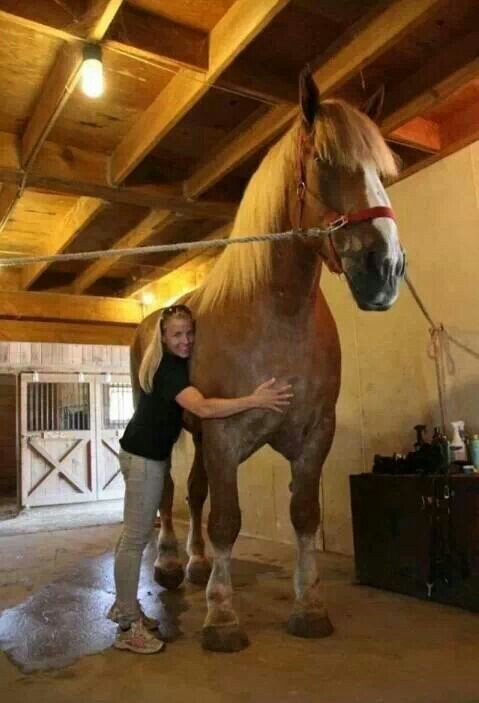
I never made a post about draft horses. :T They are the gentle giants of the horse world, sometimes growing as large as 20 hands and over 2000 lbs. The tallest horse in the world is an American-type Belgian horse named Big Jake (I think???).
A very big (but good) boy!
Despite their size, draft horses are known for their quiet, even temperaments, which make them good work horses. They were originally bred to pull wagons and plows, and they still do that. The most famous draft horses are probably the Budweiser Clydesdales, i.e. the horses in those Superbowl commercials that make us cry every goddamn year.
Draft horses can be ridden, and they are often crossed with lighter breeds, such as Thoroughbreds and Quarter Horses, to create tall, sturdy-boned, quiet sport horses.
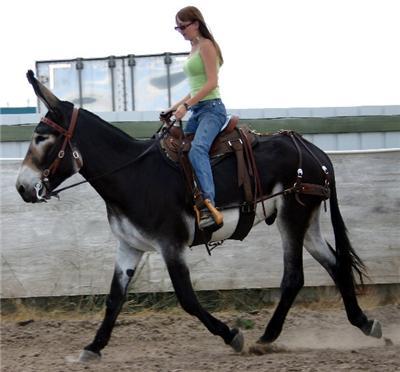
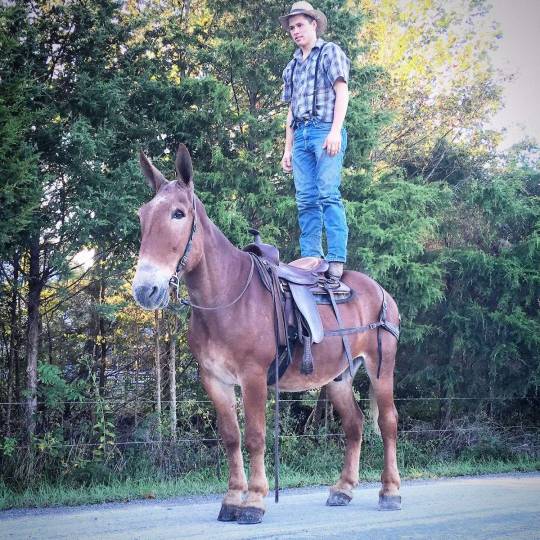
Such horses were a common sight during foxhunts, as “hotter” breeds, like Arabians and Thoroughbreds, tend to lose their minds a bit in the chaos of the hunt. Draft horses can also be crossed with Mammoth Jack donkeys to create draft mules, which are also used to pull plows for the Amish.
Mammoth Jack donkey:
Draft Mule:
There are a lot of draft breeds, some more common than others. Many of the common ones are easy to tell apart from the others, but they’re all large-boned and tall, except for the draft ponies, such as Halflingers and Norwegian Fjord horses.
The Belgian
There are two Belgian horses, one that’s popular in Europe and another that’s very common in the US.
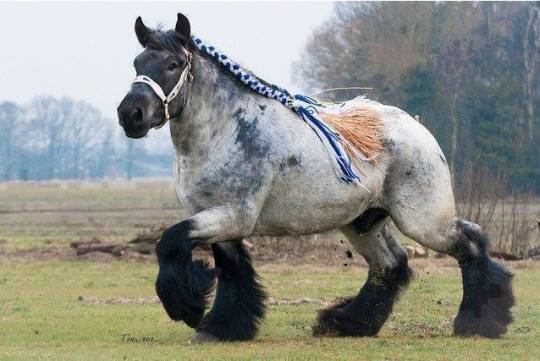
This is the European-type “Brabant” Belgian, which tends to be very thick boned and roan in color.
This is the American-type Belgian, which is lighter-boned and always sorrel/palomino in color:
Here is a Brabant Belgian mare pulling some shit:
A lot of draft horses really do enjoy pulling stuff, as much as a horse CAN enjoy doing anything that’s not eating grass and farting. Horse pulls are a common sight in Middle America, often done using Belgian horses. Here’s one of a team pulling 9200 lbs. They pull for a very short period of time, often only a few seconds.
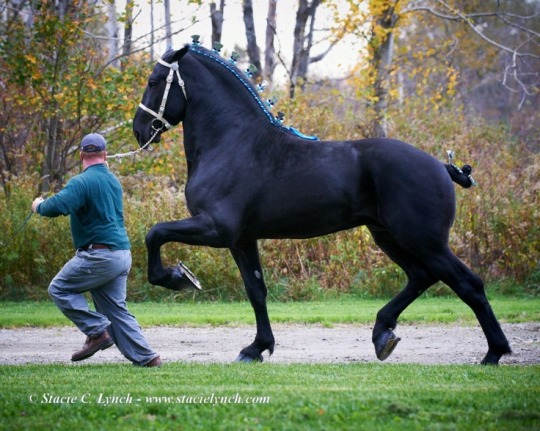
Next up is the Percheron, which has a similar body type to the Belgians but are always black or dapple. They can be slightly more spirited than Belgian horses, with some demonstrating high stepping action.
They are not to be confused with Friesians, who have much more “feathered” legs and feet (long hair around the lower legs) and are lighter-boned. Friesians also don’t come in dapple colors, like the horse at the top of this post.
Clydesdales
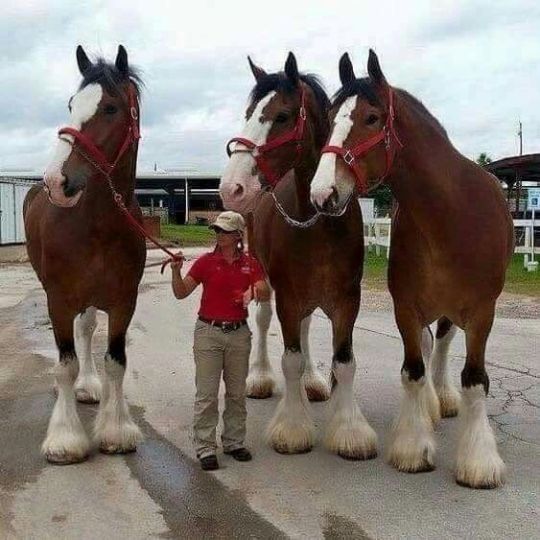
Clydesdales are recognizable because they are a) always bay colored and b) almost always have four white socks and a blaze on their faces. They also have much more feathering on their legs than Percherons or Belgians. Clydesdales are more common in parades and the like because they tend to be slightly lighter than Percheron and Belgians, and because of this, they’re more agile and “showy”. You probably would not want to plow with a Clydesdale. You could, but their feathering means their feet get dirty much easier than a Belgians might.
Shire Horse
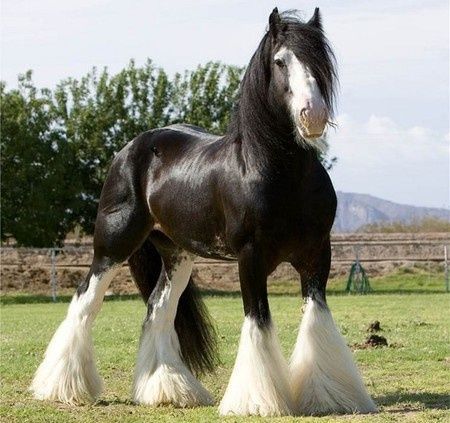
Shires come in a variety of colors, usually black or bay, and they are probably the most “feathered” horses of the popular breeds. They’ve got lots of fur on their feet.
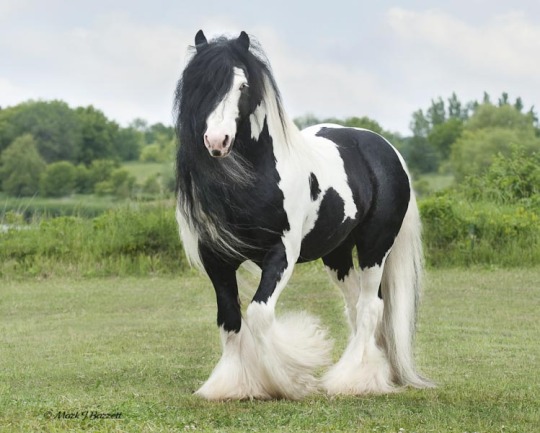
Gypsy Vanner Horses
Gypsy Vanner horses got their start pulling Roma wagons, but now they’re mostly used in fantasy photoshoots, and you can see why. They are beautiful horses, definitely not the type you’d want toiling in the muck. They are almost always paint colored, which distinguishes them from Shire horses.
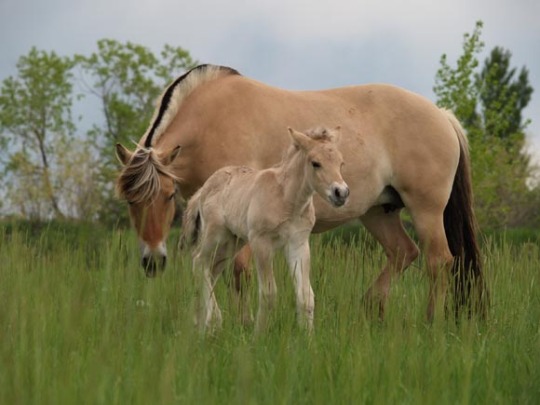
These are the main, most popular and commonly seen full-sized draft breeds, at least in the US. However, there are also draft ponies, the most popular of which is the Halflinger, which resembles a shrunken Belgian horse. They are ALWAYS sorrel/palomino colored, but their frame can vary. Some Halflingers are lighter-boned and more suitable for riding. Others are thicker-boned and better for pulling.
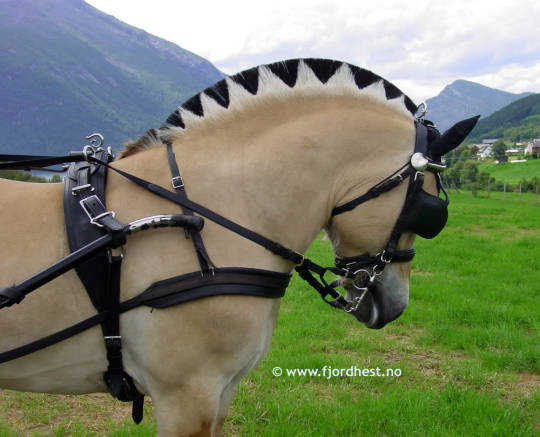
The other unmistakable draft pony is the Norwegian Fjord, easily recognized by the black stripe in the center of its mane, like a reverse ice cream sandwich.
This can lead to some creative hair cuts
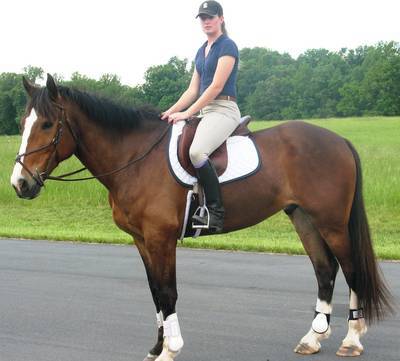
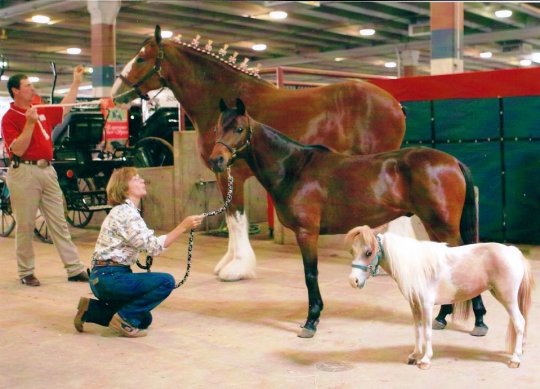
So there you go. That’s a somewhat comprehensive review of draft horse breeds. Here is a size comparison for funsies, with the average riding horse in the middle.
the bigger they are the bigger they are
Here’s folk-rock band Jethro Tull’s paean to the big beasties: “Heavy Horses”.







 Urocyon's Jaunts 2.0
You must be logged in to post a comment.