Gaelic hasnt been lost. It’s never died or been brought back. There’s an unbroken line of native speakers going back to the beginning of the language. That doesn’t seem like a ‘lost’ language to me. Furthermore I’m not sure what ‘artificial life-support’ means in this context. Gaelic is given funding for schools because there’s still native speakers of the language. It’s no more artificial than money being given to schools for English language lessons.
If anything is ‘artificial’ its the imposition of a foreign language
(English) into a Gaelic majority zone and native speakers having to
fight for decades to be able to be taught in their own language. Native speakers being forced to learn English to exist within their own regions because a central government would not allow services to be given in a people’s own language.
But then the clock only goes back so far with people who wish that minority languages would just die. There’s nothing artificial about shooting someone but suddenly it becomes an ‘artificial’ act to maybe phone an ambulance?
“There’s nothing artificial about shooting someone but suddenly it becomes an ‘artificial’ act to maybe phone an ambulance?” — THIS RIGHT HERE
Also just gonna point out here:
In the UK, the languages Gaelige, Gaelic, Cymraeg and Kernewek (that’s Irish, Scottish, Welsh and Cornish respectively) didn’t just “die out.” There was a concerted effort by the English to kill them off.
For example, in Wales, if a child was heard speaking Welsh in a classroom, they’d be given a “Welsh Not”, a wooden plaque engraved with “WN” to hang around their neck. They’d pass it onto the next child heard speaking Welsh, and whoever had the Welsh Not at the end of the day was punished – usually with a beating.
Kernewek was revived after a long hard struggle by the Cornish folk, and is now being taught again, but a lot about it has been lost because everyone who grew up speaking it has died.
And languages are never revived “just because.” The language of a place can offer so much insight into its history, so if you’re content to let a language die then you’re content to let history die.
People talk about “dead” languages as if they dwindle away gradually, naturally coming to an end and evolving into something else, but that’s rarely the case. Languages like Cymraeg and Gaelige and especially Kernewek didn’t have the chance to die with dignity, they were literally beaten out of my parents and grandparents.
Is it any wonder every other country hate the English? We invade their country, steal their history, claim pieces of their history as ours or flat out re-write it, and kill every part of their culture that we can.
It’s a miracle that any of the Celtic languages survived, so even if you don’t see the point in keeping them alive, the actual natives of each country we’ve fucked over are clinging onto what heritage they have left through the only thing they can: their language.
Hey OP, póg mo thóin!
*snerk* xD
I would like to point all of these “just let it die” assholes directly at Hebrew.
The language was effectively dead. It had been murdered and forced-assimilated away.
But there was this dude named Ben Yehuda.
And he said “no.”
“The language of my people for four thousand years or more,” he said, “should not stop existing because of a bunch of assholes.” (Okay, this is a dramatic retelling. He probably didn’t actually say assholes.)
So he started an official movement to recreate Hebrew as closely as possible to how it had been spoken about a thousand years prior.
Today, ancient Hebrew is spoken by millions of Jews around the world weekly in our prayers and Torah readings, and modern Hebrew is the official language of eight and a half million people–many of them having been born speaking it as a first language. Many people in the first group also speak at least some modern Hebrew–and it’s possible you do, too! A lot of loan words from Hebrew and Yiddish have made their way into English (like klutz, mensch, and kibitz).
That’s hardly “on life support.” Hebrew is growing, living, and thriving because of the Enlightenment efforts of the 1800s. The same COULD be done for languages like Welsh, Navajo, and Basque if the larger powers that be said “this is important” rather than forcing a giant bastion of culture–the language in which a people lived, loved, thought, told stories, and explained their world–to die.
Never trust anyone who wants to diminish the methods in which meaning is conveyed.
A language is only dead, if life transcends its power to remain eloquent.
I mean for fucks sake, we still teach Latin in school. I don’t see why we shouldn’t teach other “dead or dying” languages, in fact there should be more of an emphasis on these languages specifically because many people still speak them and different languages can have great cultural significance from region to region.
People should check out the Wampanoag Language Reclamation Project – the language had been wiped out, but they’re working on piecing it back together and relearning it. There’s at least one native speaker now, the first in generations.
I told you guys about that “Pashtun Sexuality” report which was meant for U.S. soldiers so they could be “wary” of Pashtun men, who were portrayed as pedophilic and homosexual predators. Not only do other Afghans stereotype Pashtuns, but Westerners do it too, and soldiers of any race.
Literally anything Pashtun men do is interpreted as them being homosexual predators:
As HTT has observed with
frequency while on patrols in Helmand and Kandahar provinces, these men are outwardly affectionate toward both one another and male ISAF members, are extremely gentle in their
demeanor and touch, and have often taken great care in embellishing their personal appearance
with fingernails dyed red, hair and beards hennaed in careful patterns, and eyes very occasionally
subtly outlined.
And here comes the “be wary of the gay Pashtuns” part:
In Baghram, British Marines returning from an operation deep in the Afghan
mountains spoke last night of an alarming new threat—being propositioned by swarms of gay local farmers. An Arbroath Marine, James Fletcher, said: ’They
were more terrifying than the al-Qaeda. One bloke who had painted toenails was
offering to paint ours. They go about hand in hand, mincing around the village.’
While the Marines failed to find any al-Qaeda during the seven-day Operation
Condor, they were propositioned by dozens of men in villages the troops were
ordered to search.
Just so you know, a lot of Pashtun and Pashai men adorn their hands with henna, their eyes with kohl and dye their beards (it’s sunnah). They embellish their rifles and pakols with flowers, which they have been doing for centuries. Straight men and gay men alike.
Gaelic Gods aren’t seen as ‘ruler of the skies’ or ‘the Goddess of Love’ like how other deities are. And while there is nothing wrong with the following examples, to try to fit a Gaelic God into that context is to remove them from their cultural and how they were honored. The Morrigan is a war Goddess, but not the Goddess of war.
One of my favorite quotes on this subject is “When we are tackling a strange mythology, we seek instinctively an Olympus where the gods abide,an Erebus, kingdom of the dead, a hierarchy of gods, specialized as patrons of war, of the arts or of love.”
Part of which is caused by the fact that in most of the western world, the Greek myths are taught as the be all end all, all myths follow the same structure. But it simply isn’t true. There might be things associated with the gods, or things that it is known that the Gods enjoy, but that doesn’t necessarily mean that they rule over it. Brighid is known for being a master craftsman, but so are Luchtaine, Goibne, and Creidhne are also all master craftsmen.
When we pigeonhole our Gods, we fail to see them as the complex beings that they truly are. Just as people can have different sides and aspects to them, so too can the Divine.
This is actually largely the Romans’ fault. As they went out conquering, they wrote extensively about the religions they encountered, and systematized the gods in exactly this way. They believed that ultimately all gods in other (polytheistic) cultures were depictions of the same gods they worshipped, just given different names and appearances. They were also obsessed with the Greeks in some weird ways. Roman religion and Greek religion were not identical, just closely related, and the Romans viewed Greek religion through this same Roman-centric lens.
Later on the Roman histories became the only written histories available for many mostly-extinct or altered cultures, or at least the only written histories that weren’t heavily Christianized, and Western culture to this day continues to use Roman and Greek writing as foundational elements of our culture. It’s only very recently that western scholars have started to actually heavily question the veracity of many Roman claims about the cultures they wrote about- I mean, obviously there was debate about whether some outlandish stories like Atlantis were real, but things like the Druids practicing human sacrifice were often accepted without question even if there were no means of actually confirming that.
So we have this culture that habitually forced other religions into the mold of their own religion, whose writings are the foundation of modern western culture, and whose historical accounts have only seriously come into question within the last hundred years….. And that’s why the Roman idea of the Greek pantheon has become so deeply entrenched in western paganism and fantasy literature as How A Pantheon Works.
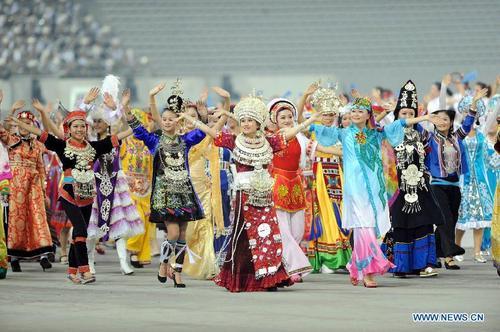
When people think of China, they all assume that everyone in China is Chinese, speaks Chinese, looks and live like this:
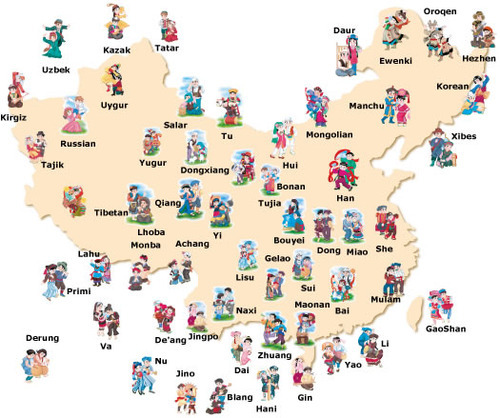
Now let’s look at the Ethnic Make-Up of China!
Look how many Han Chinese there are? But first things first! All the Han Chinese do not speak the same language! Chinese is probably as useful as saying the “Europeans”.
Let’s pretend that Europe is combined into a single country! But with London as the Capital City, and everyone is officially, “European” and they all speak “European”, with European English as the official language of Europe! The French, German, Spanish and Russians? They are their own entire language, culture and ethnicity.
Same goes with China. China is much larger than Europe, speaking different languages, eating different foods, practicing different religions, wearing different clothing. Beijing is the capital, with Mandarin Chinese as the official language of the entire country. However, Chinese languages are considered “Dialects”, but not their own distinct language, culture or ethnicity.
Now let’s look at the Han Chinese languages:
Mandarin Chinese not only has it’s “Northern, Eastern, Southwestern” dialects, but they even break up into more different dialects and accents from different region, city and province. There’s a difference between London accent, Welsh accent, Scottish and Irish accents. To simplify it, the government simply grouped everyone together.
Southern Chinese languages cannot mutually understand with any other Chinese. That’s like an Englishman trying to communicate with a German, a Dutch, or a Danish. They all belong from the same language group, but they cannot understand one another mutually.
But what about the other Non-Han Chinese?
See where Han is at? (Look where Beijing would be!) That is the original homeland of all Han Chinese people.
There are officially 56 Ethnic Groups in China, but there are hundreds and even more that are unofficial and undocumented. It’s the Chinese government way of saying, “Meh. Saffron, Violet and Pink are the same thing. Let’s just call it “Red”.
But how did Han Chinese became the major language and ethnic group of China?
Through conquest! Very much like how the Romans of today Italy killed, pillaged, raped and took over the Gauls of France, the Germania of Central Europe and the Britannia’s of the British Isles, and turned them “Roman citizens” through colonization and expansion!
But what makes China a unique case, is that the surviving natives of the Northern Han conquest, is that they still retain much of their native cultures. They survived, because most of the ethnic groups lived up in the mountains, where the ancient Han Chinese were too lazy to bring their armies up mountains:
Those who were colonized and assimilated into Chinese culture?
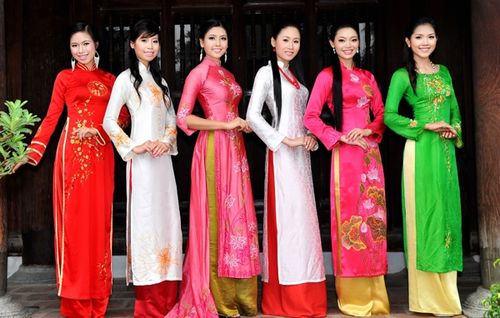
The Vietnamese were colonized by the Chinese more than three times.
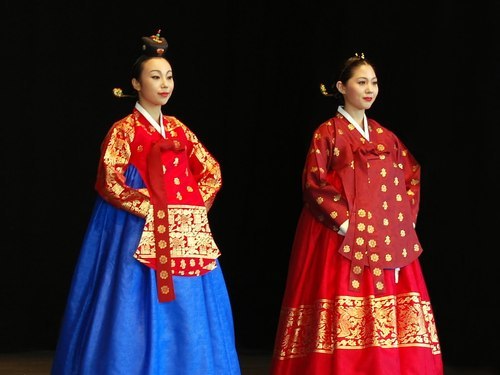
Korea was colonized/tributing state for the longest time ever.
And Southern China! They would be influenced and assimilated strongest to Northern Chinese culture and language!
But why is everyone considered Chinese?
Same bullshit as your government saying that you’re an American, Canadian, British, Australian, etc. etc. citizen. It’s like a rich White straight male, taking control of the government and dictating how you live, under his life style. The Han Chinese says that everyone in China is all Chinese.
And mostly the blatent ignorance and education on the diversity of China.
Chinese Dialects?
It’s another bullshit ideology.
Is French, Spanish, Italian and Portuguese a dialect of Europe? No. They are their own distinct languages. They may come from the same Roman history, the same Romance language family, but they are their own language. Teochow, Hakka, Minnan, Cantonese, Mandarin, etc. etc. are their own distinct language and ethnicity.
Unified China?
To unify Germany, Hitler said that the German Race was the greatest race! Germans from all over Europe, the German Swiss, the Austrian Germans, etc. etc. united as a single “Race” and rose to power.
To unify China, Northern Chinese Emperors said that they were the greatest race! And attempted to conquer everyone else, killing anyone who wasn’t “Chinese”. This was done for more than 3,000 years, resulting in many extinct native cultures and ethnicities in China, and resulting many cultures (like Korea, Vietnam and even Taiwan) to assimilate into Northern Han Chinese culture.
Conclusion:
Not everyone in China are Mandarin Han Chinese, the major ethnic and language speaking group of China. Three different dialects of Mandarin and 6 different languages of Southern Chinese (Hakka, Min, Wu, etc.).
There is an official recognized 56 ethnic groups, but hundreds that are unrecognized. Such as Tibetans, Miao, Manchu and even Koreans and Mongolians!
China is very diverse in language, culture, religion and ethnicity. Not everyone is ethnically Chinese, nor speak Mandarin Chinese.
Good post. This gives a much more diverse view of China, and the thing is the view outsiders often have of China is that of Han Chinese ethnic group.
Just some things I would like to add on/correct:
1. The term “Chinese” and name “China” is of Iranian origin -the Farsi word “Chin”,and that was the term that got passed to the Western world, just as for Iran itself, “Persia” came from the Greek name for Iran.
The local name for China basically means “Middle Kingdom” and is pronounced “zhong guo” in the Mandarin dialect. “Han” became a term to refer to our ethnic group after the Han dynasty. We are also called “hua ren” because the ancestral groups of people that would band together and identify as “Han Chinese” are called the Huaxia tribes. In English usage, many people just say “Chinese” not Han Chinese (even myself, admittedly). “Chinese” is also a nationality today and in Mandarin term used is “zhong guo ren” and generally I understand this applies to anyone with citizenship in the People’s Republic of China even if they are not Han.
The conflation of the Han people and our culture with “Chinese” as a whole is an intersection of several issues. Firstly, the imperialism and domination of our ethnic group as the post pointed out- which has led to Han culture becoming synonymous with the entirety of China and that’s why the other ethnic groups get erased. Think of this as similar to how “Englishness” is often conflated with “Britishness”, when the UK is also made up of Scotland, Northern Ireland and Wales. Further, the Chinese government today has very often tried to further Sinicise other non-Han ethnic groups. The English usage of “Chinese” also doesn’t always capture all the nuances. The fact that Han Chinese are such a dominant majority of the population further feeds this perception.
There is nothing inherently wrong with using the term “Chinese” but the problem with this is that elements of Han culture are far more explicitly treated as being the totality of the culture of modern China.
2. The thing about the non-Han ethnic groups mostly living in the mountainous regions where the imperial army didn’t bother conquering- I’d say that’s not an entirely accurate characterisation.
There were a lot of other indigenous ethnic groups in the plains and low lying areas who got massacred or forcefully absorbed too. For example, Austronesian-speaking peoples lived in much of the territory that is now modern China. Malays in Southeast Asia are an example of an Austronesian people. A lot of them got assimilated or probably suffered genocide so nothing remains of their history today. Another people assimilated are what we know as the Baiyue tribes, which is a loose term used by the ancient Han to denote several tribes they portrayed as “savages” and “barbarians”. Many non-Han people still survive today as China’s ethnic minorities but a lot more did get completely erased.
Another interesting (and slightly disturbing fact) is that the DNA within Han Chinese shows a lot more variation in the maternal line than the paternal line. Maternal DNA is passed from mother to child, so that implies a lot Han Chinese men fathered children with local women. Were they there as peaceful migrants? Or soldiers who raped or forced local women into marriages? Imo, it’s likely the second scenario was not uncommon even if the first scenario was the case in some instances. This is when you take into consideration how the Han ethnic group and various Chinese emperors had a very strong notion that our culture and civilisation was superior. Ergo, Sinicisation of diverse ethnic groups in a manner not dissimilar to how European colonialism forced its traditions on and erased local cultures in the Americas.
It’s weird how utterly hard it is for ppl on this site to realize that anti-colonial rhetoric is often coopted by reactionary nationalisms even though that was like one of the main idealogical platforms for Imperial Japan
Didn’t Imperial Japan try to position itself as the coloured liberator of all the colonies WHILE COLONISING Korea and China
Check out the pictures from a 1942 childrens book about how Japan shall be the liberator of the oppressed races and notice what areas are “liberated colonies” and what areas are just colored in as being “Japan”
Do you know what book these images came from? Do you have them in higher resolution?
I think I’ve said it before, but yeah, part of the history curricula here involved learning about Japan attacking other Asian countries in the guise of liberating them against the Western colonial powers, and nationalists such as Sukarno and Subhas Chandra Bose welcomed them, while some like Wang Jingwei did so out of political opportunism.
But I remember Indonesian activist and Communist activist Tan Malaka, having witnessed the cruelty the Japanese had displayed to the Chinese during his stay in China was wary about forming an alliance with the Japanese.






 Urocyon's Jaunts 2.0