I’ve heard a lot of advocates of inclusion say things like “kids with disabilities work twice as hard as everyone else” or “my employees with Down’s syndrome never come in late or take a day off.”
This sounds like praise, but it isn’t.
The time disabled people spend working twice as hard as everyone else has to come from somewhere.
There are reasons why kids aren’t in school every waking moment. There is a reason why vacation time exists and why it’s normal to be late occasionally.
People need rest. People need leisure time. People have lives and needs and can’t do everything.
Being disabled doesn’t erase the need for down time. Being disabled doesn’t erase the need for play, or for connections to other people.
Working twice as hard as everyone else all the time isn’t sustainable. Praising disabled people for doing unsustainable things is profoundly destructive.
People with disabilities should not have to give up on rest, recreation, and relationships in order to be valued. We have limited time and energy just like everyone else, and our limitations need to be respected.
It is not right to expect us to run ourselves into the ground pretending to be normal. We have the right to exist in the world as we really are.
why “spanking is harmful” studies will, ultimately, never matter to parents who want to hit their kids:
@fandomsandfeminism wrote a great post recently about the fact that we have, essentially, a scientific consensus on the fact that all forms of hitting children, including those euphemistically referred to as “spanking”, are psychologically harmful. they’ve also done an amazing job responding to a lot of parents self-admitted abusers who think “I hit my child and I’m okay with that” and/or “I was hit as a child and I don’t think there’s anything wrong with me” are more meaningful than 60 years of peer-reviewed research.
unfortunately, I’m here to tell you why all of that makes very little difference.
in 2014, a couple of researchers from UCLA and MIT named Alan Fiske and Tage Rai published a book called Virtuous Violence, the result of a major study of the motivations for interpersonal violence. Rai wrote a shorter piece about it in Quartz, which is a pretty light but still illuminating (hah, I did not see that pun coming but I’m gonna leave it) read.
the upshot of Fiske and Rai’s work is that most violence is fundamentally misunderstood because we think it is inherently outside the norms of a supposedly moral society. we presume that when someone commits a mass shooting or beats their spouse they are somehow intrinsically broken, either incapable of telling right from wrong or too lacking in self-control to prevent themselves from doing the wrong thing.
but what Fiske and Rai found was that, in fact, the opposite is true: most violence is morally motivated. people who commit violent acts aren’t lacking moral compasses – they believe those violent acts are not only morally acceptable, but morally obligatory. usually, these feelings emerge in the context of a relationship which is culturally defined as hierarchical. in other words, parents who commit violence against their children do so because they believe it is necessary that they do so in order to establish or affirm the dominancewhich they feel they are owed by both tradition and moral right.
when abusive parents say that they are “hitting children for their own good”, they are not speaking in terms of any rational predictions for the child’s future, but rather from a place of believing that the child must learn to be submissive in order to be a “good” child, to fulfill their place in the relationship.
this kind of violence is not the result of calm, intellectually reasoned deliberation about the child’s well-being.
for that reason and that reason alone it will never be ended by scientific evidence.
history tells us more than we need to verify this. the slave trade and the institution of racial slavery, and their attendant forms of “corrective” physical violence, for instance, did not end because someone demonstrated they were physically or psychologically harmful to slaves – that was never a question in people’s minds to begin with. for generations, slavery was upheld as right and good not because it was viewed as harmless, but because it was viewed as morally necessary that one category of people should be “kept in their place” below another by any means necessary, because they were lower beings by natural order and god’s law. this violence ended because western society became gradually less convinced of the whole moral framework at play, not because we needed scientists to come along and demonstrate that chain gangs and whippings were psychologically detrimental. this is only one example from a world history filled with many, many forms of violence, both interpersonal and structural, which ultimately were founded on the idea that moral hierarchies must be maintained through someone’s idea of judiciously meted-out suffering.
and this, ultimately, is why we cannot end violence against children by pointing out that it is harmful – because the question of whether or not it is harmful does not enter into parents’ decisions about whether or not to commit violence in the first place. what they care about is not the hypothetical harm done to the child, but the reinforcement of the authority-ranked nature of the relationship itself. the reason these people so often sound like their primary concern is maintaining their “right” to hit their children is because it is. they believe that anyone telling them they can’t hit their children is attempting to undermine the moral structure of that individual relationship and, in a broader sense, the natural order of adult-child relations in society.
and that’s why the movement has to be greater than one against hitting kids. it has to be a movement against treating them as inferior, in general. it has to be a movement that says, children are people, that says children’s rights are human rights, that says the near-absolute authority of parents, coupled with the general social supremacy of adults and the marginalization of youth, have to all be torn down at once as an ideology of injustice and violence. anything less is ultimately pointless.
“I eat too much!” There is no maximum calorie limit for eating disorders. An eating disorder is not about what you eat, but how you eat- your feelings/thoughts about your body and your intake.
“I’m not underweight!” The majority of people who develop an eating disorder will never become underweight. The only disorder that is diagnosed based partially on weight is anorexia- and for that, if you’re an average weight but meet every other criteria, you’ll still be diagnosed with ‘atypical anorexia nervosa’. It doesn’t mean you aren’t sick or that you don’t need help.
“I don’t meet the anorexia/bulimia guidelines!” OSFED (formerly known as EDNOS) is not a ‘failed’ eating disorder. It is every bit as serious as anorexia or bulimia. It is also the most commonly diagnosed eating disorder, meaning more people have this than anorexia or bulimia.
“I don’t make myself sick!” Vomiting is only one form of purging. You can have bulimia, anorexia or OSFED/ARFID and not make yourself sick.
“I still eat!” So does everybody else. You can’t photosynthesise, after all. Even people with eating disorders eat.
“I feel like a fake/ a fraud!” So does basically every single other eating disordered person. This is a really, really, really, really common feeling. You might feel guilty for ‘misleading’ other people into believing the problem is more serious than it is, or feel like you’re overblowing things. That’s totally normal and it is not true. You are not a fake or a fraud.
“I eat things that no real anorexic would eat!” I have known eating disordered patients with these safe foods: chocolate, frozen meat pizza, fruit, ice cream cones, potatoes, granola I have known eating disordered patients with these fear foods: : chocolate, frozen meat pizza, fruit, ice cream cones, potatoes, granola Safe/fear foods are not based on logic or reason. They are individualised. There are even people who don’t have any fear foods- they’ll eat anything, they’ll just feel crappy and purge it/ restrict afterwards. All of the experiences described here are those of a person with an eating disorder.
“I’ve never been inpatient!” Neither have most eating disorder sufferers.
“I’ve never been tube fed!” Neither have most eating disorder sufferers.
“I’ve never been near death!” Neither have most eating disorder sufferers.
“My blood work/ blood pressure is fine! Eating disorders affect different bodies in different ways. Some people find their blood work suffers; others find their blood pressure or pulse dips; others find that, whilst they’re suffering hugely mentally, their bodies hold up well. This is not a measure of how ‘sick’ you are. All of these things- weight, bp, pulse etc- are just symptoms of the sickness. The sickness is in your head.
“I don’t feel sick enough.” You never will. Sorry. “I’m not sick enough!” is one of the most common ED thoughts there is; please don’t listen to it. It is a lie. Do not compare your misery to someone else’s; nobody with stage I cancer says ‘yeah, but that person is a stage III, so I’m not really that bad and I won’t get any treatment yet’.
“I still get my period!” ‘Period loss’ has been removed from the DSM as necessary for a diagnosis of anorexia, and no other eating disorder requires it. It was viewed as a flawed measure of illness, and so it has been removed. Whether or not you get your period is not an indication of how ill you are.
“But I binge eat without throwing up” Binge eating disorder is a newly added eating disorder in the DSM, where people eat large amounts of food in an ‘out of control’ manner but then do not compensate inappropriately for it. It is very much a real eating disorder.
“I don’t calorie count/ weigh myself!” I know many people with eating disorders- including anorexia- who have never calorie counted, or who don’t own a pair of scales. It’s not required for diagnosis.
“I think about food all the time!” This is a symptom of an eating disorder. Malnutrition causes the brain to focus 100% of its attention on food- finding it, getting it, eating it. Daydreaming or fantasizing about food does not mean you are not sick; quite the opposite, in fact.
“But I enjoy eating!” Most people do. Eating is enjoyable. Even in the depths of my restriction, the food I ate brought me great pleasure. It’s linked to the previous point, to a certain extent. Enjoying food does not mean you don’t have an ED.
“But this is just how I am!” Eating disorders often start in early childhood, and it can be hard to break out of a pattern that well-entrenched. It’s not impossible, though. Chronic eating disorders can be harder to beat, but they can be beaten.
and because this only addresses people who are an ‘average’ weight, I’ll add: “But I’m fat!”
‘overweight’ people are more likely than thin people to have eating disorders, not less
I remember, one time at summer camp we were having a camp-wide “party” (we were served in the camp meeting hall instead of the dining hall, and there were tablecloths), and part of dessert was opening fortune cookies (no, the food was not “Asian” themed).
And I opened my cookie and the message read: “You need to learn to have more fun.” I thought it was utter codswallop, because“fun” was the only reason I did anything.
But when I read the fortune out loud, there was a chorus of voices saying the message was perfect for me, because all I ever did in my free time was read the dictionary, or encyclopedia, and I never did anything fun at all.
My protests of: “But reading the dictionary is fun, to me!” were mocked. Not even the adult counselors said anything in my defense (though I realize now that those “adults” were very likely a lot younger than we imagined them).
This memory came back to me after umpteen years because I was thinking about how I can be asexual and sex-positive at the same time. I, personally, may indifferent to the thought of getting squelchy with another person. But, apparently, a lot of other people find a great deal of joy and fulfillment in the act. So – for them – I think sex is great (as long as it’s safe, sane, and consensual). The world can always use more joy and fulfillment.
And the anti-asexual rhetoric of insisting that you have to include sex in a relationship in order for it to be “committed” and “meaningful” reminds me of those kids at summer camp who were convinced that the only way to have fun is to be loud.
And the more I thought about it, I realized that we keep doing it throughout our culture – whether it’s insisting that people have to drink alcohol at a party, or have to have sex in a committed relationship, or whether it’s trying to shame someone for liking kids’ cartoons, or liking a musician who uses auto-tune.
As long as someone’s happiness is not at the expense of another person – support them.
Today I was chatting with a coworker who I knew had been in an abusive relationship in the past. She was laughing as she told me and another coworker about how her ex never let her leave the house. Like she was for real cracking jokes about his jealous rages and how she wasn’t allowed to so much as set foot outside their door if he wasn’t with her, and the way she was telling it was funny, so we laughed along. “That’s why I enjoy doing the little things now, like taking the bus and going to the bank,” she said, and we all giggled because who likes public transportation and doing errands, right?
Then she got serious for the first time since the conversation started, it lasted only for a few moments, but I will never forget the one sentence that she said without smiling: “I’m going to die before I let that happen to me again.”
There was also this one rape victim whom a relative of mine represented in court. The rapist’s lawyer tried to discredit her by pointing out that she’d laughed while giving her testimony. She was eighteen years old on the witness stand, telling a judge and a room full of people about what had been done to her. She giggled because she was embarrassed about having to describe the graphic sex acts, and she nearly lost her case because of that.
I have classmates who laughed while telling me about old men who stole kisses from them. Who made jokes out of stories about their boyfriends screening their messages and forcing them to do things they didn’t want to do. I have known girls who were molested and manipulated for years, who shake their heads and snicker at their own past selves, how could I have let him do that to me, I was so naive, hahaha. This one woman reenacted for me, complete with dramatic gestures and voice impersonations, how her ex-husband who was under a Temporary Restraining Order scaled the gate of her house with a gun, and how she’d locked herself in her bedroom and screamed at the police over the phone to come NOW. Both of us were in stitches at the end of her tale, clutching our stomachs in mirth.
Just because they laugh doesn’t mean it isn’t real.
I can laugh about my abusive ex now because I’m not with him and will never have to let him near me again. I also sometimes wake in a cold sweat because I dreamed that I didn’t leave him. Laughing about trauma is an odd coping skill, but it is super common because it helps people stay sane in the face of awful things. We laugh to keep from crying.
People laughing at something that causes a stress response is normal. It’s literally your brain trying cope and survive by trying to make you less afraid of the stressor. Don’t ever doubt yourself about what you’ve experience, just because you laughed. Laughing is a completely valid response to something horrible, and your experience is just as valid whether you laugh or cry (or sometimes both at the same time) about it, and don’t let anybody try to tell you otherwise.
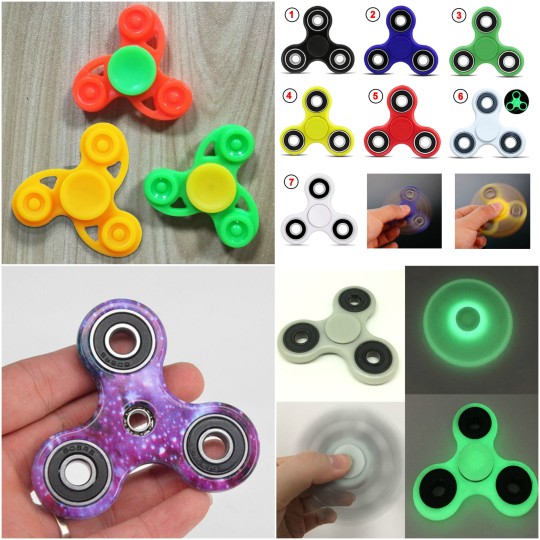
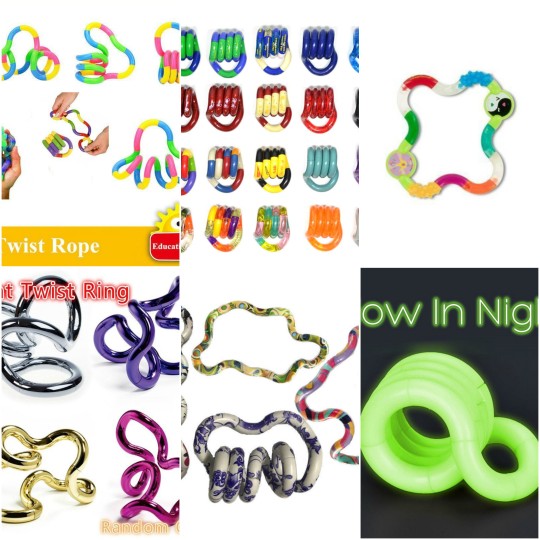
if you can, please do support ND stim toy creators. this post is specifically so ND people without much money can afford the things they need to function!
Note: neodymium magnets are awesome but they’re also dangerous. If you swallow or inhale some, that’s a medical emergency. If you get them, it’s important not to put them in your nose or mouth and to keep them away from people who might eat them.
I just need questioning girls to know that it doesn’t mean shit if you feel like being attracted to women is like…new for you. it doesn’t mean you “made it up” or are “not really into girls”. it’s perfectly normal to feel blindsided by sapphic love and attraction after a lifetime of suppressing it, excusing it, and ignoring it. all it means is that you’re finally letting yourself feel it.
or it can be genuinely new. people can change.
cool cool but i was talking specifically about compulsory heterosexuality
i know. i was adding another possibility. it’s ok to discover an attraction that you’ve been pressured by society to suppress. it’s also ok if it’s genuinely new – not everyone has to fit a “born this way” story. all im saying is that, however you arrive at that point in your sexuality (or gender), like you say it doesn’t mean you made it up or it’s not real.




 Urocyon's Jaunts 2.0