My students have started an Instagram account where they share pictures of their everyday lives and teach you words and simple sentences in South Saami, a highly endangered indigenous language with less than 800 speakers.
Each word and sentence comes with a Swedish and English translation, and my students are convinced they’ll never get more than 25 followers at the most, so if you want to prove them wrong, go ahead and follow @liksjoesaemie
Jair Bolsonaro, the president-elect of Brazil, might be the biggest single-person threat the Amazon rainforest has seen in a generation. He has likened indigenous reserves in the Amazon to “chickenpox” on the land, and promised that “there won’t be a square centimeter demarcated as an indigenous reserve” under his leadership.
Every single Native culture is distinct and unique, though many share similarities, and lumping them together is ridiculous. And while some practices are pan-Indian, the vast majority are not.
Stop homogenizing our cultures. Every Native culture is beautiful and unique and deserves to be treated that way.
Don’t fall into the trope of “pan Indian”. Fucking teepees and totem poles never existed together. Totem poles are permanent structures, teepees are fucking tents for nomadic peoples. First Nations and indigenous cultures are all deep and uniquely complex, it would be like confusing England with Russia.
We need to push to have this taught!
I grew up in Washington State, where the native Salish peoples’ formline art is a part of everyone’s regional identity. The Seattle Seahawks logo is in formline. Story* poles and carved canoes are a motif everywhere, summer canoe journeys are potlatch-esque public events, and most of the biggest resorts are casinos owned by the tribes. And our school curriculum is very progressive. I leaned in school about the Trail of Tears, about smallpox blankets, about the broken treaties that led to the “Indian Wars”… I learned that warbonnets and teepees are from the plains tribes, that Southwest tribes both before and after the Anasazi civilization built cities, that the Iroquois were the largest government on the continent before the American revolution…
I grew up knowing very well that “totem poles” were never found in the same culture as teepees.
And yet, it’s only just now, reading this, that I leaned dreamcatchers are specifically Ojibwe.
I think i learned more about Navaho and Hopi cultures from reading Tony Hillerman mysteries than from textbooks.
We need to step up.
*(they aren’t actually totemic, if you want poles that are totems you’re better off looking in some African cultures)
I’m glad this is circulating 😊 I’m looking to find the documentary (I think that’s the name in the upper left corner)
They = white people
They = Indian people
They live on the Andaman Islands in India. They are the first indigenous asian people. They came from Africa 70.000 years ago. They had lived in complete isolation for 50.000 years. Today, they are only 480 left of them, and they are in great danger. The Indian government assimilates them by force. The Jarawas are treated like animals in zoo by tourists and Indian scientists want to give them “bananas” to educate them.
The Jarawa campaigns goal is to gather 1,000,000 signatures.
Seen in the window at Gulf of Maine Books in Brunswick, Maine.
Photo: Bill Roorbach
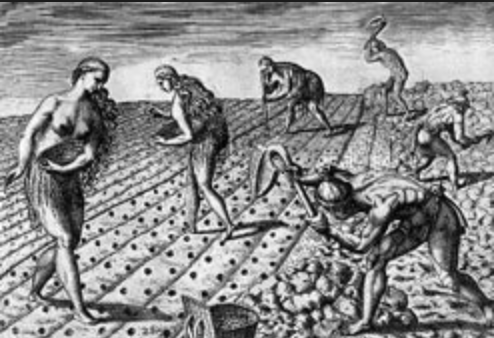
Except America wasn’t an endless expanse of forest with no certain borders. At least not while human beings inhabited it. The idea that native peoples did not cultivate or shape our land and that we had no borders is white propaganda meant to dehumanize and de-legitimize native peoples.
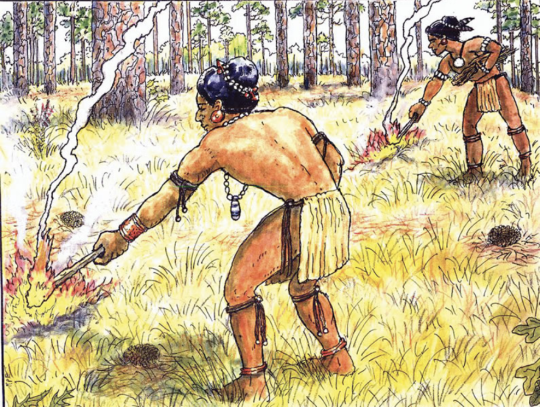
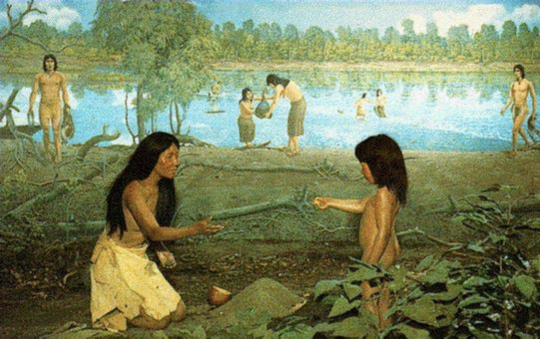
This illustration here show Apalachee people using slash and burn methods for agriculture. Fires were set regularly to intention burn down forests and plains. Why would we do this? Well because an unregulated forest isn’t that great for people, actually. We set fires to destroy new forest growth and undergrowth, and to remove trees, allowing for easier game hunting, nutrient enriched soil, and better growth rates for crops and herbs we used in food and medicine.
Pre-Colonial New England, where my tribe the Abenaki are from, looked more like an extensive meadow or savannah with trees growing in pockets and groves. Enough woodland to support birds, deer, and moose, but not too much to make hunting difficult. We carefully shaped the land around us to suit our needs as a thriving and successful people. Slash and burn agriculture was practiced virtually everywhere in the new world, from the pacific coast to chesapeake bay, from panama to quebec. It was a highly successful way of revitalizing the land and promoting crop growth, as well as preventing massive forest fires that thrive in unregulated forests. Berries were the major source of fruit for my tribe, and we needed to burn the undergrowth so they could grow.
That changed when white people invaded, and brought with them disease. In my tribe, up to 9 in 10 people died. 90% of our people perished not from violence starvation, but from disease. Entire villages would be decimated, struck down by small pox. Suddenly, we couldn’t care for the land anymore. There weren’t enough of us to maintain a vast, carefully structured ecological system like we had for thousands of years. We didn’t have the numbers, or strength. So the trees grew back and unregulated. We couldn’t set fires anymore, and we couldn’t cultivate the land. And white people would make certain we never could again. Timber, after all, was the most important export from New England.
Endless trees and untamed wilderness is a nice fantasy. But it’s a very white fantasy, one that erases the history of my people and of my land. One that paints native peoples are merely parasites leeching off the land, not masters of the earth who new the right balance of hunting and agriculture. It robs us of our agency as people, and takes our accomplishments from us. Moreover, it implies that only white people ever discovered the power to shape the world around them, and that mere brown people can’t possibly have had anything to do with changing our environment.
Don’t bring back untamed wilderness. Bring back my fire setters, my tree sappers, my farmers and my fishers. Bring back my people who were here first.
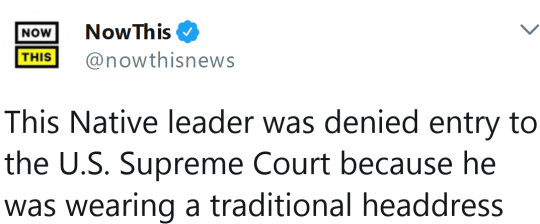
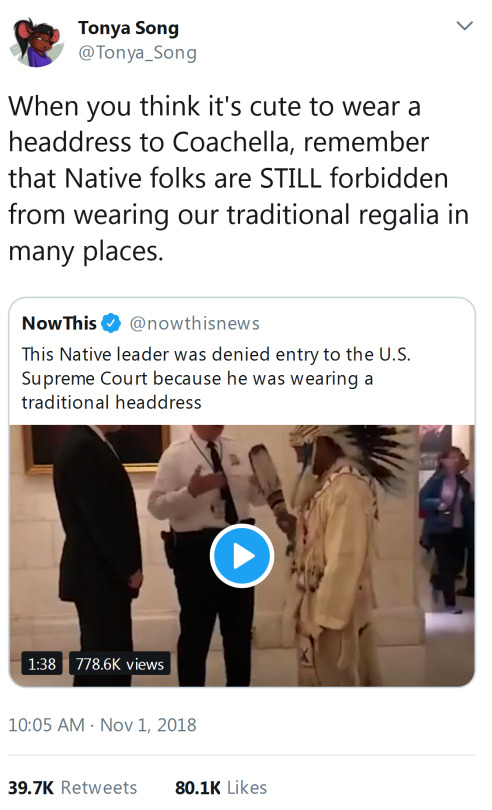
“In 1885, Canada’s Indian Act outlawed the potlatch, an exchange of wealth practiced by the Aboriginal nations of the Northwest Coast. An 1895 amendment to the Act widened its scope to include “any Indian festival, dance, or other ceremony.” […] any occasion featuring dance regalia made out of feathers or furs. Similarly, in 1883, the United States Bureau of Indian Affairs issued a circular entitled “The Code of Religious Offenses,” which declared Aboriginal ceremonies punishable by imprisonment.
A Department of Indian Affairs circular dated December 15, 1921, and endorsed by Duncan Campbell Scott — the top official who declared his intention “to continue until there is not a single Indian in Canada” — states that the Indian agents who represented the department at the local level were to “use [their] utmost endeavours to dissuade the Indians from excessive indulgence in the practice of dancing.” Mr. Scott was of the opinion that dancing was a “waste of time” that encouraged “sloth and idleness.” Such “demoralizing amusements” were an “obstacle to continued progress.”
To discourage the sun dance, Indian Affairs employed the services of the Royal Canadian Mounted Police and devised a pass system wherein any Aboriginal person absent from his or her reserve without permission of the Indian Agent could be arrested as hostile. This was a treaty violation and amounted to forcible imprisonment. But Aboriginal peoples are creative subversives: we modified our customs to make them harder to detect, and we gathered on European holidays to celebrate our traditions. Still, a number of people were charged with violating the anti-dancing laws, and most went to jail.
In one infamous case, a blind 90-year-old man in Fishing Lakes, Saskatchewan, was convicted of dancing and sentenced to two months hard labour – until public outcry forced authorities to suspend his sentence. In 1922, during a series of potlatch prosecutions, those convicted were told they could avoid prison terms if their fellow villagers surrendered all ceremonial masks, rattles, and jewelry. The villagers complied, and many of these objects were sold to the Royal Ontario Museum, the Canadian Museum of Civilization, and private collectors. Still other items were simply piled up and burned on the beach.“
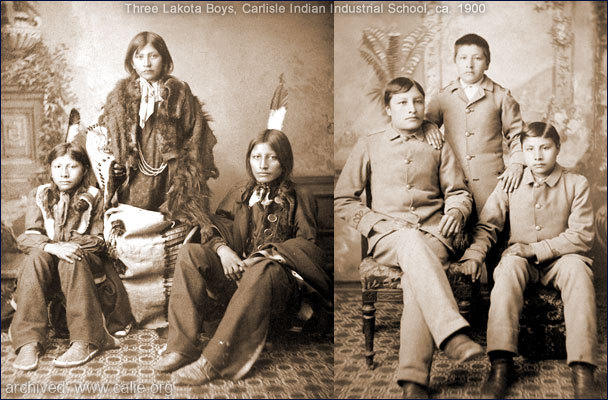
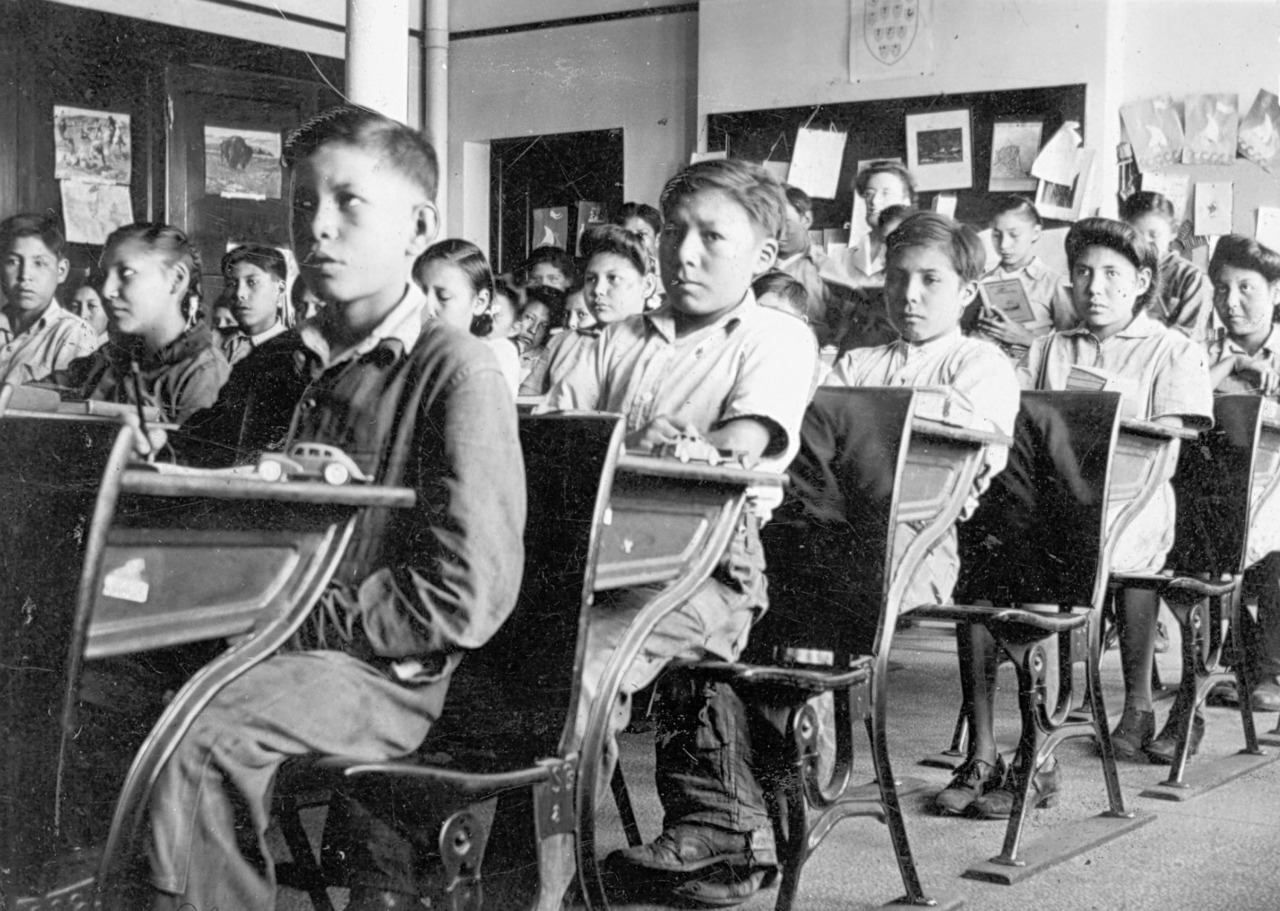
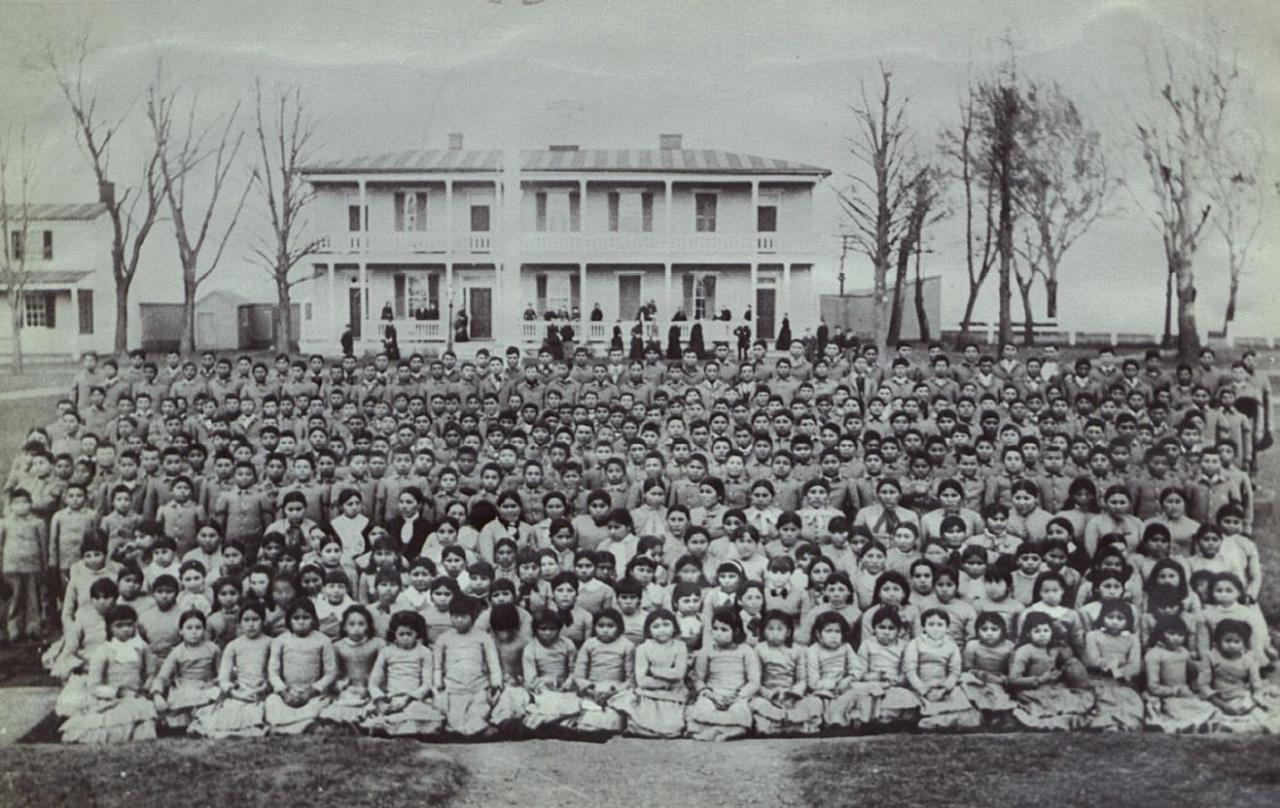
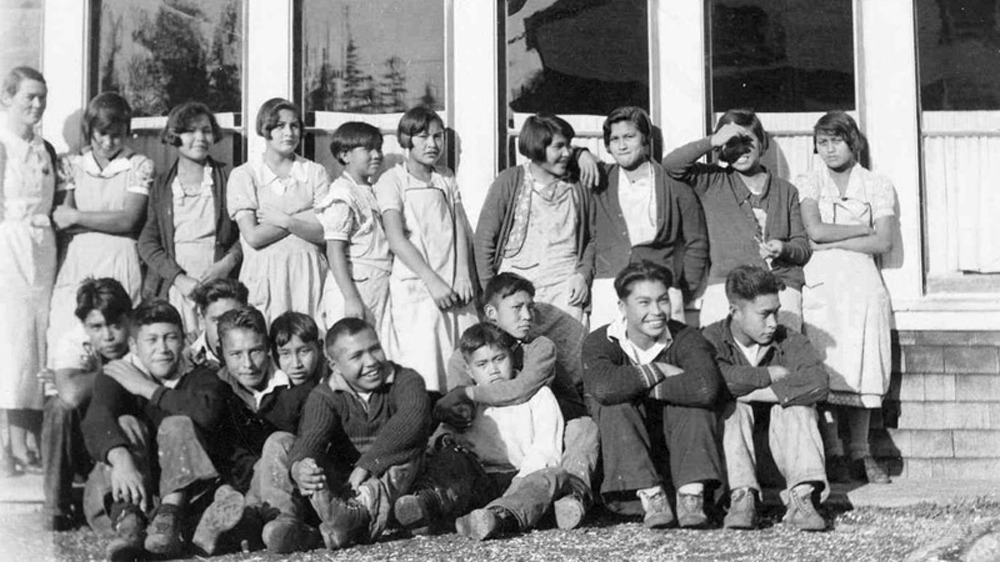
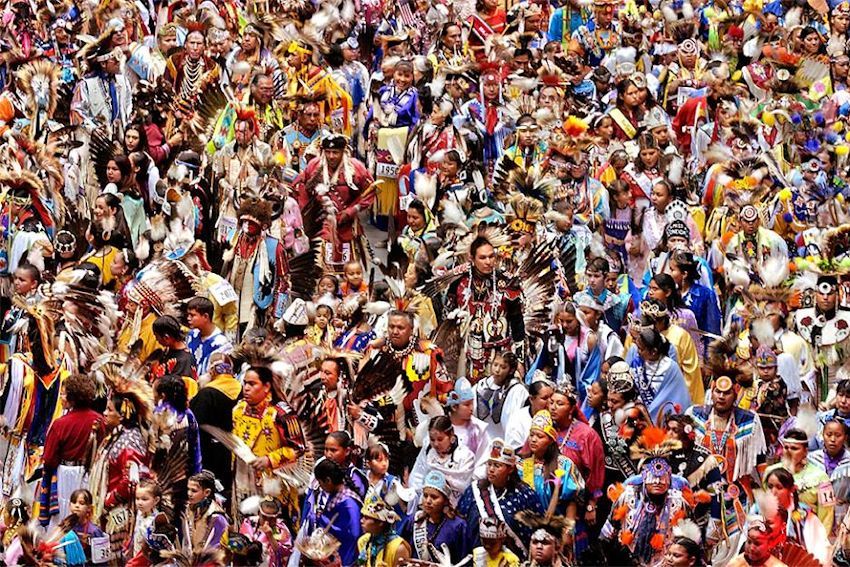
The psychological damage and cultural trauma was so great that it wasn’t until the 60′s and 70′s that pow wow’s experienced a revival in US & Canada. Generations of families under strict assimilation made people fearful and ashamed of expressing their culture and language, or unable to due to lost family traditions.
Think about that stain on the pages of history next time someone flippantly calls a group meeting a “pow wow”.
name one native american intellectual off the top of your head, name one native american actor or actress off the top of your head, name one native american senator, one native american news anchor, or an author or a tv personality or a singer or a poet or a comedian, name a single native american teacher you’ve had, can you? probably not
ok so now think of one native american cartoon character you know of or a sports team relating to native americans whether it’s their actual name or their team logo, or a town you live in or near with a “native” name bet a lot of these things came to you right away i bet you didn’t even have to think
needing native representation in media, education and government are not decoy issues, the commercialization and appropriation of native cultures are not decoy issues, the lack of native representation is institutional oppression at work
White people specifically need to reblog this, I don’t CARE if it makes you uncomfortable–that’s the point. Listen to Native voices about Native issues PLEASE
I particularly want more Native American voices in speculative fiction.
I can, however, name a Native American author: Rebecca Roanhorse. This year’s Campbell winner (best new author) and Hugo winner for best short story for “Welcome to your Authentic Indian Experience.”
White people?
Read that story. You might not enjoy it. But read it.
I need to get my hands on her novels. Roanhorse is deft and talented and deserves every accolade.
And while checking her out, I found this blog on Tor where she recommends more Native American authors. The blog highlights another problem.
The authors she mentions are: Cherie Dimaline, Stephen Graham Jones and Daniel Wilson. The editors she mentions are: Hope Nicholson, Elizabeth Lapensee and Weshoyot Alvitre.
From the names, I would only have guessed Weshoyot Alvitre was Native right off. Cherie Dimaline and Elizabeth Lapensee also kind of hint it, but I did not know Daniel Wilson wasn’t white. He’s Cherokee, and I had no idea…he’s a roboticist who writes robot stuff, and while I haven’t read it…I’ve heard so much, I just haven’t got around to it yet (I often have to be read shelves including stuff I need to re-read).
So, be aware that you may well know a Native American author, but simply not know they aren’t white. Dig a little!





 Urocyon's Jaunts 2.0
You must be logged in to post a comment.