OK, probably time for a cheese sandwich or something to regroup after the cooking disruption. (New idea: frozen tilapia!)

Still set to work on that in a while, but the blood sugar crash trying to happen isn’t going to help anything. Plus I need to get some meds in shortly.

At least getting temporarily stalled on supper past 9 p.m. is less of an issue with me the only human here relying on it tonight. *wry smile*

lemonsharks:

shedoesnotcomprehend:

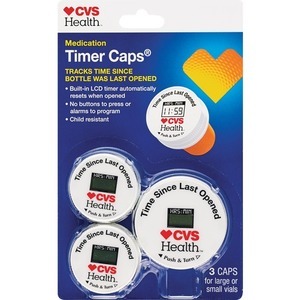
I have some medication bottles with timers built into the lids that automatically tell you how long it’s been since you last took a dose (opened the lid), and these things are so convenient I’m actually kind of stunned they’re not more common.

You don’t have to go through the whole rigamarole of “wait, did I just take my meds five minutes ago, or did I just think about doing it? … great, should I maybe miss a dose or maybe take a double dose?” every other time you take them. You don’t have to try to remember what time it was when you woke up in the middle of the night and groped around for the bottle and took the next dose and fell back asleep. If you’re taking more than one medication, you don’t have to keep track of which you took when. And of course doing all that when you’re sedated or have a fever or are just in pain is extra fun.

Plus: pediatric medicines. When I or any of my siblings got sick as babies, my parents used to write up a chart on the whiteboard, every time, with medications and dosages and times. Because they’d be switching off taking care of us, and it would just be way too easy for Mom to give the baby something that Dad had just given them ten minutes before but not thought to mention (and with a baby, that can be pretty dangerous). With timer-caps, you’ve got perfect information-sharing: you don’t just know what’s the last time you gave the baby the medication, you know what’s the last time the medication was used.

So it really seems like this should be more of a thing! I mean, ordering them online cost me a couple of bucks each; so if the manufacturers were just building in timers by default, what should that actually add to the price, maybe a quarter for each bottle? A dollar at the outside? That’s definitely within the store brand – name brand variation for even cheap over-the-counter medications. I’d happily pay fifty cents extra to buy a bottle of advil off the shelf at the grocery store that had a timer built into the lid to count out four-to-six-hours for me.

At the very least, I’m kind of surprised that this isn’t a default feature on, like, prescription painkillers. My parents did the whiteboard thing again for me after I had jaw surgery, because I was on the good drugs and in no condition to keep track of whether I’d had a dose recently or not. I strongly suspect that having a timer that set itself automatically – so that even someone pretty drugged up could look at it and see if it had reached 6:00:00 and turned green – would make a nontrivial difference in the rate of accidental overdoses. And given how much those drugs cost, adding a dollar timer to the lid is completely insignificant.

So I’d really expect consumers to be demanding these for the convenience, federal regulations to be pushing them for safety, and drug manufacturers to be happily showing them off as a “check out the cool fancy bonus gadget our brand has, because we care.” And yet as far as I know this happens literally zero – you can buy the timer lids online, if you know they exist, but no medication I’ve ever seen is just sold in bottles that have timer lids by default.

You can get them here: https://timercap.com/order-now/

They cost about $5/each and the batteries last for one year. They come in childproof and easy-open!

Massive drop in London HIV rates may be due to internet drugs

bittersnurr:

californiarocketfuel:

reliquariies:

Gay men who defied medical advice seem to have changed the course of the HIV epidemic in the UK – for the better.

Four London sexual health clinics saw dramatic falls in new HIV infections among gay men of around 40 per cent last year, compared with 2015, new figures show.

This decline may be mostly due to thousands of people buying medicines called pre-exposure prophylaxis (PrEP), which cut the chance of catching the virus, online.

“We need to be very cautious at this stage, but I can’t see what else it can be,” says Will Nutland at the London School of Hygiene and Tropical Medicine, who has set up PrEPster, a website that gives people information on how to give themselves PrEP. “Something extraordinary has happened in the last 12 months because of a bunch of DIY activists working off our kitchen tables.”

The medicine has been approved in the UK as a drug for preventing HIV infection in both men and women, but it isn’t yet available on the National Health Service.

“People say, ‘Why don’t gay men just use condoms?’,” says Mags Portman of the Mortimer Market Centre in London, one of the clinics that has seen large declines in diagnoses. “They do, but not all the time. Straight people don’t use condoms all the time either.”

To avoid paying £400 a month for private prescriptions of the brand-name drug Truvada, growing numbers are buying generic versions from online pharmacies in India and Swaziland for £40 a month, through a UK website called I Want PrEP Now.

International drugs

Until recently, most doctors would have advised against buying any medicines online, warning that the process could be illegal or the drugs may not be safe. While it is legal to buy up to a three-month personal supply, it can seem shady as the medicines are sent through several countries to get around custom laws.

But attitudes are changing. Some sexual health doctors now help people who source PrEP online by providing blood tests to check the pills are real and urine tests to ensure people aren’t getting kidney damage as a side effect. So far no pills have turned out to be fake.

These doctors were also reassured when the regulatory body, the General Medical Council, told them its ethical guidelines say clinicians should give patients information about treatments they cannot offer themselves, says Portman.

I like how this article’s tone is amazement/amusement that “internet drugs” are helping instead of disgust that men are having to get drugs shipped from thousands of miles away when they live right next to pharmacies because capitalism creates public health crises for profit.

⬆️⬆️

This isn’t just a problem with these drugs. I have seen multiple people I know in the UK ordering drugs online out of desperation. Like one that comes to mind is apparently the anti-nausea drug I easily get filled in the US is something a friend of mine has to order online in the UK. This is a thing that blocks treatment in general.

Massive drop in London HIV rates may be due to internet drugs

Trans women are scared to mix HIV medication with hormone therapy

euryale-dreams:

smartassjen:

projectqueer:

Trans women living with HIV who do not take their antiretroviral medication (ART) said it was because they were worried about harmful interactions it could cause with their hormone therapy. A study of trans women in Los Angeles showed more than 50% of those living with HIV were concerned ART and feminizing hormone therapy (HT) could result in harmful drug interactions.

Not much is is clinically understood about the interaction between the two treatments.

The National Institute of Allergy and Infectious Diseases (NIAID) and the National Institute of Mental Health (NIMH) carried out the study. They said the results were concerning. Firstly, because trans women are in a high-risk group for acquiring HIV. But also because starting ART soon after diagnosis prevents long-term health problems and transmitting HIV to a sexual partner.

The NIAID and NIMH presented the survey findings at the 9th International AIDS Society Conference on HIV Science. The conference is currently on in Paris.

CLICK THE HEADER LINK TO READ THE FULL ARTICLE.

The medical establishment really doesn’t know shit about trans bodies. Like, doctors can’t just say, “Don’t worry, it’s absolutely safe to take ARV’s while undergoing HRT.” WHICH WOULD SAVE LIVES.

Trans women think they have to make a choice between them.

And to anyone who looks at this and wonders why on earth anyone would chose hormones over life saving meds, it’s because hormones ARE life saving meds too.

The concern surrounding HIV medication and HRT has to do with a protein in your liver known as cytochrome P450 3A4 (CYP3A4) that is responsible for metabolizing various medications in your body. If a drug interferes with CYP3A4 it can have consequences on the metabolism of other drugs that rely on CYP3A4, causing you to absorb an inappropriate dose of that drug.

A drug that is used in hormonal contraceptives but which is no longer used in hormone replacement therapy for transgender women, ethinyl estradiol, was found to modulate CYP3A4. Because many HIV medicines rely on CYP3A4 this became a concern for HIV+ women taking hormonal contraceptives.

No research has been done on hormone replacement therapy or drugs nowadays used in hormone replacement therapy (micronized estradiol and estradiol valerate). Nonetheless, some doctors are concerned that the estrogen used in HRT have the potential to interfere with CYP3A4 in a significant way and that trans women receiving HIV treatment should be closely monitored for drug interactions.

I want to stress that this is all very theoretical at this point and that no interaction has yet been identified between transgender women’s HRT and antiretroviral drugs (HIV medication). Those who are concerned can read about the current state of research in this literature review which I encourage you to print out and bring with you to give to your doctor.

None of this means that HRT and HIV medications cannot be used at the same time! In fact HIV+ transgender women have been using HRT and antiretroviral medication, successfully, for a very long time. Here are some things that you should keep in mind:

The drug interaction in question, if real, would not in any way fundamentally interfere with the effectiveness of either therapy. The only thing that is of concern is that your dosages might need to be adjusted because the combination of drugs would affect how your body absorbs one or both medications. This kind of adjustment is normal, even when there isn’t a drug interaction. As long as your viral load and serum estradiol are within acceptable limits then your therapy is working and you have nothing to worry about.

People who are extra concerned about this (and you really shouldn’t be) also have the option of using estradiol patches which, because they bypass the liver, should have a minimal impact on CYP3A4 and your HIV medication. Theoretically, it shouldn’t have any more affect on your HIV treatment than the estrogen produced in cisgender women’s bodies. Again, I want to stress that many trans women use oral estradiol with HIV treatment and are just fine so if you can’t afford patches then do not worry about it.

Finally, I want to underscore that doctors prescribe drugs that interact with each other via CYP3A4 all the time. It is not a big deal and there is nothing special about HRT and HIV treatment that would make this combination of drugs different.

So… take the drugs that you need to live a full life and take the drugs you need to live a long life. You’re going to be just fine.

I’m not a physician and I want to stress that even if I were a physician a Tumblr post does not constitute medical advice. I made this post to inform and to empower HIV+ trans women to seek life-saving medical treatment and to understand that HRT is not incompatible with the drugs they need to fight HIV.

Edit: I don’t know why I emphasized CYP3A4′s role during first-pass metabolism. It is important in excretion, too but… the post remains valid regardless. I fixed it, anyway.

Trans women are scared to mix HIV medication with hormone therapy

slashmarks:

The fact that antidepressants and antipsychotics are both ultimately harmful to recovery is not new information at this point. Both of those have been established for years.

Why do doctors still prescribe them? Lots of reasons:

-Accepting that you’ve been hurting your patients and increasing their chances of relapse for no/limited reasons for years, maybe decades, is a hell of a thing. The cognitive dissonance in favor of ignoring it, or deciding the evidence has to be wrong, is heavy.

-They don’t keep up with current research, or they don’t keep up with the journals this has been published in, or they kind of sort of do but they only had time to read a few articles and really they’re busy and out of school and journal subscriptions are expensive, you know?

-Some of them just don’t care. Particularly in the case of anti-psychotics, which make relapses more frequent and more likely, but temporarily shut patients up and make them/us less annoying through sedation.

-Many doctors just don’t understand science that well – practicing medicine is very different from doing research. Even if they see the evidence, they think, “Well, my patients got better [because of placebo/because of other factors/because of coincidence/yeah, for six months until they stopped seeing you and then they relapsed], so this article has to be wrong,” and move on with their lives.

Realistically, institutions move slowly. Medicine moves slowly. Professionals don’t like changing their minds or methods, especially when doing it might incur guilt. ECT (”shock” therapy) is still used by some doctors. The French psychiatric system still heavily uses Freudian theory. This shit is not going to change until we change it.

Antidepressants and the Placebo Effect

slashmarks:

bittersnurr:

oleandir:

heavyweightheart:

“Antidepressants are supposed to work by fixing a chemical imbalance, specifically, a lack of serotonin in the brain. Indeed, their supposed effectiveness is the primary evidence for the chemical imbalance theory. But analyses of the published data and the unpublished data that were hidden by drug companies reveals that most (if not all) of the benefits are due to the placebo effect. Some antidepressants increase serotonin levels, some decrease it, and some have no effect at all on serotonin. Nevertheless, they all show the same therapeutic benefit. Even the small statistical difference between antidepressants and placebos may be an enhanced placebo effect, due to the fact that most patients and doctors in clinical trials successfully break blind. The serotonin theory is as close as any theory in the history of science to having been proved wrong. Instead of curing depression, popular antidepressants may induce a biological vulnerability making people more likely to become depressed in the future.”

like is this for fucking real???? WHAT?

And I need to know if a similar study has been done on adhd meds 

Edit: I googled the journal and it sounds like a legit journal, but the conversational writing style is throwing me off and I want to know more about like. everything about this cause this is a fucking big claim to make

Yeah this is definitely a legit source and since it’s from 2014 if no one has found anything wrong in this yet….

I mean on some level I do understand. Like I could have reblogged this to my main, I didn’t put it on twitter in the big rant I had today about informed consent with psyche drugs and the fact people claim anti-depressents are “safe”

Because I know people who follow me there are on them and for them they are Working and if I post this they will Stop Working. Some of these people already have the permanent damage from side effects so it’s too late to stop that.

Like the convincing part about this for me is that it isn’t just about the science, it’s about the moral implications and the dilemma. These drugs are placebos, but for the average person they are REALLY FUCKING GOOD placebos. The most effective placebos. This is in fact probably why they keep being prescribed off label for chronic pain, and why people say they work for their chronic pain. For some people… it might be worth it.

That being said FUCK the fact that people are still gaslit and blamed for these drugs not working. If they won’t take them off the market doctors should at least be educated in the fact these are placebos. I know they are not because while my therapist DOES think they are useless trash pills she does not seem to be aware that that is intentional.

Also ADHD drugs are not fake (unless they are fake stimulants)I know this because I have been told that meth works as a substitute and people occasionally find out they need adhd meds because they used meth recreationally. Caffeine in huge quantities apparently also works for some people. So those are a normal “it probably won’t work for everyone but it definitely does for some people. Also they probably would not be on the market otherwise because lol controlled substance.

For the record, placebos still work if people know they’re placebos; placebos actually can get more effective if a doctor gives them to you and explains the placebo effect and that you should expect to experience it, iirc, though I read that elsewhere. (The article talks a bit about this.)

It also discusses the fact that antidepressants have bad enough side effects and are physically addictive enough that knowingly using them as placebos probably isn’t ethical, but all other depression treatment has similar effectiveness, and you could also prescribe, like, sugar pills as an open placebo.

There’s also the fact that people who have been on antidepressants are more likely to become depressed again later. This is an effect separate from severity – it’s not that people who are likely to relapse are more likely to be prescribed drugs, the drugs cause the later vulnerability. (The article cites studies on this subject, if you want to verify it, read it again.)

Of course, for people who are already physically addicted to them and are already susceptible to relapse because of them, the balance of factors is different.

As for whether the article is accurate, the results have been replicated – that is, other people have done the same thing and found the same results – four times, and they cite two additional similar studies which had similar conclusions.

Antidepressants and the Placebo Effect

papi-chulo-bucky:

rainbowwhimsyart:

backstageleft:

nonespark:

a-littlebit-ofsunshine:

palewansickly:

OMG. This. Changes. Everything.

Reblogging for my followers who might have trouble remembering whether or not they’ve taken their medicine!

OH MY GOD, THIS WILL HELP ME SO MUCH. I GET SO SCARED WHEN I DON’T KNOW IF I JUST TOOK MY MEDS TWICE.

THANK YOU, I’M ABOUT TO CRY.

Let me share with you guys a product that super helps me remember if I took my meds or not (because while the above is great, I still would manage to confuse myself):

They count as soon as you put the top back on. So if I don’t know if I’ve taken my medication for the day, I can check the cap to see how long ago I opened the container! It’s brilliant! 

JFC THIS IS A GAME CHANGER.

I KNOW THIS IS MY ART BLOG BUT EVERYONE WHO TAKES MEDS SHOULD SEE THIS.

Don’t forget! ♥️

Reminded by one reblog from earlier getting another note.

One cost comparison: I actually picked up a mail order prescription from the post office this evening. I’m not thrilled about needing to go the Dodgy Online Consulting route, and pay out of pocket for something that I should be able to get from the NHS totally free. But, that’s more a matter of principle than anything else.

How much did for 6 months of BCPs totally out of pocket (with prescribing fee included) set me back?

Yep, a grand total of £29. Or US$37.40, at the current rate. Working out to £4.83 or $6.23 per month.

Which seems pretty standard here for most pill formulations, looking at other online consulting pharmacies. I wasn’t even shopping around for the best price there.

Out of curiosity, I just did a search for the same formulation under the US names on GoodRx. What did that turn up?

Yep, $9/month minimum, which was honestly lower than I expected. Mostly somewhere around $20/month.

Compared to the $6.23 I just paid for the same thing, which did have a consulting fee included. And probably wasn’t the cheapest possible to help keep me out of Cramp Hell.

It’s not like we’re getting bargain basement pharmaceuticals here. It’s the same manufacturers. There’s just at least that big a difference in what they can get away with charging. Sometimes it’s a lot more than with this particular example.

(I also paid £50 for an emergency dentist appointment with x-rays included, and maybe £12 total for two antibiotics the last time I had to go. Don’t even want to know what that would have cost us back home 😨)

Here’s hoping the small post office branch up the street really is open until 8 p.m., as indicated doing a search. I really need to get up there to collect a package, and it’s already after 6.

But, I’m also dizzy enough from the weather that it would be dumb to even try to walk it without at least getting some electrolyte drink in and resting a little while to see if that helps. Extra frustrating with it only being a few blocks, but still.

I mean, worst case I could wait until tomorrow, but it’s something I should really have today. The forecast is also pretty much the same again.

Executive Function Master here put off ordering more BCPs to stave off Cramp Hell until the last minute, and took the last one yesterday 😬 Definitely not going to complain about the shipping time from that pharmacy, but yeah. One missed/late dose is enough to cause problems, from experience. So I would really prefer not needing to do that.

The option of getting something urgent delivered for pickup at the post office is usually handy. Sure, it requires a stroll up there, but at least you don’t have to worry about getting a redelivery slip instead of the package.

Not a great situation in general, but doing my best here. I’m also pissed off again about even needing to self-treat this problem, out of pocket with the extra hassle involved. But, it’s better than the main alternative of spending at least a week pretty much incapacitated (and with looping suicidal thoughts) every month.

Getting worked up about the bigger situation there really isn’t going to help right now, but jfc you would think somebody would see that’s an unacceptable state of affairs for literally anyone. Even if they don’t dare mention the suicidal thoughts from pain.

Humans’ Use Of Pain-Relief Creams Proves Fatal To Felines

swagalicioussquids:

ksiouxw:

strixus:

flaredownapp:

Important for spoonies with cats!

Creams with Flurbiprofen are fatal to cats.

Brands that use this chemical (Not a complete list):

Myoflex
Traumeel
Capzasin

If you have cats, check your pain relieving cream for this, and keep them from ingesting it, please!

http://www.medicinenet.com/script/main/mobileart.asp?articlekey=694

Oh no! Boosting for all cat owners.

Here’s a more thorough article about this, which includes info about other types of pain relief cream + tips for keeping pets safe if you use pain relief cremes of any kind! And here’s another one that talks about other types of topical medications (hydrocortisone, antibiotic ointment, hormone cream, etc.).

I didn’t see a mention anywhere, but most NSAIDs are toxic enough to cats that I would also be very careful with topical Voltaren/diclofenac or ibuprofen. Which seem to be more common than flurbiprofen in the UK, that I know of.

Humans’ Use Of Pain-Relief Creams Proves Fatal To Felines