How culinary propaganda from a women’s magazine made Thanksgiving a thing

dr-archeville:

On November 26, 1863, the United States celebrated its first official Thanksgiving.  Aside from the small matter of the Civil War, the Union had a lot to be grateful for.  Business was good.  The nation’s boundaries and population were growing.  Relations were peaceful with every foreign power except the Confederate States of America.  And so on October 3, President Abraham Lincoln issued a proclamation, written by Secretary of State William H. Seward: “I do therefore invite my fellow citizens in every part of the United States… to set apart and observe the last Thursday of November next, as a day of Thanksgiving and Praise to our beneficent Father who dwelleth in the Heavens.”

Across the Union, from the White House to the log cabins on the frontier, Americans ate turkey with gravy and stuffing — preferably oyster, back when it was still plentiful and cheap — and many, many pies (though Lincoln may have substituted his own favorite dessert, a vanilla almond cake).  In New York City, there were parades of “fantasticals” who dressed up in costumes and beat on drums and played horns as they marched through the streets.  There was even football: a soldier stationed in Indiana reported in a postprandial letter home that “the boys are taking a game now.”  It was as though America had gotten Thanksgiving right on its very first try!

Thanksgiving has a reputation now as a placid holiday, a peaceful interlude before the noisy Christmas season when there is no pressure to buy the perfect gift or feign good cheer and belief in flying reindeer.  (Cooking an edible turkey is another story, but there are always side dishes and, if all else fails, pizza delivery.)  There has never been a great Thanksgiving song.  Its accessories, particularly gourds, have become the subject of mockery.  Even its origin story is kind of dull — a bunch of women in bonnets and men in ridiculous hats and buckled shoes once ate a meal with their Native American neighbors.  But the truth is, Thanksgiving was not always a peaceful relic of the good old colonial days.  It was actually dreamt up by a magazine editor.  And sometimes it was even contentious.

By 1863, although the concept of a celebration on the last Thursday of November was new, Americans already had lots of practice giving thanks.  November 26 was not even the first Thanksgiving that year: on August 6, Lincoln declared a day of celebration in honor of the Union’s victory at the Battle of Gettysburg.  Earlier in the war, Confederate President Jefferson Davis had twice proclaimed his own Thanksgivings to celebrate each of the Battles of Bull Run.  The first national Thanksgiving celebration had taken place back on December 18, 1777, when Henry Laurens, president of the Continental Congress, declared a need for the new nation to show its collective gratitude for the victory over the British at Saratoga.

The only thing that made Lincoln’s proclamation unique was that it established Thanksgiving as a holiday for the entire nation on a predetermined day.  Previously, Thanksgiving celebrations had been entirely dependent on the wishes of presidents and governors who could declare a Thanksgiving whenever they felt a celebration was in order.  Public holidays were in short supply in early America.  There was only one, aside from the weekly Sabbath: the Fourth of July.  Even Christmas was a workday in some parts of the country — before Charles Dickens turned it into a family holiday, it was such a raucous celebration that the Puritans felt it had to be sinful.  So Americans were particularly grateful for any extra days off.

(Conversely, civic leaders could also declare fast days if they felt the people were in need of repentance, though the only American president ever to do so was John Adams, twice.  He never used his executive power to declare a Thanksgiving.)

Thanksgiving as we know it originated in New England.  Its earliest incarnations involved a special church service and lots of speeches; it usually took place on Thursday, possibly because that was market day when everyone would be in town anyway.  Gradually, New England Thanksgiving expanded to fill the entire weekend, through Saturday night, with dances, hunting parties and lots and lots of food.  Originally turkey was the bird of choice because, on the scale of luxury, it ranked above the goose — but below the unforgivably decadent swan and peacock.  Later, everyone ate it because that was what people had “always” eaten, even though wild turkeys were virtually extinct by the time of the Revolution.

In those early days, no one mentioned the Thanksgiving story we learned about in elementary school.  New Englanders celebrated Forefathers Day on December 22, but only to commemorate their ancestors’ fortitude in surviving that first miserable winter of 1620.  The story of Squanto, the corn-planting, and the feast with the Wampanoag neighbors had been forgotten and would not be resurrected until the manuscript of William Bradford’s “Of Plymouth Plantation” was rediscovered in the 1850s.  By then, Thanksgiving dinner had become firmly entrenched in American tradition, thanks to the efforts of New Englanders who had moved elsewhere.  (They formed their own expat societies, wrote James Baker in Thanksgiving: The Biography of an American Holiday, “much to the annoyance of New Yorkers who found Yankee self-absorption irritating.”)

No New Englander was more devoted to the cause of Thanksgiving than Sarah Josepha Hale, a New Hampshire native.  Widowed as a young woman, Hale decided that instead of remarrying, she would support herself and her family with her writing.  Her first novel, Northwood, published in 1827, had an entire chapter devoted to the traditional Thanksgiving dinner with a loving description of the groaning board that held not just a roast turkey and stuffing, but also “a sirloin of beef flanked on either side by a leg of pork and a loin of mutton… a goose and a pair of ducklings… and that rich burgomaster of the provisions, called a chicken pie.”  There were pickles and preserves and bread and butter and an assortment of cakes and puddings and pies, “yet the pumpkin pie occupied the most distinguished niche.”

(Not everyone’s Thanksgiving was like this, of course.  Culinary historian Bruce Kraig, whose new book, A Rich and Fertile Land: A History of Food in America, points out that roast turkey was a luxury available only to those with access to a cast-iron stove.  Even as late as 1863, many people didn’t have them.  “They either cooked the turkey before an open fire in a roasting pan, which took a long time,” he says, “or they braised or boiled it over the fire.”)

In 1837, Hale became editor of Godey’s Lady’s Book, the pre-eminent women’s magazine of the 19th century, a sort of combination of Good Housekeeping, Gourmet, Architectural Digest, Vogue, and The New Yorker.  She stayed at her post for more than 40 years and used her considerable power to advocate for some of her favorite causes, which included education for women, celebration of American writing, the preservation of historical monuments, and, especially, the establishment of a Thanksgiving holiday on the last Thursday of November.  This, she argued, would bring Americans together: “For one day the strife of parties will be hushed, the cares of business will be put aside, and all hearts will join in common emotions of gratitude and good-will.”

She published a full range of Thanksgiving propaganda: poems and short stories glorifying the holiday meal (these fictional menus were always very similar to the meal in Northwood), recipes so readers could recreate them at home, and suggestions for table settings and decorations.  And every fall her Editor’s Table column contained a plea for a national Thanksgiving celebration, along with a tally of the states and territories that had already accepted it.  This was, in part, a gesture of self-congratulation: from the beginning of her editorship, Hale took it upon herself to write personal letters to every state and territorial governor and U.S. president, who might not be regular readers of Godey’s, urging them to adopt Thanksgiving.

The governors of Virginia were particularly resistant to Hale’s pleas, as Diana Karter Appelbaum recounts in Thanksgiving: An American Holiday, An American History.  Many Southerners already disliked Thanksgiving because they’d heard that New England preachers took advantage of the special Thursday service to preach sermons on more secular subjects, such as the evils of slavery.  They took this personally.  The Episcopal and Presbyterian churches independently declared Thanksgiving a church holiday, but Governor Joseph Johnson refused to make it a civil holiday, citing Thomas Jefferson’s belief in the division of church and state.  Although Johnson declared a day of Thanksgiving in 1855 to celebrate the end of a cholera epidemic, he pointedly called it for November 15 when the rest of the country would be celebrating on the 29th.  When Hale appealed to his successor, Henry H. Wise, he responded: “The theatrical national claptrap of Thanksgiving has aided other causes in setting thousands of pulpits to preaching ‘Christian politics’ instead of humbly letting the carnal Kingdom alone and preaching singly Christ crucified.”  In other words, “Lady, here’s what you can do with your goddamned abolitionist holiday.”

Even after they rejoined the Union, Southerners remained hostile to Thanksgiving.  Congress didn’t vote to make it an official federal holiday until 1941, so observation until then was still technically a matter of choice.  Oran Milo Roberts, governor of Texas from 1879 to 1883, refused to acknowledge it.  “It’s a damned Yankee institution anyway,” he said.  Alabama and Louisiana had days of Thanksgiving in 1875 and 1877 to celebrate the exclusion of African-Americans from their state governments.  Georgia had its own post-Reconstruction Thanksgiving in 1877, a week earlier than the rest of the country.  Wrote the Atlanta Herald, “Let praise be given to God that he delivered the South from her bondage.”

Despite this, Southerners were well steeped in Thanksgiving cuisine.  They may not have had cranberries (fruit-shipping was an innovation for the 20th century, says Kraig), and they may have substituted sweet potato for pumpkin and cornbread for Indian pudding, but they had their turkeys, their stuffing, and most of all, their pies.  Southern women, after all, were readers of Godey’s Lady’s Book, too, and Hale and her publisher, Louis Godey, had always taken great pains to disguise their own opposition to slavery so as not to alienate subscribers.  The magazine itself folded in 1878, the year after Reconstruction ended, but the image of Thanksgiving that Hale had created and so carefully cultivated lingers still.

Maybe the strangest part of the entire Thanksgiving story is how all its strangeness and contentiousness has been erased in favor of bland images of Pilgrims and cornucopias and the ritual of going around the table forcing each guest to announce what he or she is most grateful for.  That had not been Lincoln’s intention in the original Thanksgiving proclamation.  He’d asked for humility and penitence from his fellow Americans and compassion for war widows and orphans and, most of all, “I firmly implore the interposition of the Almighty Hand to heal the wounds of the nation and to restore it as soon as may be consistent with the Divine purposes to the full enjoyment of peace, harmony, tranquility and Union.”  It’s something worth remembering as we come to the end of another angry year.

How culinary propaganda from a women’s magazine made Thanksgiving a thing

teashoesandhair:

Everybody grab a pumpkin, it’s time for a spooky Halloween
tale. This time, it’s the story of Pwyll from Welsh mythology, who embarks on a
treacherous journey into the bowels of the Underworld to do penance for a
terrible, terrible wrong. Read on, if you dare. Sources and some extra spooky
info under the cut. Pretend that I’m cackling evilly.

Press J on your keyboard if you don’t want to read a terrifying yarn about the interior decorating trends of the Underworld and, like, the power of friendship.

Cockblocking yourself because of dogs: pre-Medieval etiquette 101

So our story starts with Pwyll, the prince of Dyfed, which
sounds kind of underwhelming until you remember that Welsh princes are
basically kings, which sounds really impressive until you remember that Dyfed
is approximately the size of a root vegetable and about as sparsely populated.
Anyway, Pwyll is sort of swanning around one day, on one of his royal visits to
his favourite court at Arberth (no relation to the hot bearded guy in The Mummy
with the face tats) when he decides to partake in a spot of hunting, because
he’s a pre-medieval prince and therefore he only has two hobbies, one of which
is hunting and the other is converting oxygen into carbon dioxide.

So, he gathers up his hunting dogs and his multipurpose
horse, and he sets out into the forest to murder some woodland creatures in the
name of sport. After a few hours, Pwyll starts to get bored, because it’s not
going so well. He hasn’t caught so much as an earthworm, and he really can’t
face the thought of going back to Arberth without at least a baby rabbit or
two, because all the other lords will laugh at him and tell him to ‘Pwyll off’
again, which secretly really upsets him and also gives you, the reader, a
decent idea of how to pronounce his fucking abomination of a name. He’s
considering his options, wondering whether or not he could stick some rabbit
ears onto one of his dogs and call it a catch, when he hears the baying sound
of a pack of hunting dogs in the near distance.

At first, he’s like “I can’t believe that someone else is
hunting in my forests, who would do this? Who would trespass on my royal land?
They could at least have invited me to go with them so that I didn’t have to
spend, like, 80% of my time brooding about my solitude as an unmarried Welsh
prince whose nearest friends live a six hour ride away,” but then he realises
something and his mouth sort of quirks upwards in a fiendish grin, and he heads
towards the sound of the dogs. When he gets there, he sees that a pack of dogs
have just brought down and killed a stag, and not just any stag, but a bloody
big one. There’s enough meat on it to feed his dogs and still have enough meat
to take back to his court and return a hero of the hunt, and so Pwyll chases
off the dogs, who all look really weird, because they’re all bright, glowing
white with bright, glowing red ears, and he lets his dogs eat the stag.

He’s on his way back home when suddenly this dude appears on
horseback, and his face is hidden by a grey hood which casts dark shadows over
his visage that shouldn’t be possible, but if his face were visible, it’s
pretty evident that he’d look pretty pissed off. The rider comes up to Pwyll,
dismounts from his horse, which is the exact same shade of grey as the rider’s
cloak, and he surveys the scene, looking at all the various viscera and bits of
stag, and then he turns to Pwyll and he says “look, mate, I know exactly who
you are, but if you think you’re getting some kind of formal greeting from me,
you can just jog right on.”

Pwyll would take a step back, except he’s on horseback, so
he sort of squeezes his heels into his horse’s sides and makes his horse take a
step back on his behalf, and he glares at this weird grey dude, because he has
no idea where this dude was dragged up, but Pwyll is fully aware that formal
greetings are, like, a huge deal. Pwyll is the kind of guy who formally greets
everyone, because he’s not an ingrate, and if he sometimes gets some weird
looks when he names himself and wishes a good day to each of his bed bugs in
turn, then it’s all fine because at least he is polite.

Because Pwyll is polite, he resists the urge to just yank
down this guy’s hood and lecture him on pre-medieval etiquette until he’s blue
in the face, and instead he just furrows his brow benevolently and says “my
dude, you don’t need to formally greet me if your status is higher than mine,
don’t sweat it,” because he thinks that giving this guy some kind of out is
probably the right thing to do, but the guy just shrugs and says “it’s got fuck
all to do with status, mate, it’s your goddamn atrocious manners.”

And Pwyll won’t stand for that, because he knows he’s a
righteous and courteous dude, and he has like 500 bed bugs who will attest to
that in a court of law, and so he dismounts from his horse and takes two steps
closer to the grey hooded dude and says, in a low and foreboding voice, “can
you extrapolate exactly what I’ve done wrong? Can you explain to me what the
fu- what exactly you mean, so that I can do my utmost best to rectify it?”

At that, the guy turns around and points at Pwyll’s dogs,
who have just about finished chowing down on fresh venison and are all smeared
with, like, blood and guts, like that popular gif of a rabbit eating a
raspberry, except it’s stag innards and not a popular summer fruit, and the guy
says “you fed your dogs on my dogs’ kill. Not cool, man. Not cool at all,” and
then Pwyll’s stomach plummets because he suddenly remembers page 7291 of his
portable pre-medieval etiquette guidebook, and this guy is totally right, and
Pwyll has totally fucked up, and he feels awful.

He claps a hand to the grey guy’s shoulder and starts
wittering, like “I’m sorry, buddy, that’s totally on me, I’ve never done
anything like this before, this is so out of character for me, ask literally
anybody, normally I make my dogs slaughter their own food, I don’t even feed
them Pedigree Chum because it goes against my pre-medieval etiquette and
morals,” and then he has an idea, and he says “look, I’ll make it up to you in
a way that’s becoming of your rank, OK?” And he’s pretty sure that he’s just
resolved everything, because this guy basically admitted earlier that Pwyll
outranks him, so nothing can really go wrong, and maybe he’ll have to, like,
pay a fine, or mop a floor, or marry an ugly third cousin or something. Except
then the guy says “sweet, sounds good to me. I’m Arawn, king of Annwfn. How do
you feel about killing my sworn nemesis in the Underworld?” and Pwyll just
thinks ‘oh, shit.’

So Pwyll grits his teeth and puts on this really calm smile,
even though he feels sicker than Kylie Jenner at a copyright infringement
hearing, and he says “that sounds fucking fantastic, mate, honestly, but I have
loads of stuff to be getting on with here, what with me being the prince of
Dyfed and all, so I’m not sure I’ll have time to kill your sworn nemesis, my
six or seven subjects need me,” and Arawn claps a hand onto Pwyll’s shoulder,
who still has his hand clasped to Arawn’s shoulder, and he’s like “don’t worry,
bro, I’ve got a plan. This is what we’ll do. I’ll do some of my trademark magic
stuff and I’ll switch our appearances, and I’ll go and live as you for a year,
and you go and live as me, and on the final day of that year, you’ll find that prick
Hafgan and bash his head in, and then we’ll switch back. Does that sound good
to you?”

And Pwyll just thinks ‘no, that sounds literally the
opposite to good, honestly,’ but he knows he doesn’t have a leg to stand on
here, so he just nods, tight-lipped, and then he asks “but how will I find this
Hafgan chap? If I have to, erm, vanquish him on the final day, where will he
be?” And Arawn just airily waves a grey-gloved hand and he’s all “don’t worry,
pal, I’ve sorted it. By some astonishing coincidence and definitely not my
trademark magic stuff, I’ve arranged a meeting with Hafgan for a year today at
this very spot,” and Pwyll bites his tongue and says dully “wow, what are the
chances?” and Arawn probably beams under his stupid hood and he’s like “I know,
crazy,” and then the deal is done.

So, Pwyll follows Arawn to the entrance of Annwfn, because
of course the Underworld is located in Dyfed, and then he suddenly realises
that he’s not looking at Arawn any more, but at himself, and he’s like “wow, I
had no idea that my parting looked like that from the side,” and Arawn-as-Pwyll
nods sagely and says “it’s really just the worst, I might change up your hairdo
while I’m living as you, because honestly I can’t live like this,” and Pwyll
doesn’t even disagree, and then Arawn adds “oh, and before I go and live as you
for a year, there’s some stuff you should probably know,” and Pwyll sighs and
says “go on, then,” and Arawn says “right, well, first of all you should know
that killing Hafgan is going to be an absolute fucking walk in the park, because
all you have to do is smack him once and that’s it,” and Pwyll is like “right
in the kisser?” and Arawn says “I don’t think it matters where, honestly, but
you have to only hit him once and no more, that’s the important thing,” and
Pwyll is all “OK, sock him once and only once in the kisser, I get it, but why
do I need to kill him, exactly?” and Arawn says “because he’s the other king of
Annwfn, and also he’s a knob,” and Pwyll is like “how come there are two kings?”
and Arawn scowls and says “because Welsh inheritance law is simultaneously
surprisingly progressive and a pain in the dick, but honestly the whole split
kingdom thing is only 30% of it. The main reason I need him dead is the fact
that he’s honestly just the absolute worst,” and Pwyll is like “how is he the
worst?” and Arawn says “look, I don’t have time to go into it right now, but he
once sent a love letter to a woman which consisted entirely of small images of
an aubergine,” and Pwyll is like “how did he even dictate that to a scribe?”
and Arawn is like “I don’t know, but you see my reasoning, don’t you?”

And then Pwyll asks “What else do I need to know?” and Arawn
sort of waggles his eyebrows, which is weird because he’s wearing Pwyll’s skin
but Pwyll has never been able to do that and he’s insanely jealous, and Arawn
says “the other thing that you need to know is that my wife is smoking hot,”
and Pwyll narrows his eyes and he’s like “OK, and what?” and Arawn says “it’s
entirely up to you what you do with that information, I just thought you should
know,” and then he disappears and Pwyll is alone at the entrance to Annwfn,
wearing the appearance of the king of the Underworld, and it’s only a Thursday.

When he gets inside the court at Annwfn, Pwyll is shocked to
see that this place is, like, decked the fuck out. It’s insane how beautiful
everything is. The staircases are made of solid gold, the ceilings are made of
rich, crimson velvet, and the walls are lined with intricate tapestries which
depict Arawn doing a whole range of heroic things, like slaying his enemies in
fields of blood and attending charity galas and speaking at climate change
summits. Pwyll keeps walking through the court until he gets to what he assumes
is his chamber, where he’s greeted by an attendant. His first thought is to
panic, because he’s pretty sure that they’re going to immediately work out that
he isn’t Arawn at all, but then he steels himself and arranges his facial
features into what he imagines Arawn’s might look like under that dumb grey
hood, and he says, “formal greetings to you, attendant. I am Arawn, king of
Annwfn,” and his attendant frowns and says “I know, sir, I’ve been working for
you for eleven years,” and Pwyll says “I’m just being polite, I noticed that
there’s been a real dearth of manners in these parts lately and I want to
remedy it,” and his attendant looks at him a little strangely and then hands
him a wonderfully brocaded jacket, all gold and emerald, and says “the queen
has already gone to the main hall for dinner, sir,” and Pwyll nods in what he
hopes is a sage and noble manner and says “I always feed my dogs on their own
meat, you know, and no-one else’s,” and the attendant sighs and says “I know,
sir, you’re very proud of that.”

He follows his attendant down to the great hall, which is
decorated, if it’s possible, even more sumptuously than the rest of the court.
The long table in the centre of the room is made of varnished oak, with little
carvings along the edge of animals and gods and emojis, and all along one side
of the table are sat the knights of Annwfn, whose armour is made of pure silver
and gold, and who each have dozens of finely polished, beautifully wrought
weapons. Along the other side are sat the courtiers, who all wear fashionable
and finely made gowns, even the men, because gendered notions of fashion are
not universal. And at the head of the table, in the seat next to the one which
Pwyll’s attendant is guiding him to, is sat the most beautiful woman that Pwyll
has ever seen. Like, it’s indescribable how beautiful this woman is. Pwyll
feels his mouth run dryer than Donald Trump’s income tax account, and, legs
shaking, he lowers himself into the seat next to her. She turns to him and
smiles at him, and Pwyll’s stomach flips over like one of the cats in those
videos with the cucumbers, and he manages to say “formal greetings, wife, I am
Arawn, lord of Annwfn,” and she just keeps smiling at him and says “I’ve always
admired your excellent manners, dear. You know that I don’t merit a name for
the purpose of this narrative in its original form, but you may call me Paula,
husband of mine, as you have done for the past dozen or so years of our
marriage,” and Pwyll just blushes furiously.

Over the course of the meal – which is, Pwyll is unsurprised
to discover, Michelin star quality – Paula is a total babe, laughing at all of
Pwyll’s jokes, even the rubbish one about the mailman and the medieval
etiquette tutor, and when they finally retire to bed, Pwyll is also unsurprised
to discover that he is experiencing some difficulty in the trouser department.
Paula notices this and she does that thing with her eyebrows that Arawn did,
and Pwyll starts to wonder if it’s just an Underworld thing, and she says “is
that a hunting knife in your pocket, or are you just happy to see me?” and
Pwyll says carefully “it’s a hunting knife, dear, for when I go hunting and
feed my dogs on nothing but the animals they kill,” and Paula frowns and says “I
was doing an innuendo thing, you normally love the innuendo thing,” and Pwyll
doesn’t say anything, because he has no idea what to do. He’s pretty sure that
it’s bad form on about eighty levels to sleep with Paula, because firstly she’s
not his wife, and secondly it’s impossible to obtain informed consent from her
when he’s wearing the guise of her husband.

So, Pwyll does the decent thing, and says “look, dear, I’m
desperately attracted to you, as always, but I am experiencing some personal
difficulties which pertain to events outside of our relationship, and which
are, I assure you, thoroughly platonic and non-sexual in context, and accordingly,
I think we should forego the hanky panky for the time being,” and Paula says “you
could just say that you’re not in the mood, you know, I get ‘headaches’ too
sometimes,” and Pwyll says “yes, but I think this might last a year,” and Paula
shrugs and says “our marriage has always been based on more than just our
devastatingly ferocious chemistry between the sheets, and I am here to support
you through your journey of personal growth and discovery as best I can,” and
so they have a slightly awkward hug goodnight and then go to bed.

And that’s how it is between them for an entire year. Pwyll
and Paula become the best of friends, and she never even suspects that he’s
anyone but Arawn, because he’s very careful to mention every other sentence or
so that he always feeds his dogs on their own meat, which is something that he
knows Arawn feels strongly about, and then, before he even knows it, the whole
year has passed, and it’s time to fuck up Hafgan.

He goes to the meeting place, where Hafgan is already
waiting for him, and immediately he just dislikes this dude. Hafgan has one of
those faces where you think you’ve seen him before, but it’s actually just
because he’s super bland and good-looking in the kind of way that men who star
in advertisements for carpet cleaning products sometimes are, and Pwyll
honestly wants to kill him. He’s brought his attendant with him, and Hafgan has
brought his, and a whole load of courtiers from both Arawn’s and Hafgan’s court
have come to watch the duel, and some of them are chanting ‘fight, fight, fight’
and some of them are eating popcorn out of beautifully crafted silver dishes,
and Pwyll feels his adrenaline rush like shoppers to a Black Friday deal, and
he pulls up his sleeves to his elbows and says “formal greetings, I – ” and
Hafgan just waves a hand and says “yeah, yeah, you’re Arawn. I know. Christ,
what is it with you and manners?” and Pwyll says “I’m going to challenge the
fuck out of you right now,” and Hafgan says “bring it on, Manners,” and
wordplay has never been Pwyll’s forte, so he just lunges forward with his sword and
stabs Hafgan right through his chest.

Hafgan stares down at his wound, and he’s like “dude, seriously?
That’s just super painful. I mean, I’m in complete agony right now. The least
you could do would be to kill me like a king. Put the ‘man’ into ‘Manners’,
mate, and finish me off.” But Pwyll remembers what Arawn told him, so he just
shrugs and says “not my problem any more, pal. Put the ‘have gone’ into ‘Hafgan’
and get out of here, would you? Find someone else to finish you off,” and then
Hafgan just groans and says “lads, I’ll be honest with you, he’s properly
dicked me over this time, so you should probably go and swear fealty to him
while I go and slowly bleed out in this corner over here,” and his attendant
carries him off to die slowly and painfully, and Pwyll realises that he’s just
won the entirety of Annwfn on behalf of Arawn, and honestly he feels kind of great
about it.

So, Pwyll goes to the meeting place he and Arawn had arranged the
year before, where Arawn is waiting for him. As soon as Arawn sees him, he breaks
into a smile and he’s like “Pwyll, my guy! We can finally change back! I’m so
excited to be myself again, you never told me that your knee was so dodgy,
mate,” and Pwyll is about to say something when he realises that his knee is
twinging, and he’s back as himself again. Arawn says “wait ‘til you get back to
your court, pal, you’re going to be thrilled with what you find,” and Pwyll is
like “same to you,” and they exchange an awkward silence and then Arawn sniffs
and says “come here, bro, let’s hug it out,” and Pwyll feels tears welling up
behind his eyes and he says “it’s been so emotional,” and Arawn says “I know,
pal, you just did me a massive solid back there, and I owe you one,” and Pwyll
says “if you owe me one, then I guess that means we’ll have to meet up again so
that I can call in the favour,” and Arawn says “mate, you’re welcome at my
court any time, I have this totally rad new bard who recites poetry like you
wouldn’t believe, hit me up sometime,” and Pwyll says through his tears “that
sounds good to me,” and they let go of each other and just sort of look at each
other for a few moments, then Arawn awkwardly punches Pwyll on the arm and says
“go on, get out of here, Pwyll off,” and Pwyll sniffs and laughs and says “it’s
OK when you say it,” and they part ways.

When Arawn gets back to Annwfn, he goes to find Paula and he says “is
that an embroidery bag in your pocket or are you just happy to see me?” and
Paula says “have you worked through your personal problems in a safe and
supportive environment?” and Arawn frowns and says “you what?” and Paula says “well,
it’s just that you haven’t really touched me for a year, and I want to make
sure that this is coming from a healthy place in you, you know,” and Arawn’s
mouth falls open and he says “you didn’t sleep with me all year?” and Paula is
like “I mean, I feel like you should also be aware of that,” and Arawn just
shakes his head and he’s like “oh, Paula, I have something to tell you, and it
starts with the day I met my new best friend, who is a man of great integrity,
honour and fealty, after he let his dogs eat the flesh of an animal they hadn’t
killed,” and Paula puts her hand on Arawn’s knee and says “I’m definitely
listening to you, but also you should put your face in the vicinity of my face,”
and Arawn says “I can do one better than that,” and then the whole scene fades
to black and slow ‘80s synth music starts to play.

And when Pwyll gets back to his court, he finds his advisor and he
asks him “so, indulge me, one man to another, how do you think I did as a
prince this year?” and his advisor looks at him suspiciously, like he’s afraid
to answer honestly, and Pwyll’s heart sinks, because he can’t believe that he
spent the entire year cockblocking himself and improving the bureaucratic
infrastructure of Annwfn, only for Arawn to make a total hash of his time in
Dyfed, and he says “you can be honest,” and his advisor sighs and says “my
lord, you were a better prince this year than you’ve ever been before. You
totally revolutionised the tax system, made peace with Gwynedd, and planted a
truly delightful herb garden on the front lawn, and you stopped formally greeting
every single sentient entity you came across. The year was a delight, my lord,”
and Pwyll just blinks and says “can you get a fruit basket made up? I’d like to
send it to the one true king of the Underworld.”

And from that day onwards, Dyfed and Annwfn are united under the
banner of an immortal friendship, and Pwyll becomes known as Pwyll Pen Annwfn, and
no-one ever dares tell him to Pwyll off ever again, because Arawn has a
tendency to glare threateningly in the direction of anyone who does, but it’s
still OK when Arawn says it, and they live happily ever after.

Until Pwyll falls in love with a magic woman on a horse, but that’s
a story for another day.

My other retellings can be found here; my dedicated mythology blog is here; and my Mythology Mondays Facebook page is here. My spooky, spooky book is here.

Read more link for mobile

Keep reading

On Pelicans

elodieunderglass:

elodieunderglass:

cargocultmagic:

elodieunderglass:

To his good friend thus wide, Ill ope my arms

And, like the kind, life-rendering pelican 

Repast them with my blood.

– Hamlet

In Heraldry, “The Pelican In Her Piety” is the attitude of a pelican wounding her own breast with her beak to feed the blood to her chicks. She is the rare female animal in heraldry and iconography, and is an inversion of the phoenix, who dies selfishly and eternally, forever alone. The pelican in Western folklore is female and ancient, and while she is associated with sacrifice, she does not necessary die from it, and she performs the sacrifice if her young are starving or wounded.

Figure 1. The Pelican In Her Piety. Nobody involved in this embroidery had ever seen a pelican.

By feeding her children the blood from her breast, she can actually resurrect them from literal death. In medieval times she was conveniently associated with Christ, who gave his blood in sacrifice to “resurrect” his “children.” 

Now the significance of the pelican is mostly forgotten, though you may notice her in pieces of art history around Europe.

Figure 2. More pelican, more piety.

This Kate Beaton comic shows Elizabeth I of England and her famous quote about having the heart and stomach of a king. The “albatross” thing is a joke that Kate Beaton made because it’s funny.

Figure 3. Nobody ever links to Kate Beaton properly, have you noticed that?

However, it’s ALSO funny because Elizabeth I took the pelican as a personal symbol and called herself the mother pelican of England. She was painted in a matching pair of portraits with a phoenix jewel in one portrait and a pelican jewel in the other.


“Nance, delighting in her pelican, erected a lapis lazuli shrine, and set the holy pelican by her feet.” 

– Nanshe Converses with the Birds

Nanshe, the Sumerian goddess of Social Justice, had some kind of long conversations with pelicans, which were her symbol. 

“ I am like a pelican of the wilderness;

I am become as an owl of the waste places.“

– Psalms 102:6

David, the psalmist, is also having some pelican feelings.

In Ancient Egypt, pelicans were associated with the dead and were protective against snakes. The Ancient Egyptians were much better at drawing pelicans than the medieval Europeans.

Figure 4: The Pelicans in the Tomb of Horemheb Know Something.


Figure 5: British WW2 pelican poster depicting a mother pelican in her piety, but the nest is actually a solder’s helmet [x].

Personally, I think the mother pelican would have been a better Metaphorical Animal for resurrection/protection than a shitty phoenix in Harry Potter, especially as you could pick up on lovely resonance from that frankly stupid Lily Evans plothole. If the ~*~fancy magic of a mother’s sacrifice~*~ can spontaneously shatter an evil wizard’s soul, but the mechanism is fundamentally ignored thereafter, then what was the fucking point? Surely anyone who sacrificed themselves in love during two great wizarding wars – and there were many – would have simultaneously protected their loved ones from harm while destroying their attackers. Even Narcissa would probably have done it if she had been guaranteed to protect Draco and kill Voldemort while doing so. You have all this ~*~magical love~*~ that turns every family into a war-ending bomb but nobody bothers to do anything about it. They’re all faffing around with Christ allegories and noble self-sacrifice and  And all they ever do is fawn around their silly phoenix and have an Order of it, when the whole time.

But nobody really gets tattoos of pelicans.

Figure 6: the Order of the Pelican. think about it

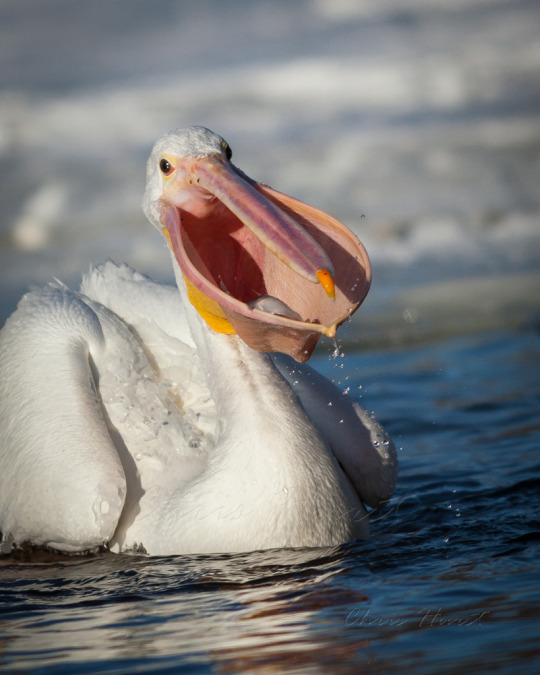
The noble, mythological aspect of the pelican has very little do with pelicans in real life. Like wolves/lions and other Romantic and Charismatic Animals who are elevated in human folklore but ridiculous in private moments, pelicans are incredibly silly and awkward animals.

I have petted them. And it was good. Their faces are leathery and they are silly. They have no nostrils. Everyone should like pelicans more.

Figure 7: I hope this has convinced you.

Counterpoint. 

Pelicans are nightmare birds

*thumps fist on table* THIS IS A FURTHER ARGUMENT FOR THE POTENT SYMBOLISM OF THE PELICAN

Helpful person: links don’t work on your tumblr

Me: FINE

Different helpful person: would you consider fixing your tumblr

Me: NEVER

how to know you are a norse mythology geek:

alarajrogers:

dendritic-trees:

hamelin-born:

catwinchester:

kyraneko:

poztatt:

dendritic-trees:

sweetdreamr:

auntieval:

sweetdreamr:

upon seeing THIS in the thor: ragnarok trailer

you scream, “FENRIR! HI PUPPER!!!!”

IT GOT BETTER OMFG IM CRYING

Yeah… me too. I wanna pat the very big pupper.

And this is how The End is stopped.  Not by the gods or goddesses, the other races than man, no.  It is Tumblr.  As a mass running after a now confused and tail tucking Fenrir, whining softly as the crowd chants “PUPPER! PUPPER! PUPPER!”

Better yet: Fenrir escapes his chains and lopes forward to destroy the earth, and is met by a crowd of people. An army, Fenrir thinks, and bares his teeth in a ferocious snarl and charges toward them.

They cheer.

Wait … cheer?

Fenrir slows, confused. He smells no fear, senses no rage. This is … a very strange army.

The first hand—weaponless!—reaches for him; he tenses, ready to tear the offending limb to shreds, and lets out a high little yippy whine when it pats him about the ears.

Immediately the noise is reproduced by some four or five of the nearest humans; he smells excitement; more hands are patting him.

It’s nice.

The humans crowd around him, patting him and scritching him and shuffling around to give others a chance. Voices coo, and make puppy noises, and someone catches just the right spot and he cocks his leg and scratches himself, drawing a multitude of oohs and ahhs and cheers and squees.

At some point, his hunger awakens at the scent of burnt flesh; a human has brought him what he later learns is a hot dog; he swallows it in one bite, to more cheering, and looks around hopefully for more.

It is not long before more is bought: steaks and Big Macs and bacon; it seems like much of the group has brought him a snack of some kind and was hoping for a chance to give it to him.

The End of the World is supposed to be at hand, but Fenrir does not care. His hunger sated, his battle-lust swept away by a tide of gently petting hands, he rolls over, careful not to crush his many companions, and takes a nap.

“Who’s a good boy?” they ask him, over and over. 

Is this some psychological warfare, he wonders, designed to undermine his confidence and remind him that he is nothing more than a monster who needs to be chained? 

“Who’s a good boy, huh, huh?” “Who’s my good boy?” “

And then one of them answers the question for him.

“You are!”

‘Me?’ he thinks. But if there was any doubt, she confirms it.

“You are, yes you are.”

Fenrir’s tongue hangs out of his mouth as he grins. ‘I’m a good boy!’

@lectorel

This is the best thing ever.

This would work. Fenrir was betrayed by gods that he trusted; they feared his strength and tricked him into accepting being bound because he trusted Tyr, his friend. (Loki was not directly involved in selling out his own son; usually Loki is involved any time someone gets tricked by the Aesir, but it’s notable that he was not, here.) The deal was that Tyr would put his arm in Fenrir’s mouth to prove that the gods were acting in good faith when they tied Fenrir up to “let him prove he could break the chain”; when he couldn’t break the chain, the gods refused to free him, and Fenrir bit Tyr’s arm off, because that was the deal.

So Fenrir has a serious rageboner going on against the Aesir and all of creation; that’s why he wants to eat the sun and end existence. A huge number of humans validating him, praising him, petting him and giving him yummy treats might actually convince him that, while the Aesir are still assholes and would deserve it if he ate them, he should not eat the sun because Midgardians are totally cool and give him petties.

how to know you are a norse mythology geek:

dendritic-trees:

hamelin-born:

catwinchester:

kyraneko:

poztatt:

dendritic-trees:

sweetdreamr:

auntieval:

sweetdreamr:

upon seeing THIS in the thor: ragnarok trailer

you scream, “FENRIR! HI PUPPER!!!!”

IT GOT BETTER OMFG IM CRYING

Yeah… me too. I wanna pat the very big pupper.

And this is how The End is stopped.  Not by the gods or goddesses, the other races than man, no.  It is Tumblr.  As a mass running after a now confused and tail tucking Fenrir, whining softly as the crowd chants “PUPPER! PUPPER! PUPPER!”

Better yet: Fenrir escapes his chains and lopes forward to destroy the earth, and is met by a crowd of people. An army, Fenrir thinks, and bares his teeth in a ferocious snarl and charges toward them.

They cheer.

Wait … cheer?

Fenrir slows, confused. He smells no fear, senses no rage. This is … a very strange army.

The first hand—weaponless!—reaches for him; he tenses, ready to tear the offending limb to shreds, and lets out a high little yippy whine when it pats him about the ears.

Immediately the noise is reproduced by some four or five of the nearest humans; he smells excitement; more hands are patting him.

It’s nice.

The humans crowd around him, patting him and scritching him and shuffling around to give others a chance. Voices coo, and make puppy noises, and someone catches just the right spot and he cocks his leg and scratches himself, drawing a multitude of oohs and ahhs and cheers and squees.

At some point, his hunger awakens at the scent of burnt flesh; a human has brought him what he later learns is a hot dog; he swallows it in one bite, to more cheering, and looks around hopefully for more.

It is not long before more is bought: steaks and Big Macs and bacon; it seems like much of the group has brought him a snack of some kind and was hoping for a chance to give it to him.

The End of the World is supposed to be at hand, but Fenrir does not care. His hunger sated, his battle-lust swept away by a tide of gently petting hands, he rolls over, careful not to crush his many companions, and takes a nap.

“Who’s a good boy?” they ask him, over and over. 

Is this some psychological warfare, he wonders, designed to undermine his confidence and remind him that he is nothing more than a monster who needs to be chained? 

“Who’s a good boy, huh, huh?” “Who’s my good boy?” “

And then one of them answers the question for him.

“You are!”

‘Me?’ he thinks. But if there was any doubt, she confirms it.

“You are, yes you are.”

Fenrir’s tongue hangs out of his mouth as he grins. ‘I’m a good boy!’

@lectorel

This is the best thing ever.