I have recently discovered Plants. Did you know: if you find a plant you like, you can just… collect its seeds? Or, you can dig it up and plant it somewhere else?? OR (now this one is crazy but stick with me) you can take part of it and grow it into a new plant?!?
Amazing! First, I started small: I noticed some milkweed was spilling floaty seeds everywhere, so I borrowed a couple, planted them, and several months later I had so many Monarch and Queen caterpillars I had to give some away.
Next: I noticed a baby morning glory vine had popped up in my side yard. I didn’t want it in my side yard, so I dug it up, put it in my brand new flower garden, and several months later it has taken over the entire back half of my yard.
Then: my coworker brought in some lemongrass cuttings she’d done, and I planted it in my yard. It exploded and it’s the most massive lemongrass bush I’ve ever seen.
Now that I’ve done my “hands off” experiment with the back yard (conclusion: invasive grasses will completely take over and prevent any natives from taking root), I am ready to become the master of my realm. But I’m still broke as heck. So!
Milkweed vine (Matelea?) and Monarda seeds nabbed from the field at work!
Every mango I ever eat ever again! (Three germinated, started #4 last night)
Ruellia simplex which I *cough* may have borrowed from a park. I took five because I didn’t have scissors or a knife and I didn’t trust my ability in making cuttings but ALL FIVE ROOTED and some are starting to bud!!!
Red yucca from the parking lot at work
It’s contagious! My coworker went for a walk in her neighborhood, and saw a strange tree with these 15 inch long seed pods that look like giant string beans. So of course she took one to give to me. It matured over the weekend, and today I popped it open and LOOK AT ALL THESE SEEDS!!! It’s a Catalpa tree, which is native to the eastern and southern US states. It makes HUGE F-ING flowers which it drops everywhere, making a huge mess. They get TALL. And I have a HUGE HANDFUL of them. What am I going to do with 100+ Catalpa trees?!?! My (not very large) yard is already filling up with trees (though I eagerly await the total consumption of my house into thick wooded forest in the middle of my housing development). I’m thinking Bonsai 😂
September 11, 2018
Mad scientists and backyard horticulturists have a lot in common actually
Mad engineers are just as important as mad scientists, someone needs to actually know what they’re doing. Any mad scientist can design a death-ray but building one that doesn’t blow up in your face when you pull the dramatic switch?
Speaking as a (mad) plant scientist I wholeheartedly endorse your efforts and attitude.
Much of the fruit on trees in a relatively sunny position at Kew after a relatively warm summer in 1996 was still not fully ripe, though it was very nearly so and ripened well off the tree
And that was a noteworthy performance 😅
It’s also very unlikely to get frosted at the appropriate time. Which, in my estimation, makes parsnips and rutabagas/swedes just about edible without the weird sweet tones (though a lot of people do want that)–but is kinda the opposite of what you need to get persimmons worth eating.
Even if we had the space, that would have to be a nope. Pretty as the trees are.
(You can find Asian persimmons here, but the flavor/texture are very different. The North American kind don’t ship worth a damn either, like pawpaws, which is why they’re not really grown commercially.)
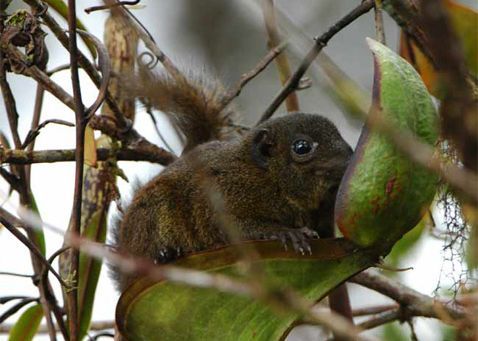
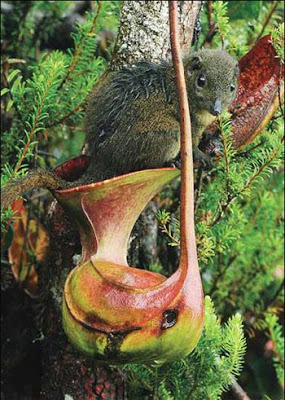
the mechanism- for those new to Shit Eater Mcgee over here- works like this: the pitcher top has a sweet nectar that the tree shrew native to it’s habitat loves. the shrew sits on the top of the pitcher and eats the nectar, which conveniently, though the wonders of evolution, places the shrew’s asshole directly above the neck of the pitcher. under the neck of the pitcher is digestive fluid. the shrew then poops and so is the way of life and the wonders of biology
you have no idea how much this plant is ridiculed by the scientific community. at the carnivorous plant convention i was at a couple weeks ago whenever even an IMAGE of this plant would come up on a slide it would be met with a round of laughter. nobody can take this plant seriously.
i actually got to see it in person at the same convention, which was pretty cool, and they’re actually smaller than u would expect?? they’re notorious for taking a long time to grow their first full-sized pitchers, which makes sense when you hold one in your hands for the first time and realize that these pitchers are woody. like, i was expecting a flexible leaf kind of feel like most of the other species have, but apparently to support the sheer weight of a shitting shrew on u you gotta have like, support and stuff in there. it deadass feels like light, strong, hallow wood, while looking like a flexible leaf.
its a fucking ridiculous plant but at the same time….my bitch made it through millions of years of evolution like that. like do u see that image? that image of a shrew taking a dump into a pitcher plant? that pitcher plant has it made
the toilet plant laughs at your derision, humanity, it has fertilizer on delivery order and it just does not care
I thought it might be fun to make a collage of some plants that aren’t green. These spooky species are naturally ghost-white or blood-colored. They lack the green pigments that enable plants to make food from the sun. Instead, they are parasites, snatching food from nearby plants.
Clockwise from top left: Indian pipe (Monotropa uniflora), summer form pinesap (Monotropa hypopitys),Indian pipe (Monotropa uniflora), beechdrops (Epifagus virginiana), autumn form pinesap (Monotropa hypopitys),one-flowered cancer root (Conopholis americana).




 Urocyon's Jaunts 2.0
You must be logged in to post a comment.