The Aral Sea was once the
fourth-largest lake in the world. Fed primarily by snowmelt and precipitation
flowing down from faraway mountains, it was a temperate oasis in an arid
region. But in the 1960s, the Soviet Union diverted two major rivers to
irrigate farmland, cutting off the inland sea from its source. As the Aral Sea
dried up, fisheries collapsed, as did the communities that depended on them.
The remaining water supply became increasingly salty and polluted with runoff
from agricultural plots. Loss of the Aral Sea’s water influenced regional
climate, making the winters even colder and the summers much hotter.
While seasonal rains still
bring water to the Aral Sea, the lake is roughly one-tenth of its original size.
These satellite images show how the Aral Sea and its surrounding landscape has
changed over the past few decades.
annual BlackHoleFriday! Check out these black hole deals from the past year as you prepare to
head out for a shopping spree or hunker down at home to avoid the crowds.
First things first, black holes have one basic rule:
They are so incredibly dense that to escape their surface you’d have to travel
faster than light. But light speed is the cosmic speed limit … so nothing
can escape a black hole’s surface!
Black
hole birth announcements
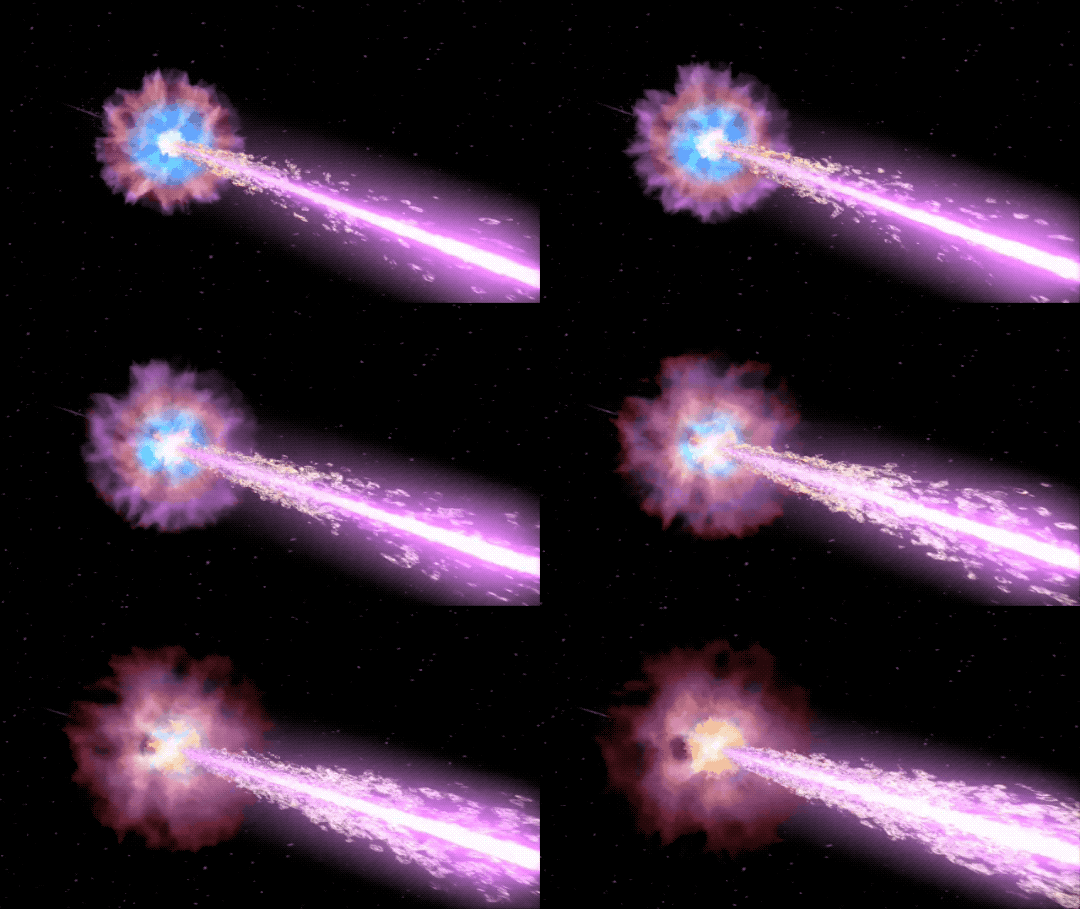
Some black holes form when a very large star
dies in a supernova explosion and collapses
into a superdense object. This is even more jam-packed than the crowds at your
local mall — imagine an object 10 times more massive than the Sun squeezed into
a sphere with the diameter of New York City!
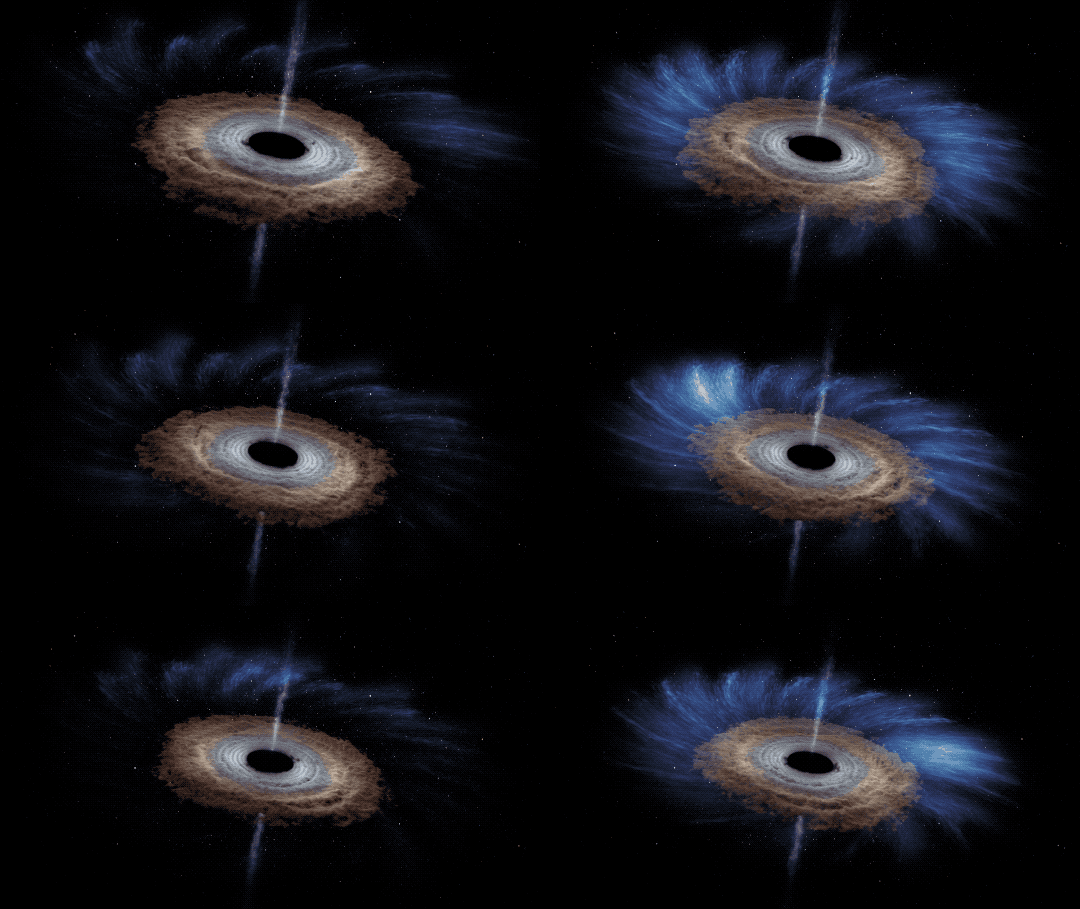
Near one black hole called GRS 1915+105, NICER found disk
winds — fast streams of gas created by heat or pressure. Scientists are still figuring out some puzzles about these types of wind.
Where do they come from, for example? And do they change the way material falls
into the black hole? Every new example of these disk winds helps astronomers
get closer to answering those questions.
Merging
monster black holes
But stellar mass black holes aren’t the only
ones out there. At the center of nearly every large galaxy lies a supermassive
black hole — one with the mass of millions or billions of Suns smooshed into a region no bigger than our solar
system.
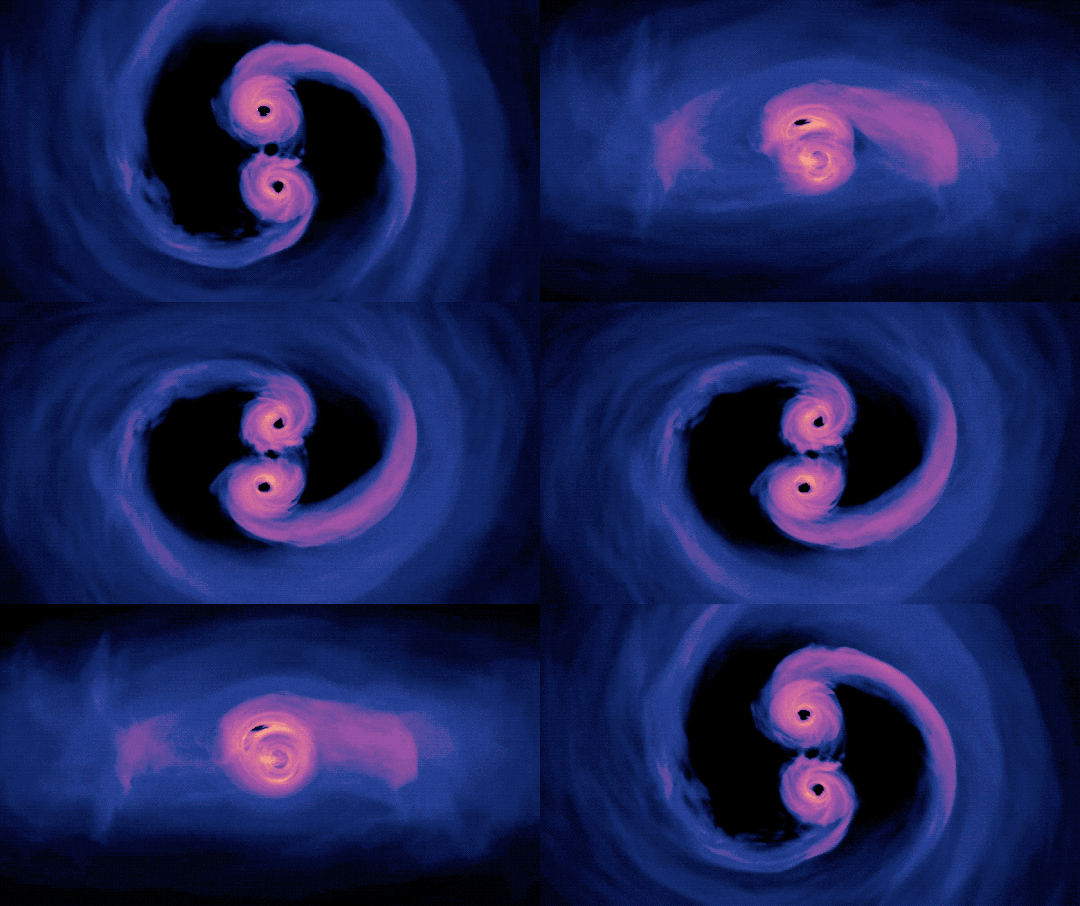
There’s still some debate about how these
monsters form, but astronomers agree that they certainly can collide and
combine when their host galaxies collide and combine. Those black holes will
have a lot of gas and dust around them. As that material is pulled into the
black hole it will heat up due to
It also turns out that these supermassive
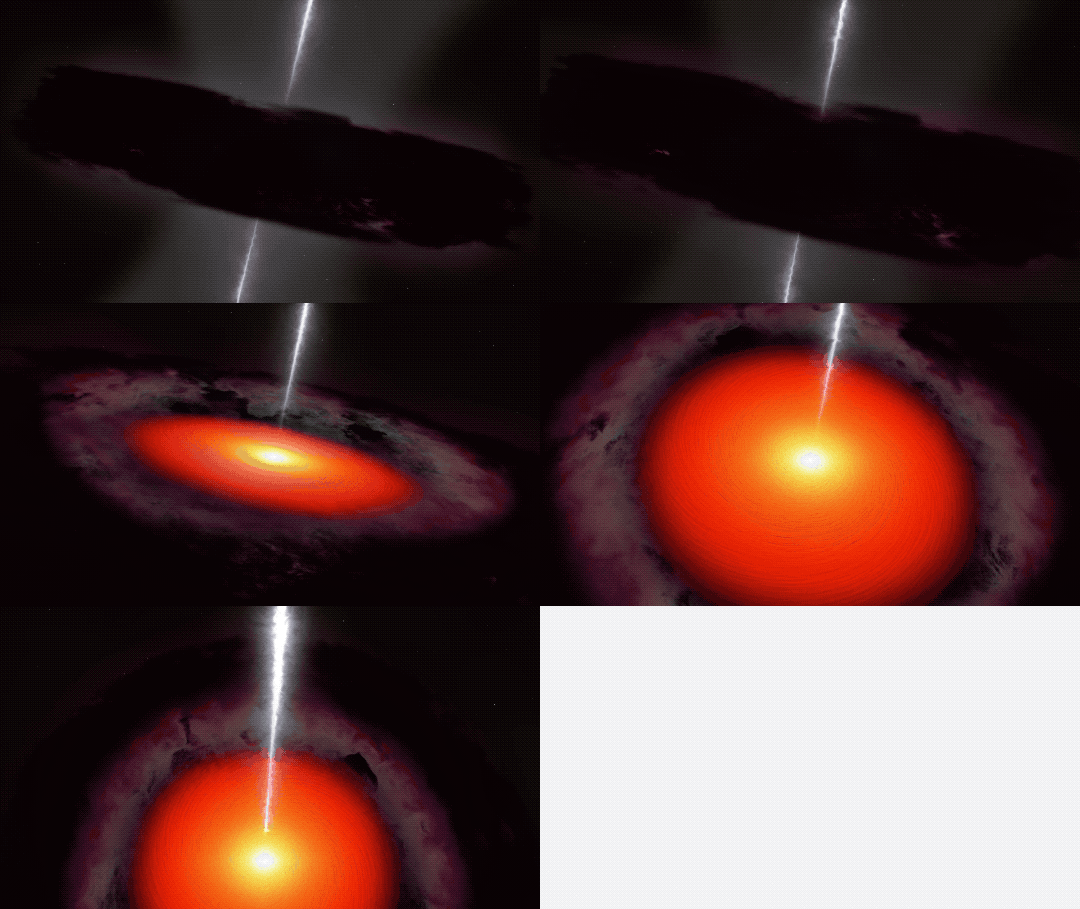
black holes are the source of some of the brightest objects in the gamma ray
sky! In a type of galaxy called active galactic nuclei (also called “AGN” for short)
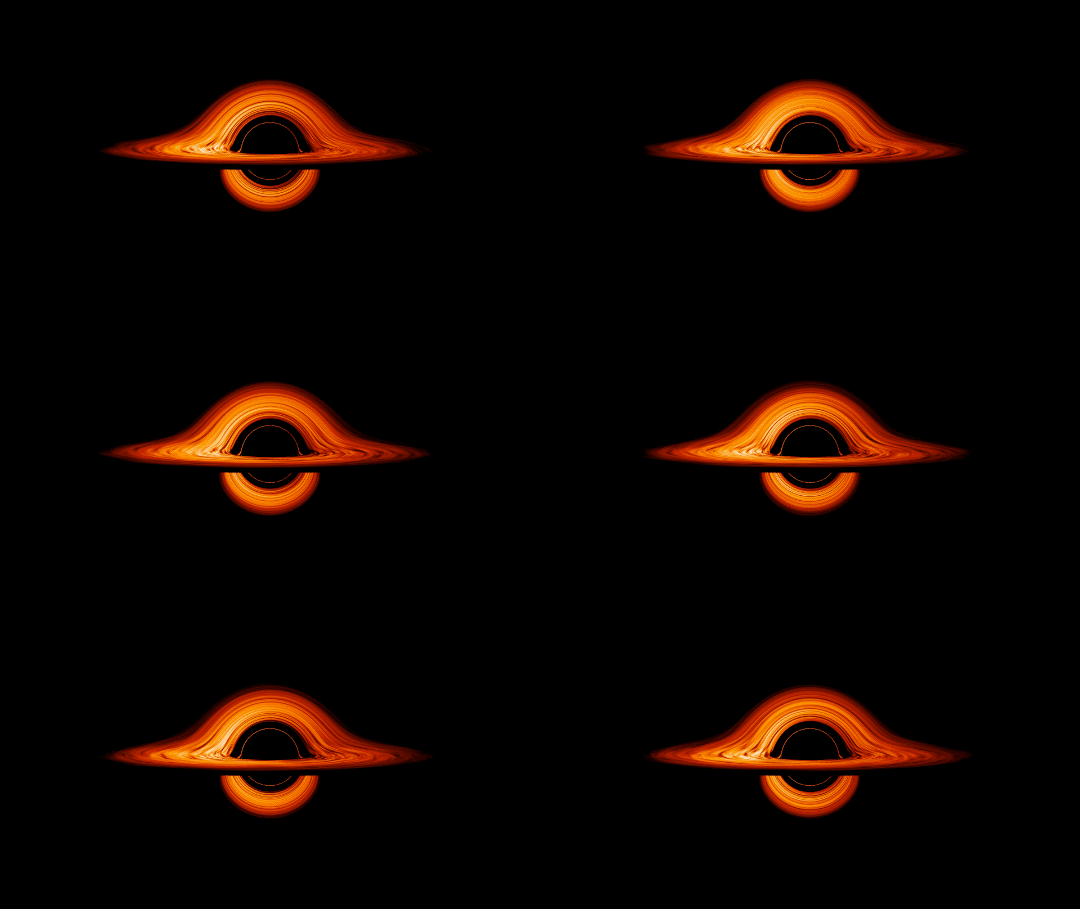
the central black hole is surrounded by a disk of gas and dust that’s
constantly falling into the black hole.
But not only that, some of those AGN have jets
of energetic particles that are shooting out from near the black hole at nearly
the speed of light! Scientists are studying these jets to try to understand how
black holes — which pull everything in with their huge amounts of gravity —
provide the energy needed to propel the particles in these jets. If that jet is
pointed directly at us, it can appear super-bright in gamma rays and we call it
a blazar. These blazars make up more than half of the sources our Fermi
space telescope sees.
Catching
particles from near a black hole
Sometimes scientists get a two-for-one kind of
deal when they’re looking for black holes. Our colleagues at the IceCube Neutrino Observatory
actually caught a particle from a blazar 4 billion light-years
away. IceCube lies a mile under the ice in Antarctica and
uses the ice itself to detect neutrinos, tiny speedy particles that weigh
almost nothing and rarely interact with anything. When IceCube caught a
super-high-energy neutrino and traced its origin to a specific area of the sky,
they turned to the astronomical community to pinpoint the source.
Our Fermi spacecraft scans the entire sky
about every three hours and for months it had observed a blazar producing more
gamma rays than usual. Flaring is a
common characteristic in blazars, so this didn’t attract
special attention. But when the alert from IceCube came through, scientists
realized the neutrino and the gamma rays came from the same patch of sky! This
method of using two or more kinds of signals to learn about one event or object
is called multimessenger astronomy, and it’s helping us learn a lot about the
universe.
Get more fun facts and information about black
holes HERE
and follow us on
social media today for other cool facts and findings
about black holes!
Make
sure to follow us on Tumblr for your regular dose of space: http://nasa.tumblr.com.





 Urocyon's Jaunts 2.0
You must be logged in to post a comment.