Now I’m almost waiting for “if you order people around and generally sound like an arrogant ass, a lot of people aren’t going to appreciate that” to get morphed into the obnoxious kind of tone policing 😵
this trend of people offering simple, usually good advice for feeling slightly better and being immediately met with “WE CANT ALL BE NEUROTYPICAL KAREN” needs to die ASAP if only because 99.99% of the time on Tumblr its friendly advice from one mentally ill person to the rest of us
And also… not everyone talking about this stuff is pushing it on everyone.
Like — Unfuck Your Habitat doesn’t work for me. Trying to engage with it would harm me.
I’m also really glad it exists. It works for a lot of other people.
It’s not harming me by existing.
Getting pushy and assuming that the same strategies must work for absolutely everyone are really what I object to. Doesn’t matter that much who they are or where they’re coming from with it, that type of overbearing approach is unlikely to go over well.
Unsolicited advice based in assumptions that you know better than the other person about their own life and wellbeing is just not cool. (And it’s also hardly limited to any one group. Unfortunately.)
That is also very different from the way more respectful “I have tried X and it worked very well for me in my particular situation (though of course YMMV)”. That type of discussion can be very helpful.
I don’t know all of these things with certainty, but I believe they are all true, and it would be nice if people stopped treating them as contradictory.
Talking over people, condescending to them, not responding to signs of discomfort, etc., can and do cause harm.
Autism and autistic traits tend to make people more likely to engage in these behaviors.
These behaviors can also be made more likely by one person assuming that that the other person can’t have anything worthwhile to say, or by one person treating the other person’s feelings as unimportant. These attitudes, in turn, can be made more likely by certain social privileges including class privilege and male privilege.
People are often not consciously aware of the ways in which classism and sexism cause them to downplay certain perspectives, so these can be a factor even in the absence of malicious intent.
Any individual instance of these behaviors might be influenced by multiple factors including the ones given above and others.
Behaviors associated with autism are typically stigmatized as weird and embarrassing even when they don’t harm other people.
Some of the stigma associated with the behaviors under discussion is rooted in ableism and the punishment of certain kinds of weirdness.
Some of the stigma against condescension, ignoring discomfort, and talking over people derives from the actual harm these behaviors cause to other people.
Musings/potential elaboration: Within the subset of “neurodivergent people who talk over others,” I would add that lots of interpersonal and gender differences can probably be attributed to a kind of predictive shame. I’m hesitant to draw any sweeping conclusions, but I’ll say that most people I know who fit into said subset fall into one of two categories: the “I’m just going to embarrass myself so I won’t say anything on the off-chance I’ll be rude” type and the “normies have it out for me, they just don’t get my interests” type. And while I’ll concede that there’s almost definitely a gender-socialization thing going on there, I think it’s interesting that both cases are still grounded in the knowledge/expectation that the behavior is stigmatized and unwanted, not in classic entitlement.
Another addition is:
There are different cultural norms about how conversations work.
In some cultures, you’re supposed to wait your turn. In others, you’re supposed to jump in and interrupt each other.
Neither is wrong.
Harm is often done when people aren’t playing by the same set of cultural assumptions.
Blogger Bunmi Laditan sent her 10-year-old’s school a clear message.
“Hello Maya’s teachers,
Maya will be drastically reducing the amount of homework she does this year. She’s been very stressed and is starting to have physical symptoms such as chest pain and waking up at 4 a.m. worrying about her school workload.
She’s not behind academically and very much enjoys school. We consulted with a tutor and a therapist suggested we lighten her workload. Doing 2-3 hours of homework after getting home at 4:30 is leaving little time for her to just be a child and enjoy family time and we’d like to avoid her sinking into a depression over this.”
A++++ parenting 💜
I’ve talked with a whole cadre of child therapists and psychiatrists about this very issue. There islittleconclusive evidence that homework significantly improves elementary school children’s grades, understanding of subjects, or facility with various operations, processes, etc. However, plenty of evidence suggests that ever-increasing amounts of homework for young children lead to stress, anxiety, emotional fatigue, resistance toward academics in general, lack of leisure time to build social/interpersonal skills, and poorer family relations. (My kids were doing about 3 hours a week IN KINDERGARTEN, at age 5 – so that’s ½ hour every night, after a 6.5 hour school day, or else saving it up for long slogs over the weekend, even more disruptive. And that wasn’t including reading practice!)
We have stopped doing homework altogether with my 7 year old as a result of severe anxiety/depression and a learning disability. She had gotten to a place where she had so little self confidence and truly believed that she was stupid and worthless, not just because of homework of course – but every time we tried to sit down to do homework with her, it’d end in tears with her really vehemently berating herself, and no amount of encouragement could ameliorate the damage done. Now, granted, she’s got other things going on besides just an overload of school work. But in NO WAY did the homework help her, either academically or emotionally.
No little kid should have to spend an hour or more each night getting through homework. Now, my deal with Siena is that if she wants to give her homework a shot, I will absolutely help her if she wishes for help, but I no longer force her to complete all of it or to work on it for some set length of time before finally throwing in the towel.
Guess what? With the pressure taken off, she’s actually doing MORE independent work now, purely out of the desire to learn and practice, than she ever was before we’d decided with her therapy team and school that homework was just not a thing this kid could handle.
Luckily for my older daughter my school’s 3rd-grade team decided to hand out homework only 3x/week, and the sheets take no more than 15-20 minutes to complete. That is totally reasonable for 8-9 year olds!
Anyway tl;dr just because the school system may require it sure as shit doesn’t mean parents can’t, or shouldn’t, fight it. Do what’s right for your kid, and above all, let them be kids.
I eventually stopped doing homework because I was overwhelmed by it.
There was an article just the other day in the local paper about a primary school that’s abolishing homework! You can read it here (autoplay video, gives you a few seconds to stop it).
As a teacher the only “homework” my students get is the work they don’t finish in class. Assigning homework for work’s sake is the dumbest thing a teacher can do
I think part of the issue is not considering homework time as work. Like, 10 year olds shouldn’t be doing 10 hour days, and that’s pretty well recognised. But 7 hours in school, plus 3 hours at home? that’s fine/sarcasm
Obviously with older students they need to be writing essays on their own at home and so on, but making 7 year olds do maths practice at home isn’t going to help anything. If they didn’t grasp in it lessons, then they’re not likely to figure it out on their own at home.
I was really lucky. My primary school only assigned homework in year 6 (10-11 years) and it was supposed to be 10 minutes a night max. My secondary school had a 20 mins per subject rule, no more than 4 subjects a night, no homework to be due the next day policy, and least in the first few years (up to 14-15 or so). And no homework over school holidays. Your week off was supposed to be actually off, not doing schoolwork. Kids need breaks.
Another problem with homework is that there’s very little that young children can reliably do independently. Little kids need a lot of scaffolding in order to practice things and develop their skills.
The kinds of repetitive drilling that little kids can do independently aren’t a very good use of anyone’s time. The kind of assignments that *are* a good use of time for young kids require support that most parents don’t know how to give.
Without appropriate support, kids tend to get frustrated and demoralized. It’s not good for their learning, and it’s not good for their relationships with their parents.
why “spanking is harmful” studies will, ultimately, never matter to parents who want to hit their kids:
@fandomsandfeminism wrote a great post recently about the fact that we have, essentially, a scientific consensus on the fact that all forms of hitting children, including those euphemistically referred to as “spanking”, are psychologically harmful. they’ve also done an amazing job responding to a lot of parents self-admitted abusers who think “I hit my child and I’m okay with that” and/or “I was hit as a child and I don’t think there’s anything wrong with me” are more meaningful than 60 years of peer-reviewed research.
unfortunately, I’m here to tell you why all of that makes very little difference.
in 2014, a couple of researchers from UCLA and MIT named Alan Fiske and Tage Rai published a book called Virtuous Violence, the result of a major study of the motivations for interpersonal violence. Rai wrote a shorter piece about it in Quartz, which is a pretty light but still illuminating (hah, I did not see that pun coming but I’m gonna leave it) read.
the upshot of Fiske and Rai’s work is that most violence is fundamentally misunderstood because we think it is inherently outside the norms of a supposedly moral society. we presume that when someone commits a mass shooting or beats their spouse they are somehow intrinsically broken, either incapable of telling right from wrong or too lacking in self-control to prevent themselves from doing the wrong thing.
but what Fiske and Rai found was that, in fact, the opposite is true: most violence is morally motivated. people who commit violent acts aren’t lacking moral compasses – they believe those violent acts are not only morally acceptable, but morally obligatory. usually, these feelings emerge in the context of a relationship which is culturally defined as hierarchical. in other words, parents who commit violence against their children do so because they believe it is necessary that they do so in order to establish or affirm the dominancewhich they feel they are owed by both tradition and moral right.
when abusive parents say that they are “hitting children for their own good”, they are not speaking in terms of any rational predictions for the child’s future, but rather from a place of believing that the child must learn to be submissive in order to be a “good” child, to fulfill their place in the relationship.
this kind of violence is not the result of calm, intellectually reasoned deliberation about the child’s well-being.
for that reason and that reason alone it will never be ended by scientific evidence.
history tells us more than we need to verify this. the slave trade and the institution of racial slavery, and their attendant forms of “corrective” physical violence, for instance, did not end because someone demonstrated they were physically or psychologically harmful to slaves – that was never a question in people’s minds to begin with. for generations, slavery was upheld as right and good not because it was viewed as harmless, but because it was viewed as morally necessary that one category of people should be “kept in their place” below another by any means necessary, because they were lower beings by natural order and god’s law. this violence ended because western society became gradually less convinced of the whole moral framework at play, not because we needed scientists to come along and demonstrate that chain gangs and whippings were psychologically detrimental. this is only one example from a world history filled with many, many forms of violence, both interpersonal and structural, which ultimately were founded on the idea that moral hierarchies must be maintained through someone’s idea of judiciously meted-out suffering.
and this, ultimately, is why we cannot end violence against children by pointing out that it is harmful – because the question of whether or not it is harmful does not enter into parents’ decisions about whether or not to commit violence in the first place. what they care about is not the hypothetical harm done to the child, but the reinforcement of the authority-ranked nature of the relationship itself. the reason these people so often sound like their primary concern is maintaining their “right” to hit their children is because it is. they believe that anyone telling them they can’t hit their children is attempting to undermine the moral structure of that individual relationship and, in a broader sense, the natural order of adult-child relations in society.
and that’s why the movement has to be greater than one against hitting kids. it has to be a movement against treating them as inferior, in general. it has to be a movement that says, children are people, that says children’s rights are human rights, that says the near-absolute authority of parents, coupled with the general social supremacy of adults and the marginalization of youth, have to all be torn down at once as an ideology of injustice and violence. anything less is ultimately pointless.
Mary was a beautiful baby, sweet and affectionate, but by the time she’s three she’s turned difficult and strange, with fey moods and a stubborn mouth that screams and bites but never says mama. But her mother’s well-used to hard work with little thanks, and when the village gossips wag their tongues she just shrugs, and pulls her difficult child away from their precious, perfect blossoms, before the bites draw blood. Mary’s mother doesn’t drown her in a bucket of saltwater, and she doesn’t take up the silver knife the wife of the village priest leaves out for her one Sunday brunch.
She gives her daughter yarn, instead, and instead of a rowan stake through her inhuman heart she gives her a child’s first loom, oak and ash. She lets her vicious, uncooperative fairy daughter entertain herself with games of her own devising, in as much peace and comfort as either of them can manage.
Mary grows up strangely, as a strange child would, learning everything in all the wrong order, and biting a great deal more than she should. But she also learns to weave, and takes to it with a grand passion. Soon enough she knows more than her mother–which isn’t all that much–and is striking out into unknown territory, turning out odd new knots and weaves, patterns as complex as spiderwebs and spellrings.
“Aren’t you clever,” her mother says, of her work, and leaves her to her wool and flax and whatnot. Mary’s not biting anymore, and she smiles more than she frowns, and that’s about as much, her mother figures, as anyone should hope for from their child.
Mary still cries sometimes, when the other girls reject her for her strange graces, her odd slow way of talking, her restless reaching fluttering hands that have learned to spin but never to settle. The other girls call her freak, witchblood, hobgoblin.
“I don’t remember girls being quite so stupid when I was that age,” her mother says, brushing Mary’s hair smooth and steady like they’ve both learned to enjoy, smooth as a skein of silk. “Time was, you knew not to insult anyone you might need to flatter later. ‘Specially when you don’t know if they’re going to grow wings or horns or whatnot. Serve ‘em all right if you ever figure out curses.”
“I want to go back,” Mary says. “I want to go home, to where I came from, where there’s people like me. If I’m a fairy’s child I should be in fairyland, and no one would call me a freak.”
“Aye, well, I’d miss you though,” her mother says. “And I expect there’s stupid folk everywhere, even in fairyland. Cruel folk, too. You just have to make the best of things where you are, being my child instead.”
Mary learns to read well enough, in between the weaving, especially when her mother tracks down the traveling booktraders and comes home with slim, precious manuals on dyes and stains and mordants, on pigments and patterns, diagrams too arcane for her own eyes but which make her daughter’s eyes shine.
“We need an herb garden,” her daughter says, hands busy, flipping from page to page, pulling on her hair, twisting in her skirt, itching for a project. “Yarrow, and madder, and woad and weld…”
“Well, start digging,” her mother says. “Won’t do you a harm to get out of the house now’n then.”
Mary doesn’t like dirt but she’s learned determination well enough from her mother. She digs and digs, and plants what she’s given, and the first year doesn’t turn out so well but the second’s better, and by the third a cauldron’s always simmering something over the fire, and Mary’s taking in orders from girls five years older or more, turning out vivid bolts and spools and skeins of red and gold and blue, restless fingers dancing like they’ve summoned down the rainbow. Her mother figures she probably has.
“Just as well you never got the hang of curses,” she says, admiring her bright new skirts. “I like this sort of trick a lot better.”
Mary smiles, rocking back and forth on her heels, fingers already fluttering to find the next project.
She finally grows up tall and fair, if a bit stooped and squinty, and time and age seem to calm her unhappy mouth about as well as it does for human children. Word gets around she never lies or breaks a bargain, and if the first seems odd for a fairy’s child then the second one seems fit enough. The undyed stacks of taken orders grow taller, the dyed lots of filled orders grow brighter, the loom in the corner for Mary’s own creations grows stranger and more complex. Mary’s hands callus just like her mother’s, become as strong and tough and smooth as the oak and ash of her needles and frames, though they never fall still.
“Do you ever wonder what your real daughter would be like?” the priest’s wife asks, once.
Mary’s mother snorts. “She wouldn’t be worth a damn at weaving,” she says. “Lord knows I never was. No, I’ll keep what I’ve been given and thank the givers kindly. It was a fair enough trade for me. Good day, ma’am.”
Mary brings her mother sweet chamomile tea, that night, and a warm shawl in all the colors of a garden, and a hairbrush. In the morning, the priest’s son comes round, with payment for his mother’s pretty new dress and a shy smile just for Mary. He thinks her hair is nice, and her hands are even nicer, vibrant in their strength and skill and endless motion.
Blogger Bunmi Laditan sent her 10-year-old’s school a clear message.
“Hello Maya’s teachers,
Maya will be drastically reducing the amount of homework she does this year. She’s been very stressed and is starting to have physical symptoms such as chest pain and waking up at 4 a.m. worrying about her school workload.
She’s not behind academically and very much enjoys school. We consulted with a tutor and a therapist suggested we lighten her workload. Doing 2-3 hours of homework after getting home at 4:30 is leaving little time for her to just be a child and enjoy family time and we’d like to avoid her sinking into a depression over this.”
A++++ parenting 💜
I’ve talked with a whole cadre of child therapists and psychiatrists about this very issue. There islittleconclusive evidence that homework significantly improves elementary school children’s grades, understanding of subjects, or facility with various operations, processes, etc. However, plenty of evidence suggests that ever-increasing amounts of homework for young children lead to stress, anxiety, emotional fatigue, resistance toward academics in general, lack of leisure time to build social/interpersonal skills, and poorer family relations. (My kids were doing about 3 hours a week IN KINDERGARTEN, at age 5 – so that’s ½ hour every night, after a 6.5 hour school day, or else saving it up for long slogs over the weekend, even more disruptive. And that wasn’t including reading practice!)
We have stopped doing homework altogether with my 7 year old as a result of severe anxiety/depression and a learning disability. She had gotten to a place where she had so little self confidence and truly believed that she was stupid and worthless, not just because of homework of course – but every time we tried to sit down to do homework with her, it’d end in tears with her really vehemently berating herself, and no amount of encouragement could ameliorate the damage done. Now, granted, she’s got other things going on besides just an overload of school work. But in NO WAY did the homework help her, either academically or emotionally.
No little kid should have to spend an hour or more each night getting through homework. Now, my deal with Siena is that if she wants to give her homework a shot, I will absolutely help her if she wishes for help, but I no longer force her to complete all of it or to work on it for some set length of time before finally throwing in the towel.
Guess what? With the pressure taken off, she’s actually doing MORE independent work now, purely out of the desire to learn and practice, than she ever was before we’d decided with her therapy team and school that homework was just not a thing this kid could handle.
Luckily for my older daughter my school’s 3rd-grade team decided to hand out homework only 3x/week, and the sheets take no more than 15-20 minutes to complete. That is totally reasonable for 8-9 year olds!
Anyway tl;dr just because the school system may require it sure as shit doesn’t mean parents can’t, or shouldn’t, fight it. Do what’s right for your kid, and above all, let them be kids.
I eventually stopped doing homework because I was overwhelmed by it.
There was an article just the other day in the local paper about a primary school that’s abolishing homework! You can read it here (autoplay video, gives you a few seconds to stop it).
As a teacher the only “homework” my students get is the work they don’t finish in class. Assigning homework for work’s sake is the dumbest thing a teacher can do
I think part of the issue is not considering homework time as work. Like, 10 year olds shouldn’t be doing 10 hour days, and that’s pretty well recognised. But 7 hours in school, plus 3 hours at home? that’s fine/sarcasm
Obviously with older students they need to be writing essays on their own at home and so on, but making 7 year olds do maths practice at home isn’t going to help anything. If they didn’t grasp in it lessons, then they’re not likely to figure it out on their own at home.
I was really lucky. My primary school only assigned homework in year 6 (10-11 years) and it was supposed to be 10 minutes a night max. My secondary school had a 20 mins per subject rule, no more than 4 subjects a night, no homework to be due the next day policy, and least in the first few years (up to 14-15 or so). And no homework over school holidays. Your week off was supposed to be actually off, not doing schoolwork. Kids need breaks.






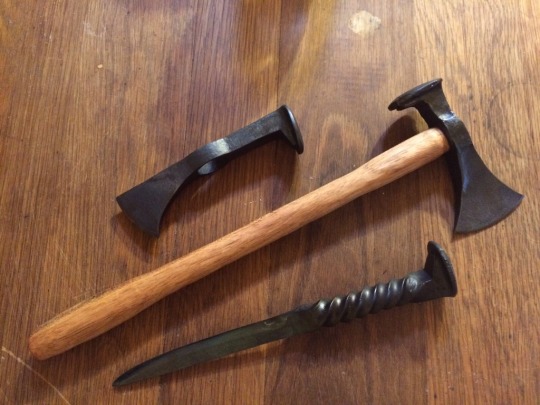



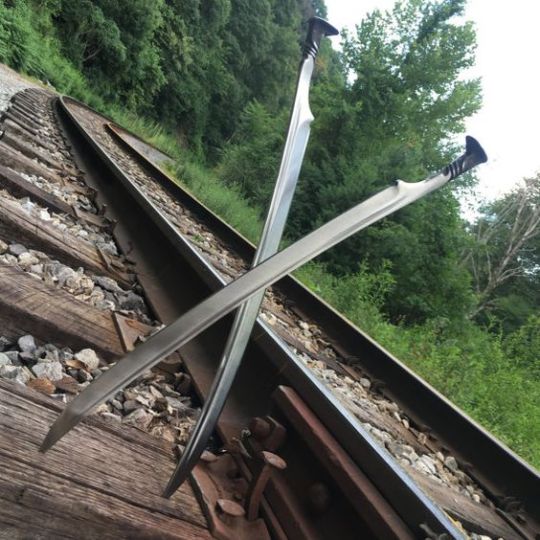
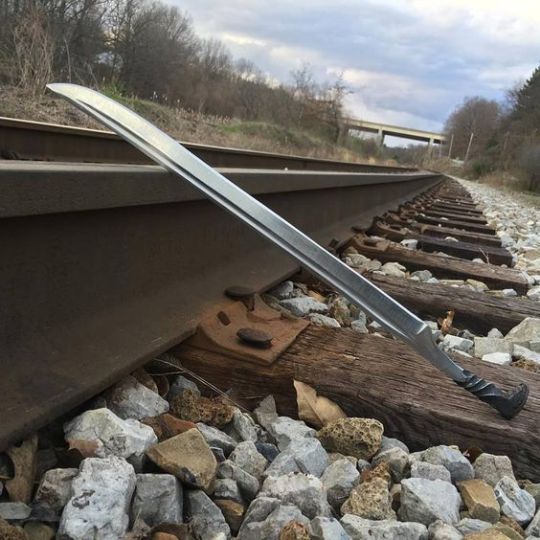
 Urocyon's Jaunts 2.0
You must be logged in to post a comment.