It is genuinely concerning how many popular media outlets will characterize left-wing protests as inherently bad because they pose a threat to the ruling class, and therefore us.
People believe that stuff. They see authority as always in the right, whether or not they want to admit it: Police attacking protesters is completely expected, but protesters fighting back is violence.
Yet history shows us that disrupting order is the most effective method of pushing change.
Child labor didn’t end in the US because factory owners thought, “hey, this is actually bad”. They were met with backlash from unions and labor movements. Same with food contamination and dangerous working conditions.
We credit the ruling class for positive change when they’ve been holding it back for self benefit all along.
You are not supporting freedom for defending their position, and of course reactionary movements are the first to say resistance should be stopped by government forces.
The governor just stated if you can’t get out of any mandatory evacuation, whether for fuel or any reason at all, call 1-800-955-5504, right now! The’ll help if you don’t have money, if you have pets, etc. They want you to call NOW because there is time to help you.
(I guess signal boosting this is an upside to being subjected to the weather channel while living utterly landlocked.)
I’m in the midst of my own hurricane preparedness, so this is the only post I’ll be sharing. because yeah, evacuating on your own is nearly impossible at this point. if you can’t ride it out where you are, this is your best hope. godspeed, everybody 💕
Getting closer to what you saw in your head, eh? Keep at it!
Your story when somebody else sees it:
hhhhhHHHHHHH
(⚪д⚪)
This is a lovely post. It goes to show that when we percieve our own work, most of us have some type of insecurities about our own talents.
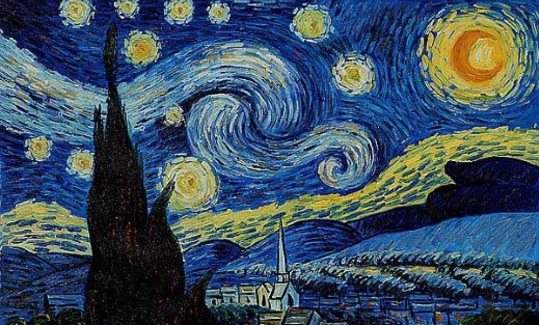
Also possibly relevant is that probably when Van Gogh finished Starry Night, he jumped up and down in frustration for a while because it didn’t look as good as it had in his head.
Tolkien used to complain that he could never write anything as well as he could imagine it. So you know, ‘good enough’ is definitely a thing.
The next time I see one of those “millenials will be photographing the end of the world” posts I’m gonna scream because let me tell you, I just went through a natural disaster and Snapchat literally saved people’s lives. Thanks to snapchat I knew exactly what roads were flooded, what stores were open, what my HOUSE looked like (since I wasn’t there), and which shelters I could go to. People were snapping/tweeting asking to be rescued and THEY WERE. I didn’t get my news from the tv, I saw it in real time on social media and I will never not be grateful for that.
As someone who watches a lot of disaster documentaries let me tell you something the fuck else –
After disasters where things like Fukushima or a broken levee situation, videos of the disasters can help calculate where failures happen in the engineering. Should you endanger your life for footage?? Absolutely not but documenting things like this help us prepare for the future.
That’s actually how we have so much information about how the fire spread after the 1906 earthquake in San Francisco. A photography store owner saw the flames coming and started handing his stock out to whoever would take it. People who’d never had their photograph taken were suddenly walking the streets with a camera and as much film as they could carry as their world burned, documenting everything and everyone. Comparing the photos and the eyewitness stories connected to them gives a very good record of where the smoke was rising from at any given point in time.
Similar story to 9/11 – there was a lot of amateur video being shot, so we know important details of how the emergency response on-site worked in practice even though a lot of the most significant eyewitness who could have spoken about it later were killed AND we have an incredible record of how the evacuation of the surrounding streets worked and didn’t work including what last-ditch emergency havens at ground level were actually safe from the debris cloud. And that was before the era of cell phone video with automatic uploading to cloud – if it had happened after that advance showed up, we’d have detailed information about how the fire spread inside from areas where no one made it out.
Yeah, humans like to document disasters. I mean, it’s not like one of our most significant advantages over other species is the ability to tell each other why a thing is dangerous and how to handle it without requiring first-hand knowledge or anything…
Really, we had to take multiple classes about North Carolina’s history and all they taught us was “we grew tobacco and indigo, we fought the British, there were some slaves, then the slaves were free, the end.”
I went through school in Virginia, and this sounds eerily familiar. Swap Pocahontas mythology for the indigo, and yammer on repeatedly about being The First Permanent English Colony, and that about covers it next colony over too.
Georgia. State specific fourth and eighth. Ton of Civil War details, Sherman burning everything, and the eastern gold rush with minimal discussion of the Trail Of Tears until and unless you eventually took AP US History. Racial history discussion even outside state history mainly MLK and George Washington Carver.
State history was required material for the state social studies graduation exam. There was no way to access the material if you transferred in after eighth grade – no class, no optional afterschool tutoring, no handouts, no warning. We had someone in my test section nearly have a crying breakdown because no one had warned her and she’d moved to the south for the first time between eighth and ninth – she was facing not graduating for the crime of not being raised in the south regardless of her grades in the classes that counted toward the diploma and the fact no class that counted toward the diploma even as an elective covered those parts of Georgia history.
Wow. I don’t know how it is now, tbf, but we at least didn’t have any graduation exams covering social studies. I went through just as they were starting to introduce any of those tests, though.
(And everyone in my dual college enrollment English class totally bombed the new required “literacy” exam. Literally nobody even came close to passing. They didn’t make us retake anything, but yeah. That’s the quality of the one graduation exam I did see 😨)
That really doesn’t sound right at all, especially if there was no way to cover any earlier state history-specific material the student had missed. To put it mildly.
I wish I could find one thing I read a while back, with someone talking about the actual history around the Civil War in the North Georgia mountains compared to the number of assholes currently flying the stars and bars under the carefully pushed impression that it really is their “heritage”.
Depressingly similar pattern in my part of Virginia, yeah. The bit that only didn’t get split off to make WV because it already had enough rail infrastructure that Virginia wanted to hold onto.
If your family has been in North Carolina since the Civil War like mine has, your ancestors might well have detested the Confederacy. If you added up the African-Americans, the Unionists, the anti-Confederate rebels, the anti-war crowd and those who simply hated what the Confederacy did to their home state, they might have outnumbered the hardcore Confederates. The sizable crew of dissidents was just as Southern as Robert E. Lee and might be astonished to see Confederate monuments all over the state today.
In arguing for the new Mandatory Confederate Monuments Act, Republican Rep. Marilyn Avila of Raleigh said, “When you talk about memorials and remembrances, the point of time at which they were erected is extremely relevant.” Avila was right. She simply had no idea when the monuments went up, saying it was “shortly after the War Between the States.” If someone had tried to put up Confederate monuments all over North Carolina shortly after the Civil War, there might have been another war. The unanimous Confederate white South is nothing but a cherished myth – especially in North Carolina.
White North Carolinians erected the vast majority of our Confederate monuments – 82 out of 98 – after 1898, decades after the Civil War ended. More importantly, they built the monuments after the white supremacy campaigns had seized power by force and taken the vote from black North Carolinians. The monuments reflected that moment of white supremacist ascendency as much as they did the Confederate legacy…
During the actual Civil War, the Confederacy bitterly divided North Carolina, the last Southern state to secede and the one with the highest number of battlefield deaths and the highest desertion rate. At times the conflict in North Carolina literally became “a war within a war.” Thousands of white North Carolinians took up arms against the Confederacy and far more refused to accept its authority. Thousands of black North Carolinians escaped enslavement and served in the Union army.
In 1861, Confederate officials complained that Eastern North Carolina was “infested with Tories and disloyal persons.” When federal troops captured the northeastern North Carolina coast in 1862, a thousand local white men immediately volunteered for the Union armies…
The Confederate Conscription Act, which exempted prosperous slaveholders from military service, turned many more Tar Heels against the war. That autumn of 1862, North Carolina’s own internal civil war began to rage. From the coastal swamps to the wilderness of the Blue Ridge, anti-Confederate guerillas, Unionists and runaway slaves battled the Confederacy; parts of North Carolina became virtually ungovernable.
Scores of public meetings in over 40 of the state’s then-86 counties demanded an end to the war. Campaigning for re-election in 1864, [Governor Zebulon] Vance declared, “The great popular heart is not now and never has been in this war. It was a revolution of the politicians and not the people.” The notion that the Confederacy represents white North Carolina’s heritage is not historical but instead political.
In the 1890s, white Populists and black Republicans forged an interracial “Fusion” alliance in North Carolina that won both houses of the legislature, two U.S. Senate seats and the governorship. These homegrown Fusionists launched the most daring and democratic experiment in Southern political history.
The interracial Fusion coalition never lost at the polls in an honest election. But in the 1898 election, its enemies turned to violence, intimidation and fraud to steal the election outright. Former Confederate Alfred Waddell declared: “If you find the Negro out voting, tell him to leave the polls, and if he refuses, kill him, shoot him down in his tracks.” White mobs in the streets of Wilmington beat and killed black citizens and overthrew the city government at gunpoint. This coup was the capstone of the 1898 “white supremacy campaign.”
Two years later, the white supremacy campaign again resorted to extralegal measures and elected Gov. Charles B. Aycock. Aycock said afterward, “We have ruled by force, we have ruled by fraud, but we want to rule by law.” They passed a constitutional amendment that took the vote away from black North Carolinians. Afterward they built a one-party, whites-only apartheid regime. This was the Jim Crow social order that persisted for six decades, until the civil rights movement of the 1950s and 1960s gave birth to a better South.
Today, there are about 100 Confederate monuments in North Carolina, five on the Capitol grounds in Raleigh. There are [few] monuments to the slaves that built our state. There are none for the interracial Reconstruction government of the 1860s, which gave us the North Carolina Constitution we still try to live under and built our first system of free, tax-supported public schools.
Our statehouse displays no statues to celebrate the interracial Fusion movement of the 1890s, which could have led the way into a different kind of South. We have no monuments on our courthouse lawns to the interracial civil rights movement that helped to pass the Voting Rights Act of 1965, which made black Southerners full citizens for the first time. There are no monuments at the Capitol to Abraham Galloway, Charlotte Hawkins Brown, Ella Baker or Julius Chambers.
Only one side of our racial history – the Confederates and the white supremacy movement – gets public monuments in North Carolina. And yet the history that we leave out of our public square speaks lessons far more profound than the message of the Confederacy.


 Urocyon's Jaunts 2.0
You must be logged in to post a comment.