Apologies for the length of this post, but the story we’re reading is important, and gets to the core of climate change. The article includes a few more infographics than I have posted here, so if you want to see and learn more, go into the article itself.
For several months, most recently a few days ago, I posted links to articles and reports in scientific journals telling us that the currents in the Atlantic Ocean are slowing and shifting in their patterns. The science behind the existence of these currents and the reasons for the changes is complicated. Here’s an infographic from this InsideClimate News article and an excerpt explaining the science:
The oceans have thousands of currents, gyres and eddies that carry water around the planet. Their movements regulate the Earth’s climate and transport carbon, heat and nutrients.
Together, these currents act like a giant conveyor belt that transports heat from the tropics to the higher latitudes. As warm water from the tropics flows toward the poles in wind-driven currents near the surface, it cools, becoming denser and heavier, and eventually sinks. It then begins flowing back toward the equator in a slow journey deep in the ocean.
Scientists call this the thermohaline circulation because it’s driven by temperature and salinity.
A video from the Met Office (which formally is the Meteorological Office, the United Kingdom’s national weather service):
Here’s an excerpt that tells us what the scientists suspect is going on now:
What’s Causing Ocean Circulation to Slow?
After ruling out most other causes, scientists say an influx of cold, fresh water from melting Greenland ice is probably disrupting the ocean conveyor belt at a delicate point, where the cooled surface water starts sinking.
Fresh water pouring off the Greenland Ice Sheet and increased rainfall make the water less saline, and less dense than saltier water. That makes it harder to sink and drive the current’s journey southward, explained Alexander Robinson of the University of Madrid, a co-author of the Naturestudy.
The same thing may be happening near Antarctica, according to University of Tasmania researcher Alessandro Silvano, who measured the freshening effect of melting glaciers.
“Our results suggest that increased glacial meltwater input in a warming climate will both reduce Antarctic Bottom Water formation and trigger increased mass loss from the Antarctic Ice Sheet, with consequences for the global overturning circulation and sea level rise,” he concluded with co-authors in the Science Advances study.
Consequences? Excerpt describing them:
Studies suggest it would mean much colder winters and hotter summers in Europe, changing rainfall patterns in the tropics, and warmer water building up along the U.S. coast that can fuel sea level rise and destructive storms. The changes in the North Atlantic could also intensify streams of icebergs into shipping lanes and coastal ice jams that hinder navigation.
There are already signs that the weakening is having an effect. In 2015, scientists traced the imminent collapse of the commercially important cod fishery in the region to rapidly warming water in the Gulf of Maine, which fits the pattern of slowing Atlantic circulation. Record-warm water off the East Coast that helped fuel 2011’s destructive Hurricane Irene, as well as Superstorm Sandy a year later, appears to fit that pattern, as well, according to NASA.
Fisheries experts in the Northeast say continued weakening of the AMOC is expected to continue heating that area much faster than the average. That will “further impact fisheries and living marine resources in the region,” said researcher Vincent Saba of NOAA’s Northeast Fisheries Science Center.
The center’s scientists say rising levels of CO2 in the atmosphere have affected the AMOC and slowed the redistribution of heat in the North Atlantic. Waters along the Northeast Continental Shelf have warmed, and the Gulf of Maine has warmed faster than 99 percent of the global ocean over the past 10 years, impacting the distribution of fish and other species and their prey.
Finally, here’s a cool NASA video. It doesn’t add much to the excerpts above or the base article in InsideClimate News, but the animation of the Earth’s ocean currents looks like an animated version of Vincent Van Gogh’s painting, “The Starry Night.”
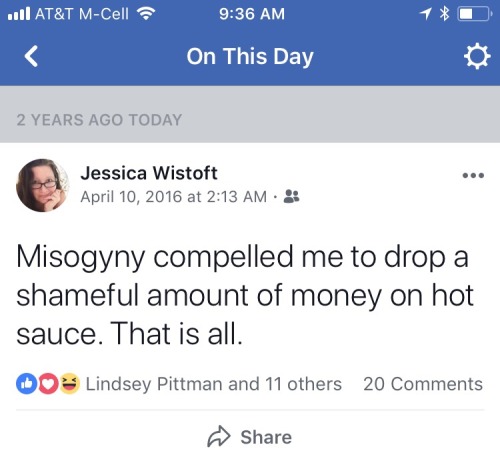
So I like hot stuff. I’m not like, a dick about it. I don’t brag because there are people out there that can handle waaaay hotter foods than me. It’s not a competition.
So I’m at Tijuana Flats, a “mexican” food restaurant chain famous for their hot sauce bar. All in all, what they put out on the bar isn’t the spiciest stuff in the world, but you’ll find some delicious gems in there.
I immediately look at whatever is marked black as hottest for the day (they change them) and immediately go to pump some into the little paper containers provided when…
“Whooaaa, sweetheart you don’t want to do that,”
I turned around and there’s this skinny guy in jeans and a logo polo. There’s another dude wearing the same shirt, so they must have come here from some sad IT job. I’m a little taken aback at this dude’s presumption that I am ignorant to what I’m doing, but I blow it off.
”Nah, man, it’s got the black label, I haven’t tried this one yet.”
”Are you sure? It’s really spicy.”
”I’m pretty sure dude.”
”I don’t think you should, because it was a bit much for me.”
At this point I’m feeling patronized. I stare at him.
“It’s fine. Really.”
“Oooookay,” He says in this exasperated, don’t-say-I-didn’t-warn-you kind of voice. I get my hot sauce and sit down. Food arrives, I taste it with a chip first to test. It’s super sweet, actually. I dump the whole thing on my taco. I don’t know if he’s watching.
I go up to the counter and ask the manager to ring me up a bottle of the sauce to take home. It was pretty delicious! Manager says he’ll bring it to my table.
They bring it, I pay, and the server asks if I’m into hot sauces – of course I say yes. Hot Sauce Police is now watching. She brings me an assortment of sauces they do not serve at the bar because of liability reasons. One of them was rated at 1.5 million Scoville units. I bought all of them, signing the credit card slip as he watches.
I finished my meal.
Then I looked right at him and licked the fucking paper container when I was done.
If you’re going to be giving advice on how to get better at something – and I’m thinking particularly of visual art, but applies to just about anything – then the key thing to understand is that most of the time, the reason that beginners don’t practice isn’t because they’re too lazy or because they’re looking for shortcuts, but because they don’t know how.
Engaging in productive practice is, itself, a skill that must be learned. Without it, what you’re doing isn’t practice: it’s just repetition, and all repetition does is reinforce existing shortcomings. If you’re good at what you do, you’ve probably sufficiently internalised that skill of how-to-practice that you don’t even realise you have it – which is a big problem when it comes to helping others improve!
Folks don’t need to be told to practice. They need to be told how to practice. There’s really no such thing as too much detail here – stuff that seems obvious to you almost certainly isn’t.



 Urocyon's Jaunts 2.0
You must be logged in to post a comment.