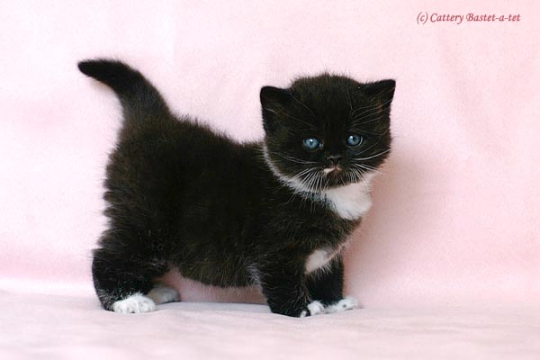
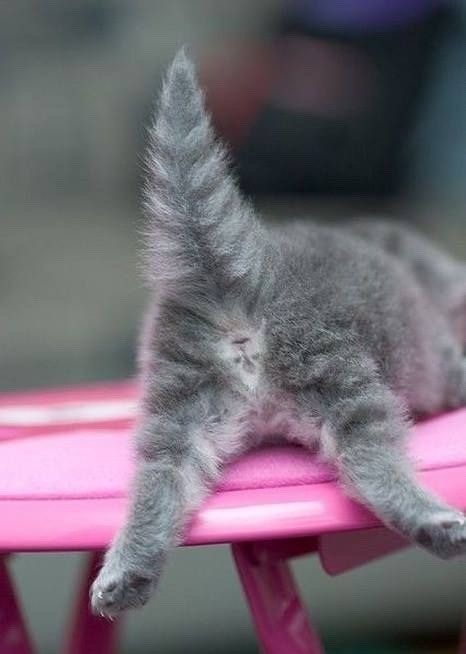
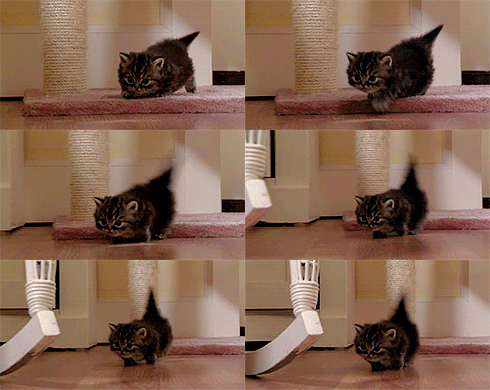
In Austria, we call kittens at that age “Autodromkatzerl”, which translates to “bumper car kittens”, because of the way their tail sticks up. It’s not a really common word, but a very cute one, I think
this is a genuinely delightful bit of knowledge, thank you for sharing this!! omg
this is so 100% Lebanese. everything from the dumpster rolling down the street, to the old fashion mercedes, to the soft french music playing in the background, to the scenery, to the random dude stopping his car on the highway to get out, to the two dudes on the mo-ped beeping and driving up the street the wrong way. Modern Art.
In a 1970s experiment, a Stanford
psychologist and 7 other mentally
healthy participants got themselves
admitted to 12 different psychiatric
hospitals across the US by pretending
to hear voices. Once inside, they began
acting normally, but all 12 hospitals
diagnosed each of them with disorders,
forced them to take drugs, and required
them all to admit they had a disease
before they could be released. SourceSource 2
This was the study ‘being sane in insane places’ by David Rosenhan. The purpose of the study was to determine whether or not the staff of asylums could truly determine a person’s sanity after being admitted.
Rosenhan ans his colleagues did not pretend to hear voices, they pretended to hear a ‘hollow thud’- something with no basis in psychology. From the get go they were offering the doctors and nurses a chance to deny them entry, but despite the fact that the thing they were faking wasn’t even a real symptom, they were all admitted.
That very day, the moment of their admission, they went back to acting normal. They went about their day as normally as possible, and waited to see if the staff of each hospital they were in would notice. They stopped reporting hearing the noise that got them admitted.
The staff never noticed.
Some of the patients did.
Despite this, all of them were eventually released, but none were declared sane on release. Some were in the hospital for 2 weeks, one remained for over 50 days.
What the study proved was that it became impossible to establish sane from insane in the setting of a mental hospital. To retest, after Rosenhan came forward with his findings, he told asylums all over the nation that they’d be doing the experiment again, but with more participants this time. After a certain period, he would ask the head doctors of the ‘targeted’ asylums which patients they believed were faking it.
All of the hospitals reported at least one person.
No one was actually sent in.
This reiterated the original claim, proving for all that the perception of sanity is reliant on location and societal standards.
Similar to the 1887 book and 2015 film 10 Days in a Madhouse, where an investigative journalist fakes her way into an asylum, reveals horrible conditions and speculates that the conditions might be making the occupants insane. That in turn reminds me of harsh jail conditions being counterproductive for rehabilitation.
One of the warehouse workers interviewed, Shannon Allen has been living in her car at the warehouse parking lot for months after her injuries. Donate to her GoFundMe here
“Imagine having a child that refuses to hug you or even look you in the eyes”
Imagine being shamed, as a child, for not showing affection in a way that is unnatural or even painful for you. Imagine being forced, as a child, to show affection in a way that is unnatural or even painful for you. Imagine being told, as a child, that your ways of expressing affection weren’t good enough. Imagine being taught, as a child, to associate physical affection with pain and coercion.
As a preschool special ed para, this is very important to me. All my kids have their own ways of showing affection that are just as meaningful to them as a hug or eye contact is to you or me.
One gently squeezes my hand between both of his palms as he says “squish.” I reciprocate. When he looks like he’s feeling sad or lost, I ask if I can squish him, and he will show me where I can squish him. Sometimes it’s almost like a hug, but most of the time, it’s just a hand or an arm I press between my palms. Then he squishes my hand in return, says “squish,” and moves on. He will come ask for squishes now, when he recognizes that he needs them.
Another boy smiles and sticks his chin out at me, and if he’s really excited, he’ll lean his whole body toward me. The first time he finally won a game at circle time, he got so excited he even ran over and bumped chins with me. He now does it when he sees me outside of school too. I stick out my chin to acknowledge him, and he grins and runs over and I lean down for a chin bump.
Yet another child swings my hand really fast. At a time when another child would be seeking a hug, she stands beside me and holds my hand, and swings it back and forth, with a smile if I’m lucky. The look on her face when I initiate the hand swinging is priceless.
Another one bumps his hip against mine when he walks by in the hallway or on the playground, or when he gets up after I’m done working with him. No eye contact, no words, but he goes out of his way to “crash” into me, and I tell him that it’s good to see him. He now loves to crash into me when I’m least expecting it. He doesn’t want anything, really. Just a bump to say “Hi, I appreciate you’re here.” And when he’s upset and we have to take a break, I’ll bump him, ask if he needs to take a walk, and we just go wander for a bit and discuss whatever’s wrong, and he’s practically glued to my side. Then one more bump before we go back into the room to face the problem.
Moral of the story is, alternative affection is just as valid and vitally important as traditional affection. Reciprocating alternative affection is just as valid and vitally important as returning a hug. That is how you build connections with these children.
This is so goddamn important.
I verbally express affection. A LOT.
My husband… doesn’t. I don’t know why. For the longest time part of me wondered if it meant he loved me less.
At some point I told him about a thing I had done as a kid. Holding hands, three squeezes means ‘I Love You’.
Suddenly he’s telling me I Love You all the time.
Holding my hand, obviously, but also randomly.
taptaptap
on my hand, my shoulder, my butt, my knee, whatever body part is closest to him, with whatever part of him is closest to me
All the time.
More often than I ever verbally said it.
It’s an ingrained signal now, I can tap three times on whatever part of him, and get three taps back in his sleep. Apparently I do the same.





 Urocyon's Jaunts 2.0
You must be logged in to post a comment.