So, while I was at the hospital, this week, one of the care attendants coming around to check my vitals, etc., trying to make cheerful small talk, was talking about the temperature of the room, and whether I was comfortable.
Said something to the effect of: “All women want to be hot.”
Years ago, before I realized that asexuality was a thing, I would have chalked up my cringe reaction to the fact that such a comment was cliche and sexist. But as he said it, this time, I could feel, in the moment, that my reaction was actually a recoil of disgust, and it probably had always been.
All I could think is: Wow! I’m really, really, Not Straight, aren’t I?
In the last couple of years, my realization that I’m Ace has been entirely figuring it out by hindsight, as an intellectual exercise. Since I’ve made a decision to stop looking for a relationship, it seemed like a great big non-issue.
But that one line of casual conversation really brought into focus just how far my own orientation is out of whack with society’s expectation.
I’ve been thinking about my initial reaction of (what I finally identified as) disgust, to the idea of being “hot.”
Because I’m actually one of those asexual people with a high libido (fantasy=good), and generally have always considered myself sex-positive, which could be why it took me so long to name the feeling.
But I think it’s a power thing. It makes me really uncomfortable to imagine my presence sparking feelings in other people that I’m just not capable of feeling for myself. It makes me feel like a target.
In the Care Bears movies, the heroes could solve just about any problem by speaking truth to power. Whenever a handful of bears cared enough to act, they could get together and give the villain the Care Bear stare. Their intense caring made the villain care too — at least until the next episode. (And in the movies, it was sometime permanent.) Whenever they weren’t solving a problem, it was because they were failing to care about it. The real world does not work that way.
In the Care Bears world, caring is magic. In real life, it’s not enough to care about something — you also have to have power. It’s not enough to know what needs to change — you also have to have a strategy for changing it. Sometimes speaking truth of power can be a source of power; sometimes you need other kinds of power. Sometimes you need to vote, get out the vote, build coalitions, wait for the right moment, make compromises, fundraise, reach out behind the scenes or otherwise find another source of power. Most real-life power is partial, most real life change is not fully satisfying — but it’s real, and it’s worth pursuing.
People unfamiliar with advocacy sometimes cause problems by expecting Care Bear stares to work in real life. They assume that any group of activists who cares about something should be able to get together, speak truth to power, and change hearts and minds with the sheer power of concentrated caring. As a result, when they see that a handful of activists who say that they care about a problem have not solved it, they angrily assume that this means that the activists just don’t care enough to be willing to do the Care Bear stare. When people aren’t solving a problem, it’s important to ask *why* they’re not solving the problem. Sometimes it’s because they don’t care, but often it’s because they don’t have the power to make all of the change they want to make. Often, they’re doing the best they can with the resources available to them.
This also happens in politics: For instance, people sometimes ignore the implications of the fact that the Democrats are the minority party in Congress and that there is a Republican in the White House. They believe, implicitly, that if the Democrats just *cared* enough, they would be able to stop the Republicans from passing bad laws and appointing awful people — and that they could pass the laws that we need without any Republican support. They sometimes reach the dangerous conclusion that Democrats don’t really care and aren’t worth voting for. But in real life, Democrats don’t have the option of using the Care Bear stare — they need power. If we want the Democrats to have the power to protect us from Trump and pass better laws, we have to vote in more of them.
People also sometimes expect *themselves* to be able to use a Care Bear stare. People stuck in this mindset feel a lot of shame when they notice problems that they don’t know how to solve, because they it must mean that they don’t really care as much as they think they do. It is much more helpful to understand that caring about problems does not in and of itself create the ability to solve problems. In real life, you won’t have the power to fix everything you want to fix, but you will have the power to fix something. When you accept that caring doesn’t create power by itself, it can enable you to find the things that do — including solidarity with other advocates who are doing the best they can.
T;dr Care Bear stares do not work in real life. In real life, caring about a problem does not in and of itself create the ability to fix the problem. In real life, you also have to have power. When people ignore power and expect caring to fix everything, it creates a lot of problems in advocacy.
on occasion, i browse the clearance racks at overpriced hipster-y boutiques cause from time to time you can find amazing deals, but being in Rich People Places always makes me a little nervous– and today when i was picking up a layaway from one of these shops, my nerves resulted in a story the shopkeepers are probably gonna be telling for quite a while.
i’d just come from the feed store for lizard food (ie: bugs), and it was like 95F out so they were slowly being smothered to death in my backpack. so when the clerk, who i’d overheard was only on her second day working there, gave me my fancy sundress in a bag way too big for it, i pulled out two dozen crickets in a plastic bag and a tub full of mealworms from my pack and set them gently on the bag so they could breathe better till i got home.
this girl’s eyes go wide and she looks imploringly back at the equally startled-looking manager helping her through the transaction, and i realize that this might look a little weird to folks who aren’t reptile keepers. so, instead of doing the logical thing and explaining that i’m feeding leopard geckos, i sorta chuckled and shrugged apologetically, and just said “dinner, y’know?”
for the briefest of moments, there was an awkward silence so sweaty and suffocating you could drown in it, and then, in true daytime comedy fashion,
the fucking crickets started chirping.
so i guess i’m never going back there ever again.
This is gold.
We once kept a pet lizard who ate live crickets or locusts at different points of her life. The only issue is that I am from a tiny Scottish island so we had to order them in by mail.
When we went away on holiday our neighbours would collect the locusts for us and feed our lizard.
So we’re away for Christmas and at the time we were ordering locusts from a shop on ebay. We get a phone call from said neighbour who tells us that instead of 500 locusts we have received 5000 crickets. Said crickets have eaten their way out of the plastic sack and have escaped into our kitchen.
Through some kind of monumental effort our neighbour and her son manage to seal the bag and recapture the crickets. They call us and we decide the best thing to do is return to sender. Our lizard got picky and would no longer eat crickets at this stage of her life so they were useless to us.
Next day or so we get another phone call. Apparently these crickets had once again eaten their way out of their confines. This time they escaped from the post van to descend like some kind of biblical plague on our local airport. They had to close while an exterminator was contacted.
My father calls the airport to apologise. However, at the time he was the editor of the local newspaper. Also, the airport did not know that the crickets were ours. So their reaction was to say “oh no please don’t print this story”. He explained the situation and did not put it in the paper.
i regret this post every day of my life but your addition makes it worth it
I love what fleas look like from above vs. from the side
I didn’t realize this was surprising to so many people!
This lateral flattening allows the flea to “swim like a fish” through fur, aided by the many backwards-facing barbs and hairs along their sides.
If you’ve ever tried to pick them off a dog or cat you’ve seen this in action, it really is like they’re gliding through a liquid environment and amazingly fast, hardly even using their legs to do it.
This is also why they don’t have wings, which would get in the way of this trick, but they compensated with incredible jumping ability that may as well be flight.
Hundreds of millions of years ago, though, fleas couldn’t jump and they were flattened top-down:
This is because fleas were originally parasites of dinosaurs, and while dinosaurs often had feathers, feathers have a different density and the “fur swimming” wouldn’t have worked yet.
The first fleas similar to today’s fleas probably began evolving towards the end of the dinosaur’s run, adapting to the increasing number of our ancestral mammals. Dinosaurs shrank into modern birds so rapidly, it seems, that their original fleas vanished entirely.
So basically whenever you get bit by a flea, you caught that from a dinosaur.
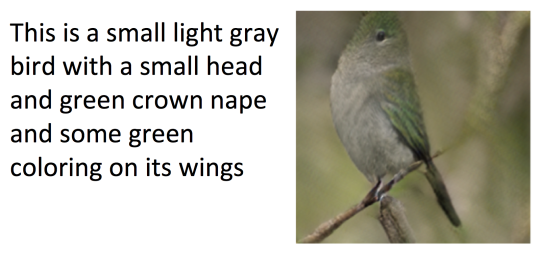
There was a paper recently where a research team trained a machine learning algorithm (a GAN they called AttnGAN) to generate pictures based on written descriptions. It’s like Visual Chatbot in reverse. When it was just trained to generate pictures of birds, it did pretty well, actually.
(Although the description didn’t specify a beak and so it just… left it out.)
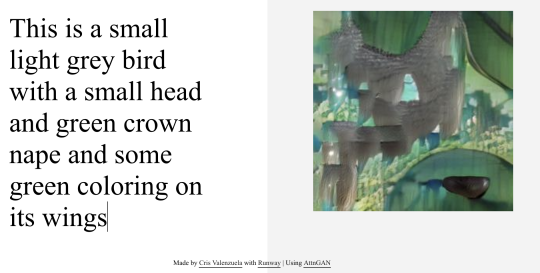
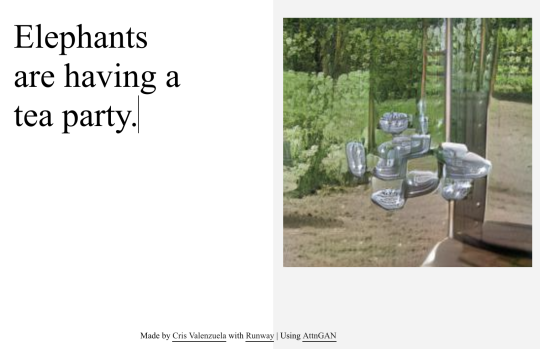
But when they trained the same algorithm on a huge and highly varied dataset, it had a lot more trouble generating a picture to go with that caption. Below, I give the same caption to a version of their algorithm that has been trained to generate everything from sheep to shopping centers. Cris Valenzuela wrapped their trained model in an entertaining demo that attempts to generate a picture for any caption.
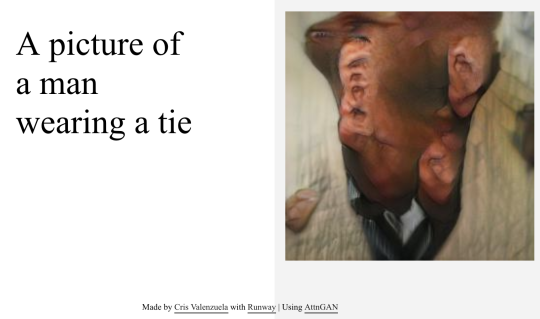
This bird is less, um, recognizable. When the GAN has to draw *anything* I ask for, there’s just too much to keep track of – the problem’s too broad, and the algorithm spreads itself too thin. It doesn’t just have trouble with birds. A GAN that’s been trained just on celebrity faces will tend to produce photorealistic portraits. But this one, however…
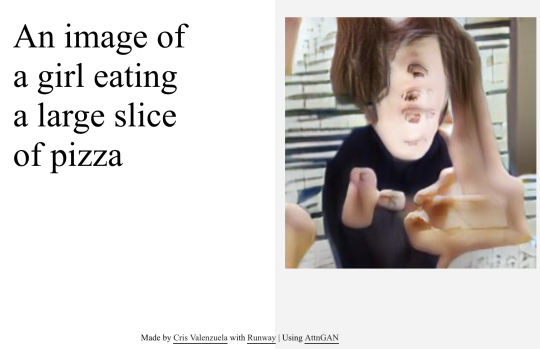
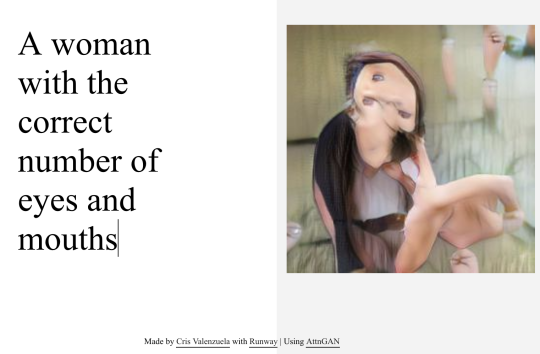
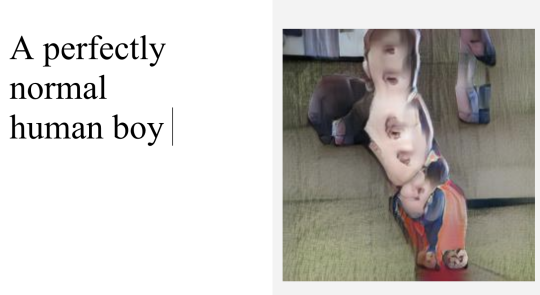
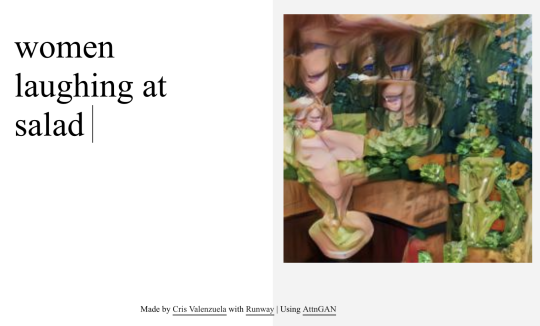
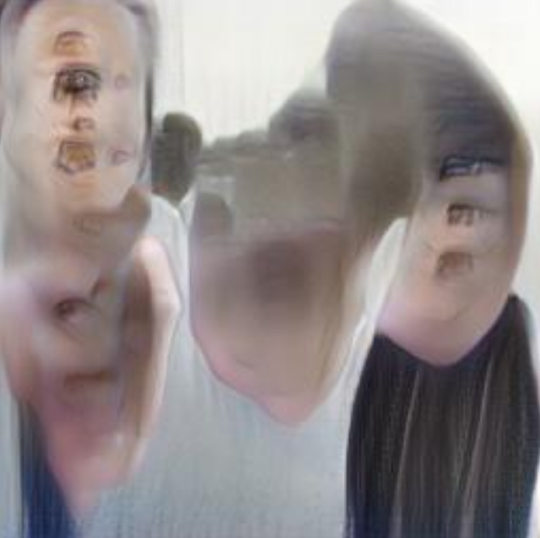
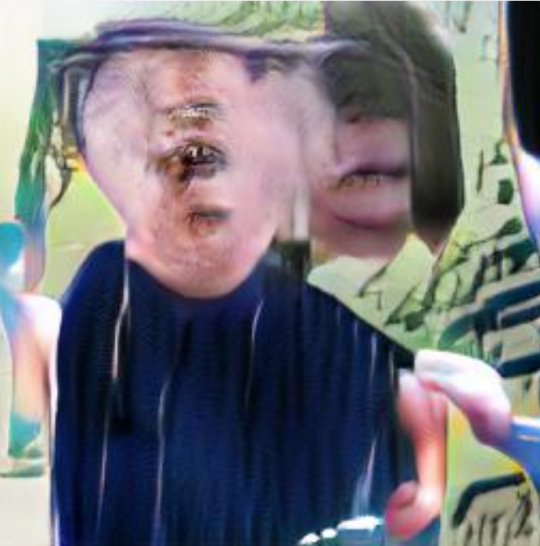
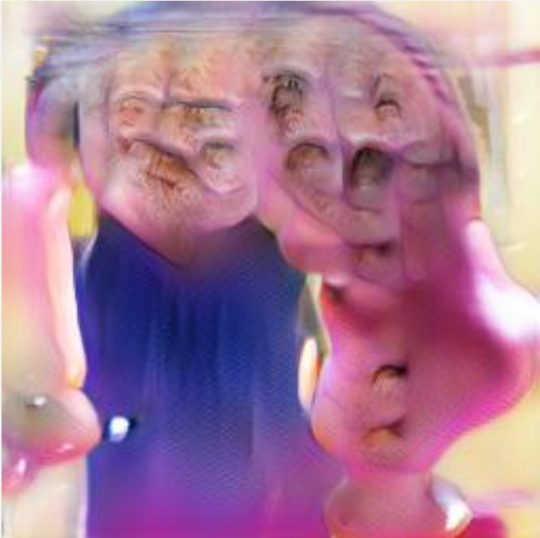
In fact, it does a horrifying job with humans because it can never quite seem to get the number of orifices correct.
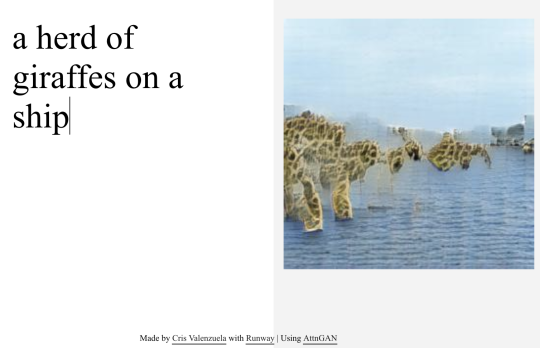
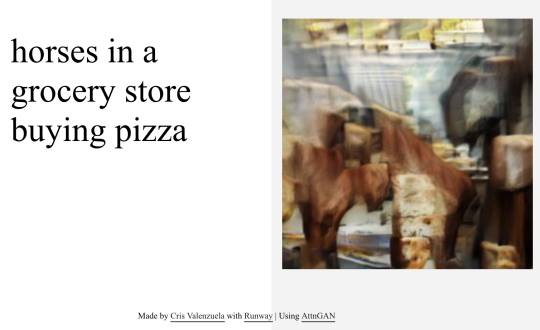
It’s fun to ask it to draw animals though. It knows the texture of giraffes, but not quite exactly their shape. And it knows that boats are on the water, but not necessarily that they are boats.
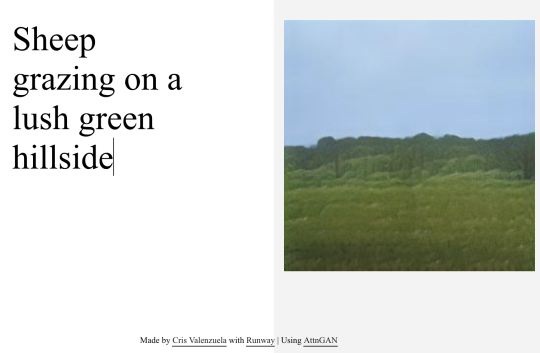
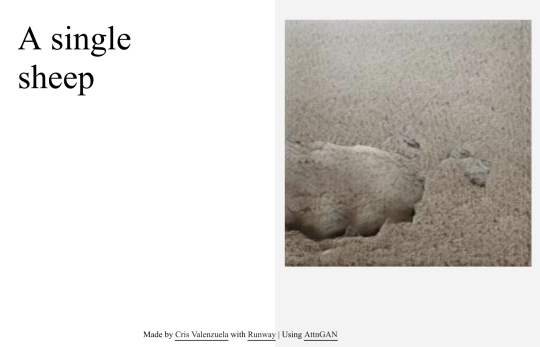
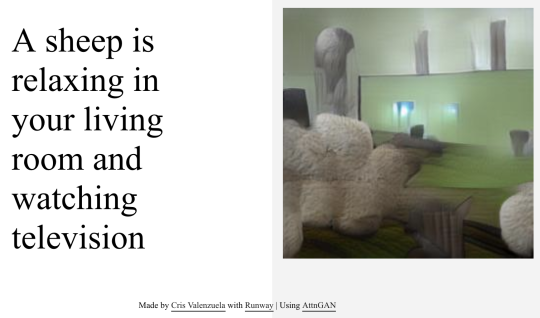
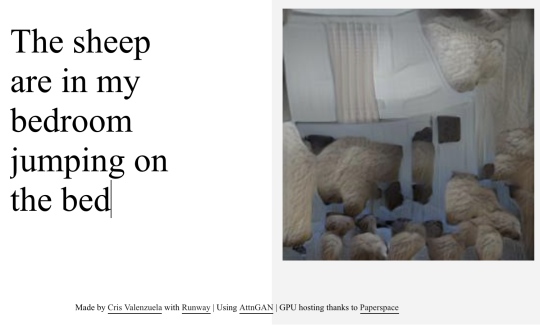
It also (like many other image recognition algorithms) gets a bit confused about the difference between sheep and the landscapes they’re found on. Other algorithms recognize sheep in pictures of empty green fields. And this one, when asked to draw sheep…
That’s different, though, from asking it to draw *a* sheep. In that case, it knows exactly what to do. It draws the sheep, and then just to be safe it fills the entire planet with wool too.
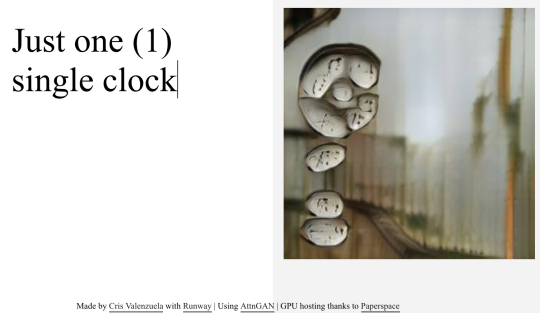
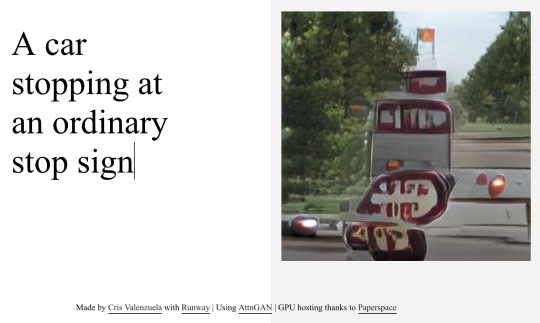
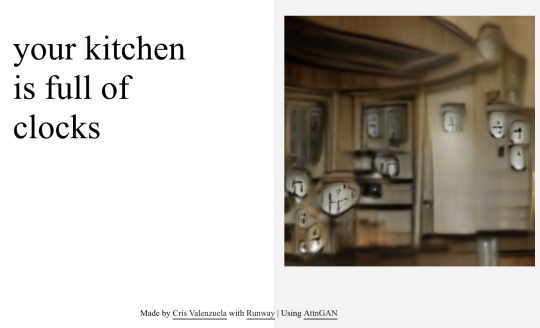
It really likes drawing stop signs and clocks. Give it the slightest opportunity to draw one, and it will chuck those things all over the place.
Other than its horrifying humans, this algorithm can actually be pretty delightful.
I had way too much fun generating these and ended up with way more than would fit in this one blog post. I’ve compiled a few more of my favorites. Enter your email and I’ll send you them (and if you want, you can get bonus material each time I post).
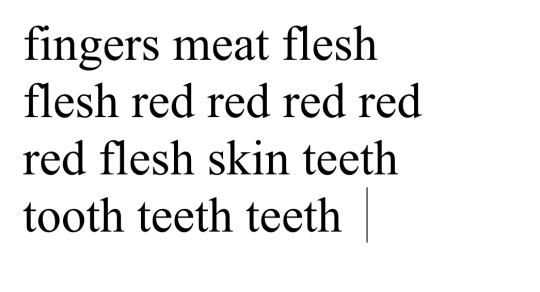
once you get the hang of it (a good tip is you don’t need to write sentences, you can just list stuff) you can just use it like an instant body horror generator, watch:



 Urocyon's Jaunts 2.0
You must be logged in to post a comment.