Maria may have been a force of nature, but the disaster itself was largely man-made. Hurricanes have been sweeping through Puerto Rico for thousands of years. This was a manufactured catastrophe, created by an explosive mix of politics, Wall Street corruption, poor planning and rising carbon pollution.
It would be easy to dismiss the death and destruction in Puerto Rico as a freak event, a sorry collision of politics, economics and Mother Nature. In fact, what happened in Puerto Rico was a powerful warning that preparing for life in the new normal is about a lot more than updating building codes and convening blue-ribbon commissions to study sea-level rise and extreme-rain events. The story of rebuilding Puerto Rico demonstrates that virtually no aspect of our current way of life, including our legal and financial systems, is ready for what’s coming our way.
A consequence of this decade-long financial decline was little investment in infrastructure — the roads, highways, bridges, water and sewage systems, and electric grid were all more or less abandoned. There was no money for building inspectors to make sure houses were built to code (in fact, there were only a handful of inspectors on the entire island) and no funds to stockpile medication in rural areas, much less to build, say, a new hospital for Vieques, a municipal island of 9,000 people with woefully inadequate health care. “Even before the storm, Puerto Rico was headed for a humanitarian disaster,” says López, the San Juan lawyer. “That was obvious to anyone who cared to look. When Maria came along, it blew back the curtain to expose it all.”
But as Rivera knows as well as anyone, one year after the storm, Puerto Rico remains an island lost at sea. The economy will be pumped up by billions of dollars in recovery funds over the next few years, but after that? The path to statehood is likely to be long and steep. You can spin out various possible futures for the island: In one version, disaster capitalists and bitcoin entrepreneurs arrive in their yachts and private jets, turning Puerto Rico into a crypto St. Barts; in another, post-capitalists build a paradise powered by solar microgrids, community gardens and the rebirth of local fisheries; in a third, the territory falls into a dystopian ruin, where everyone with brains and ambition has fled to the mainland, leaving behind an aging, unhealthy population in slow but inexorable decline. But one thing that’s clear is that in the age of accelerating climate change, what’s most vulnerable is not ice sheets and coral reefs. It’s our human-built world. As Puerto Rico demonstrates, one big storm can blow the whole thing down.
The reason there are so many weird utility cartridges for the original Game Boy is because for the better part of a decade, it was the only mobile computing device that many people could afford. When the Game Boy debuted in 1989, its sticker price was less than $90 USD – around one-tenth the cost of even the most basic contemporary non-gaming handheld. When you put those figures together, publishing your sewing machine controller app as a Game Boy cart suddenly makes a lot of sense!
Figment, the recently closed writing website, has just launched (after a long delay) their long-awaited successor to figment known as Underlined, where users can post their work and receive feedback, supposedly.
DO NOT USE UNDERLINED. DO NOT POST YOUR WORK ON UNDERLINED.
Underlined’s terms and conditions contains a clause stating that the rights to all your work that you post on their website belongs to them!!!!
Underlined belongs to Penguin Random House. This is an extremely dirty trick for them to play on writers, especially young writers and children, who come to the internet to get feedback and will lose the rights to their work. Please boost!!!
For my writing friends looking for an online writing community, DO NOT USE Underlined.
I went to confirm @greater-than-the-sword‘s post, because seriously publishers are still pulling this garbage? And yes, they are. If you want to check out the full terms and conditions, have at it. They are full of writers’ nightmares, a few of which I’ll highlight under the cut.
What is feminism? In this short, accessible primer, bell hooks explores the nature of feminism and its positive promise to eliminate sexism, sexist exploitation, and oppression. With her characteristic clarity and directness, hooks encourages readers to see how feminism can touch and change their lives–to see that feminism is for everybody.
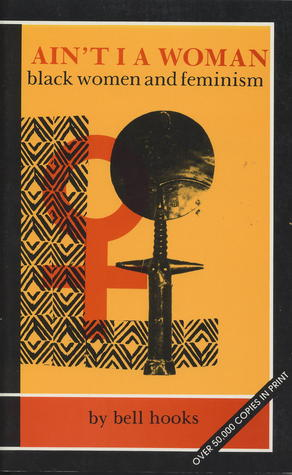
A groundbreaking work of feminist history and theory analyzing the complex relations between various forms of oppression. Ain’t I a Woman examines the impact of sexism on black women during slavery, the historic devaluation of black womanhood, black male sexism, racism within the recent women’s movement, and black women’s involvement with feminism.
In Teaching to Transgress, bell hooks–writer, teacher, and insurgent black intellectual–writes about a new kind of education, educations as the practice of freedom. Teaching students to “transgress” against racial, sexual, and class boundaries in order to achieve the gift of freedom is, for hooks, the teacher’s most important goal.
Bell hooks speaks to the heart of education today: how can we rethink teaching practices in the age of multiculturalism? What do we do about teachers who do not want to teach, and students who do not want to learn? How should we deal with racism and sexism in the classroom?
Full of passion and politics, Teaching to Transgress combines practical knowledge of the classroom with a deeply felt connection to the world of emotions and feelings. This is the rare book about teachers and students that dares to raise critical questions about eros and rage, grief and reconciliation, and the future of teaching itself.
A sweeping examination of the core issues of sexual politics, bell hooks’ new book Feminist Theory: from margin to center argues that the contemporary feminist movement must establish a new direction for the 1980s. Continuing the debates surrounding her controversial first book, Ain’t I A Woman, bell hooks suggests that feminists have not succeeded in creating a mass movement against sexist oppression because the very foundation of women’s liberation has, until now, not accounted for the complexity and diversity of female experience. In order to fulfill its revolutionary potential, feminist theory must begin by consciously transforming its own definition to encompass the lives and ideas of women on the margin. Hooks’ work is a challenge to the women’s movement and will have profound impact on all whose lives have been touched by feminism and its insights.
One of our country’s premier cultural and social critics, bell hooks has always maintained that eradicating racism and eradicating sexism must go hand in hand. But whereas many women have been recognized for their writing on gender politics, the female voice has been all but locked out of the public discourse on race.
Killing Rage speaks to this imbalance. These twenty-three essays are written from a black and feminist perspective, and they tackle the bitter difficulties of racism by envisioning a world without it. They address a spectrum of topics having to do with race and racism in the United States: psychological trauma among African Americans; friendship between black women and white women; anti-Semitism and racism; and internalized racism in movies and the media. And in the title essay, hooks writes about the “killing rage"—the fierce anger of black people stung by repeated instances of everyday racism—finding in that rage a healing source of love and strength and a catalyst for positive change.
bell hooks writes about the meaning of feminist consciousness in daily life and about self-recovery, about overcoming white and male supremacy, and about intimate relationships, exploring the point where the public and private meet.
According to the Washington Post, no one who cares about contemporary African-American cultures can ignore bell hooks’ electrifying feminist explorations. Targeting cultural icons as diverse as Madonna and Spike Lee, Outlaw Culture presents a collection of essays that pulls no punches. As hooks herself notes, interrogations of popular culture can be a ‘powerful site for intervention, challenge and change’. And intervene, challenge and change is what hooks does best.
Addressing questions of race, gender, and class in this work, hooks discusses the complex balance that allows us to teach, value, and learn from works written by racist and sexist authors. Highlighting the importance of reading, she insists on the primacy of free speech, a democratic education of literacy. Throughout these essays, she celebrates the transformative power of critical thinking. This is provocative, powerful, and joyful intellectual work. It is a must read for anyone who is at all interested in education today.
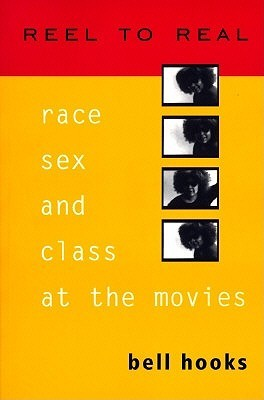
Although it may not be the goal of filmmaker, most of us learn something when we watch movies. They make us think. They make us feel. Occasionally they have the power to transform lives. In Reel to Real, Bell Hooks talks back to films she has watched as a way to engage the pedagogy of cinema – how film teaches its audience. Bell Hooks comes to film not as a film critic but as a cultural critic, fascinated by the issues movies raise – the way cinema depicts race, sex, and class. Reel to Real brings together Hooks’s classic essays (on Paris is Burning or Spike Lee’s She’s Gotta Have it) with her newer work on such films as Girl 6, Pulp Fiction, Crooklyn, and Waiting to Exhale, and her thoughts on the world of independent cinema. Her conversations with filmmakers Charles Burnett, Julie Dash, and Arthur Jaffa are linked with critical essays to show how cinema can function subversively, even as it maintains the status quo.
In these twelve essays, bell hooks digs ever deeper into the personal and political consequences of contemporary representations of race and ethnicity within a white supremacist culture.
When women get together and talk about men, the news is almost always bad news,” writes bell hooks. “If the topic gets specific and the focus is on black men, the news is even worse.”
In this powerful new book, bell hooks arrests our attention from the first page. Her title–We Real Cool; her subject–the way in which both white society and weak black leaders are failing black men and youth. Her subject is taboo: “this is a culture that does not love black males: ” “they are not loved by white men, white women, black women, girls or boys. And especially, black men do not love themselves. How could they? How could they be expected to love, surrounded by so much envy, desire, and hate?
Drawing on both her roots in Kentucky and her adventures with Manhattan Coop boards, Where We Stand is a successful black woman’s reflection–personal, straight forward, and rigorously honest–on how our dilemmas of class and race are intertwined, and how we can find ways to think beyond them.
In Sisters of the Yam, hooks examines how the emotional health of black women is wounded by daily assaults of racism and sexism. Exploring such central life issues as work, beauty, trauma, addiction, eroticism and estrangement from nature, hooks shares numerous strategies for self-recovery and healing. She also shows how black women can empower themselves and effectively struggle against racism, sexism and consumer capitalism.
Boozhoo (hello), my name is Ken, I am a disabled Ojibwe artist from northern Wisconsin. I am writing this post because I am having a hard time making ends meet and any donations I could possibly receive at this time would be greatly appreciated. Recent events have left my bank account depleted and my cupboards bare, I have some food but it will not last and I still do not know how I will cover all the utility bills.
I do have PayPal, that is really the best way to donate at this time, the email I use for that is: baapimakwa@gmail.com, or you can click here.
I have the opportunity to move, and this is something I desperately need to do for my health and well being, I will have better access to medical care and the services I require. To make this work I am going to need to be bringing more funds than my disability payment, I really need to get some art together and get more things on my redbubble, I would love to do something like a patreon but I don’t think I can put out timely content at this time.
I have a scanner now, I am desperately in need of a new computer, I have been using a borrowed computer for the last few months and will have to give it back before I move, and it is not compatible with my scanner and I am unable to add editing software to it even if I could.
I am trying to raise at least $1000 at this time, for moving expenses and a new laptop, I am trying to move forward but there is so much holding me back and I need help.
And my first thought was closet. Just an ordinary, tiny, New England closet.
But no!
There are STAIRS in that closet!
Now where do those stairs go, you may ask?
Up to the black void attic of course.
But you know, it doesn’t seem to end there.
Because for reasons no one seems to know, this door deadbolts from inside. There’s nothing but a black void up there. Why must it lock on that side of it???
Of course, it was then that I spotted something else.
Why yes, those ARE scratch marks on the inside of the door. Which, one might think dog because they’re so low on the door (only a third of the way up).
But you know, this wouldn’t be fun if that was all there was.
That deadbolt has scratches all around it too.
Funzies!
Because guess what.
That deadbolt is five feet off the ground. And there is no dog in this house tall enough to reach it.
Pretty sure I just entered a horror film.
Gotta love Boston architecture.
You’re friend’s a werewolf don’t be afraid just support them.
Both North Carolina and Virginia have stated they now have plans to evacuate prisoners within the projected path of Hurricane Florence*. South Carolina Governor Henry McMaster (@HenryMcMaster, 803-734-2100) refuses to evacuate prisoners AT ALL, including those IN THE EVACUATION ZONE. Federal Prisons have only given vague answers that they “are prepared” and say they can give no details due to “security reasons”. We must continue to pressure them to ensure they meet our demands! We’ve prioritized South Carolina numbers below!
UPDATE: Jailhouse Lawyers Speak has confirmed with prisoners inside Ridgeland Correctional and Lieber Correctional that they are NOT being evacuated. Ridgeland has told phone-zappers it’s not moving people without orders from the Governor or the Director of Prisons. We’ve updated the below numbers accordingly!
Governor’s Office- 803.734.2100 and Twitter- @HenryMcMaster
Legislative Liaison/Special Assistant to the Director— Dexter Lee—- 803-896-1731
Jasper, Colleton, and Beaufort CO’s in Southern SC are not under mandatory evacuation but SC Emergency Management Div. retweeted a tweet from Horry Co. EMD telling residents of those counties to evacuate. Additionally the Governor told residents of those counties in a live press-briefing 9/12 to leave if they can. Information for those county jails:
Beaufort County Detention Center: (843) 255-5200
Colleton County Jail: (843) 549-5742
Colleton County Sheriff Administration: (843) 549-2211
When I was still in high school I went into the girls toilets one morning before classes started. I could hear this girl crying from one of the cubicles. When I asked her what was wrong she said to me “I just started my period. I don’t know what to do!” I asked her what she meant and she said “My mum can’t afford them. She said if this ever happened I have to go home right away” When I gave her one of the pads from my bag she literally hugged me so tight. she was sobbing while saying to me "Now I can stay at school thank you" That hit me so hard. I gave her my lunch money so she could buy her own. My cheese toastie means nothing to me at this point if I can give this one girl something she needs. Sanitary Products are not a luxury item. Period poverty is real. I’m so proud of my wee country right now.💙
This needs to be International, starting YESTERDAY.







 Urocyon's Jaunts 2.0
You must be logged in to post a comment.