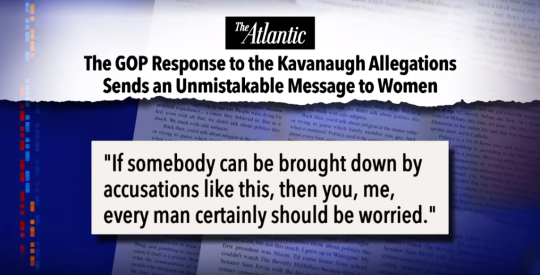
I know this is a committee hearing and not a court hearing but if Kavanaugh were presiding over his own confirmation he would hold himself in contempt. No decent judge would allow that kind of backtalk and refusal to answer from a witness, or showboating and leading the witness from the examiners.
There are people who look much better than they actually are. They trick other people into admiring them for virtues that they do not actually possess. Sometimes they do this by using their charisma like a mirror.
It works along these lines (I’m using ‘he’ here both for ease of reading and because this is *often* male-coded behavior, but there are also people who do this who aren’t men):
Charisma Man is a bad leader. He talks a lot about important causes, but doesn’t do any effective work on them.
Mostly, Charisma Man insults all the leaders who are doing serious work on those causes for not having fixed it yet.
Idealistic people see that the problem hasn’t been solved yet, and assume that it’s because the other leaders don’t care as much as Charisma Man does.
They are sincere, and they think Charisma Man is too.
They will tell everyone that Charisma Man is kind and wise and good.
None of this is actually true. There is wisdom and kindness and sincerity and goodness in the room, but it’s not coming from Charisma Man, it’s coming from his followers.
When they look at Charisma Man, they see their own good qualities reflected back, and then give him credit for them.
Charisma Man is wielding his charisma like a mirror in order to stop people from noticing what he is actually like.
People don’t notice all the ways that Charisma Man is failing at leadership because they’re seeing their own reflected goodness instead.
They also don’t notice all the ways that they are good and competent and valuable because they are attributing everything good they notice to Charisma Man.
If you are admiring a leader in an unbounded way and losing sight of your own worth, you might be looking at a charisma mirror rather than reality. It’s worth asking yourself:
What does this leader do that I think is admirable?
Do they actually do those things?
Is it unusual to do those things? Who else does them?
How is this leader helping others to be effective?
How is this leader valuing other people’s work?
When there is kindness and wisdom and sincerity in the room, where is it coming from? Is it from the leader, the followers, or both?
If a leader is making you feel like the only valuable thing you can do is follow them, sometimes is seriously wrong. Everyone, including you, has their own good qualities and their own contributions to make. Good leaders don’t want you to depend on them for your own sense of self worth, and they don’t want you to see them as the only person with something to offer. Good leaders don’t want unbounded admiration from their followers; good leaders collaborate and show respect for other people’s strengths.
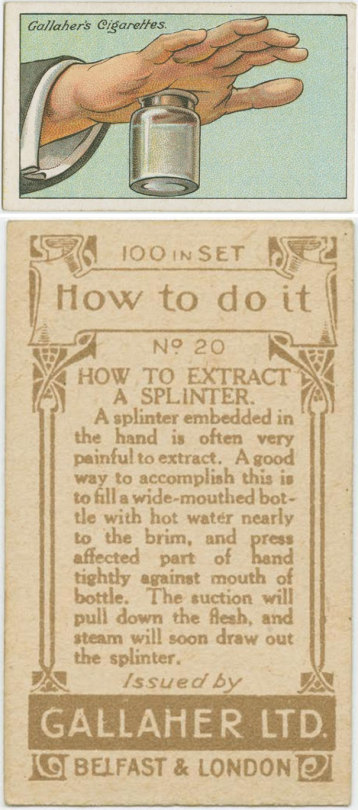
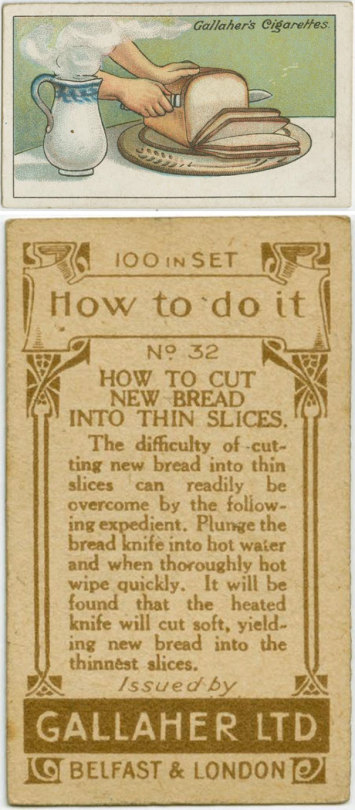
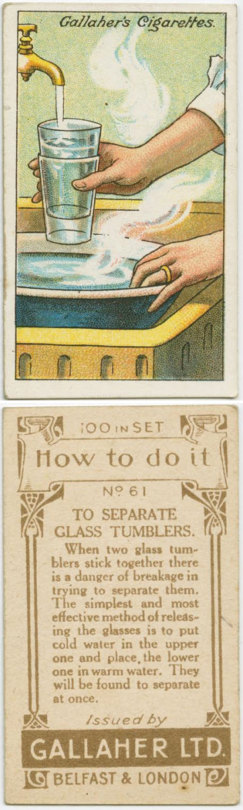
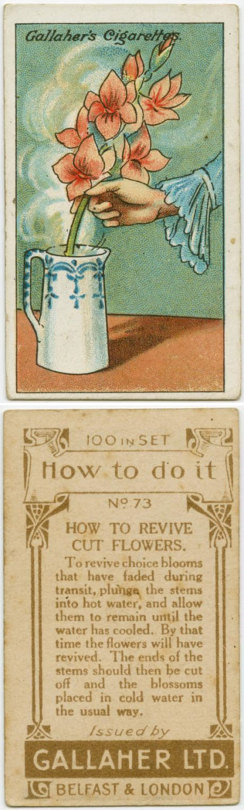
People don’t often look back on the early 1900’s for advice, but what if we could actually learn something from the Lost Generation? The New York Public Library has digitized 100 “how to do it” cards found in cigarette boxes over 100 years ago, and the tips they give are so practical that millennials reading this might want to take notes.
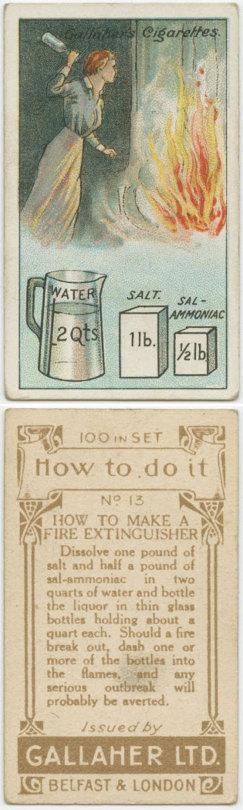
Back in the day, cigarette cards were popular collectibles included in every pack, and displayed photos of celebrities, advertisements, and more. Gallaher cigarettes, a UK-founded tobacco company that was once the largest in the world, decided to print a series of helpful how-to’s on their cards, which ranged from mundane tasks (boiling potatoes) to unlikely scenarios (stopping a runaway horse). Most of them are insanely clever, though, like how to make a fire extinguisher at home. Who even knew you could do that?
The entire set of life hacks is now part of the NYPL’s George Arents Collection. Check out some of the cleverest ones we could find below. You never know when you’ll have to clean real lace!
I see a lot of people (especially disabled people) hate themselves for struggling with things that they think of as easy, often along these lines:
Person: I need to do this thing.
Person: It’s not hard. This is so easy. Why don’t I just do it?
Person: I know I need to do the thing. It’s been weeks. What’s wrong with me? This isn’t hard. I need to just do it already.
If you’re having trouble doing something, the thing you’re struggling to do is not actually easy. There is no objective difficulty scale. Tasks aren’t inherently easy or difficult — it depends on the person and the situation. Different people find different things easy and hard. Sometimes you will struggle with things that other people find easy. That doesn’t mean you’re failing to do an easy thing. It means that for you, the task is hard.
Sometimes things that are hard at first become easier with practice, or become easier when you learn new skills. Sometimes things never get any easier. Sometimes solutions that work for people who can do the thing without much trouble will work for you too; sometimes you might need support that other people don’t need.
Sometimes you might need to find an alternative to doing the thing. Sometimes the only solution is to have someone else help you do the thing or do the thing for you. It doesn’t matter if you think it ’should’ be hard or easy, if you’re having trouble doing something, that means the thing you’re trying to do is hard. (And sometimes, it might mean that the thing is impossible.)
Calling something easy does not make it easy, and you can’t make hard things easy by hating yourself. Hard things become much more possible when you accept that they are hard, stop trying to overcome the difficulty through sheer force of will, and seek out solutions that will work for you.
Tl;dr: If you’re saying to yourself “Why haven’t I done this easy thing?!”, the thing is probably not actually easy.
Today’s another day when way too many people are saying this stuff happens in high school because that’s just how men are like, and if you add alcohol to the equation, whatever, what else can you expect?, and I’m suddenly thinking about Hockey Boy (my next door neighbour growing up), and a party we found ourselves at when we were seventeen and summer was almost there, enticing and sweet like ripening strawberries. I considered it a wild thing at the time, but I now understand we were innocent nobodies in the middle of an isolated nowhere. Still, there was music and spin the bottle and some very hard liquor and I think two people disappeared in a room together and everyone laughed and cheered. And anyway, Hockey Boy drank too much of whatever that thing was (‘Oven cleaner’, the host described it) and finally passed out on the couch, his freckles standing out like scars in the fading candlelight.
On the whole, a most interesting & satisfying night.
Only the next day I was made aware of a prank they were playing on him, and here it’s where it gets complicated for half a second: Hockey Boy and I were very good friends, but I was best friends with his best friend, Silver Earring, another boy who lived in the neighbourhood, and we’d all grown up together and spent time together and were in a band and did all those things teenagers did before the internet. What I never realized at the time is that Silver Earring had a tentative crush on me and what I did realize of is that I had a tentative crush on Hockey Boy because he’d basically put on thirty pounds of muscle over the previous summer and there’s a moment you get around friends of the opposite sex, right (or friends of the same sex for whomever’s so inclined) – that Shit, okay tHEN flash of realization that your childhood playmates have actual physical bodies attached to them, that they’re not only jokes and weird habits and shared memories but real people with bits and bobs and lips you could potentially kiss and wouldn’t that be a good story for your future children? And anyway, Silver Earring was trying to find out how I felt about him, also he needed to get back at Hockey Boy for some situation involving a guitar I never knew the full truth of, so what he did is that he told Hockey Boy that he’d been Very Inappropriate with me the night before, Very Inappropriate Indeed, and when asked for details he smiled a wild fox smile and dropped concepts like ‘nudity’ and ‘didn’t know you had it in you’ and also ‘not sure she’s happy btw’ and we were seventeen and idiotic, and this was all a big joke to him, time of his life, really, and when he came to me and asked me to lie and help him out so he could turn this prank into something Epic, I honestly didn’t see anything wrong with it?
(I now understand he was hoping I’d cry out, ‘Oh no, I couldn’t possibly pretend to have feelings for him’ and ‘I don’t want you, specifically, to think I’m interested in someone else’, but, well – miscommunication and missed chances and life taking us both in better and more suitable directions.)
No: we all knew one another really well and school was boring boring boring and people were always lying and going on adventures in my books, so this was exciting and new and something to write in my diary about. Yay. We both assumed Hockey Boy would be embarrassed, that he would blush that rare blush of his, and it was fun to have this stupid secret between us.
(As I said: yay.)
But when I got back from school that very same day, Hockey Boy was waiting for me in my driveway, all miserable and washed-out in the hot afternoon sun, and suddenly the thing didn’t seem so fun anymore. As soon as he saw me, as soon as I got off my bike, he stood up – he tried to look at me, couldn’t – and staring at his feet, he delivered a stumbling, heartfelt, soul-shattering apology for something I knew perfectly well he hadn’t even done. He told me he didn’t remember anything about that night, that he regretted drinking because he never wanted to embarrass or hurt me in any way, that Silver Earring hadn’t told him the details of what had happened but it didn’t matter – it was bad, and it was his fault, and he hoped we could still be friends but he understood if I –
“You fell asleep,” I blurted out, and I don’t think I’d ever been more ashamed of myself in my entire life. He was pale and red-eyed and freaking undone. “You fell asleep and nothing happened.”
“But he said – wait – that bastard -”
It ended, luckily, in nothing at all. Silver Earring paid us both drinks the next Saturday night, apologized profusely for being an idiot, and there was some blushing and a couple of uncomfortable smiles, but that was it. And if I think of my (boy) friends, of the people (men) I grew up with, stuff like this is mostly what I remember. Boys being careful, boys being kind, boys asking if you’re sure, boys backing off, boys saying sorry and looking at their feet and knowing exactly where the line is.
(Boys being normal, that is.
Boys being human beings and not freaks and not monsters.)
So, I don’t know – it physically hurts, it
physically
makes me sick to sit here and listen to grown-ass adults pretending boys and men are inherently violent, inherently brutal, inherently selfish and criminal and mean-spirited – and that we, as a society (as women) should simply let them be as violent and brutal and selfish and criminal and mean-spirited as they were born to be.
Seriously, enough with this bullshit.
Just – enough.
(And also: if men and boys are so utterly incapable of self-control, why do those same people insist of they should be in charge of virtually everything? You can’t both argue men are way more rational than hormone-driven, blood-dripping, borderline hysterical women and then explain away shitty and illegal behaviour as ‘just male nature’, surely? How does that work?)
“Most people, when you confront them about something they are doing wrong, get defensive and deny it at first. But later, when they have had some time to cool down, they will come back and admit you were right. Abusers do not do this. They use the passage of time to find additional arguments about why they are right.”
when i was very small i assumed this song was about some lady who literally kept a human face in a jar by the door and since father mckenzie buried her that meant that he also killed her and basically i thought eleanor rigby was about zombies until i was like 12 years old
This is so much better than anything I could’ve envisioned listening to the song.







 Urocyon's Jaunts 2.0
You must be logged in to post a comment.