Big Horses are a Very New Thing and they Likely Didn’t Exist in your Historical and/or Fantasy Settings.
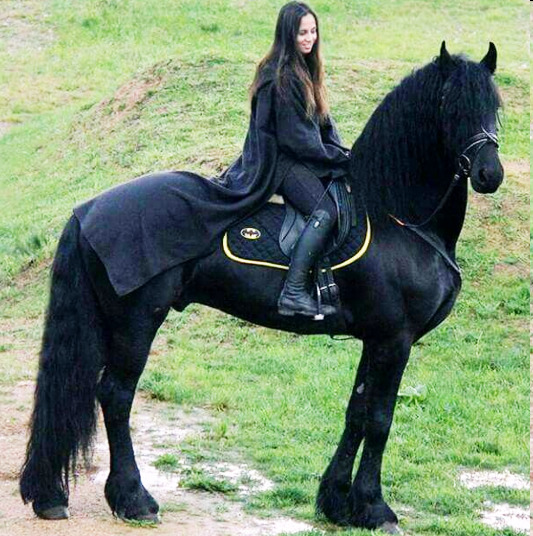
You’ve all seen it in every historical piece of media ever produced. Contrary to popular belief, a big black horse with long legs and long flowing mane is not a widespread or even a particularly old type of horse.
THIS IS NOT A MEDIEVAL THING. THIS IS NOT EVEN A BAROQUE THING. THIS IS A NINETEENTH CENTURY CITY CARRIAGE HORSE.
All the love to fancy Friesian horses, but your Roman general or Medieval country heroine just really couldn’t, wouldn’t, and for the sake of my mental health shouldn’t have ridden one either.
Big warmblood horses are a Western European and British invention that started popping up somewhere around 1700s when agriculture and warfare changed, and when rich folks wanted Bigger Faster Stronger Thinner race horses. The modern warmblood and the big continental draught both had their first real rise to fame in the 1800s when people started driving Fancy Carriages everywhere, and having the Fanciest Carriage started to mean having the Tallest and Thinnest Horses in the town.
Before mechanised weaponry and heavy artillery all horses used to be small and hardy easy-feeders. Kinda like a donkey but easier to steer and with a back that’s not as nasty and straight to sit on.
SOME REAL MEDIEVAL, ROMAN, OTTOMAN, MONGOL, VIKING, GREEK and WHATEVER HISTORICALLY PLAUSIBLE HORSES FOR YOU:
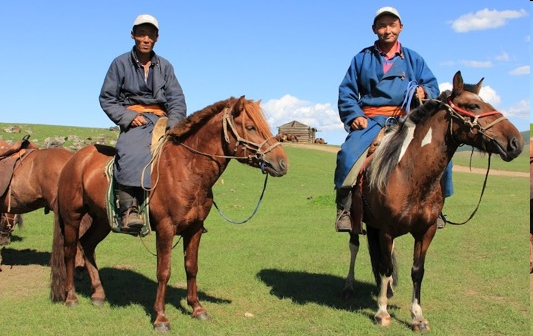
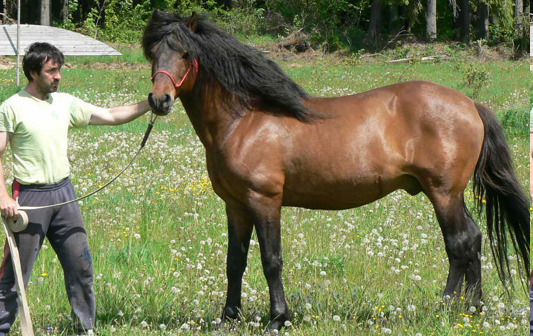
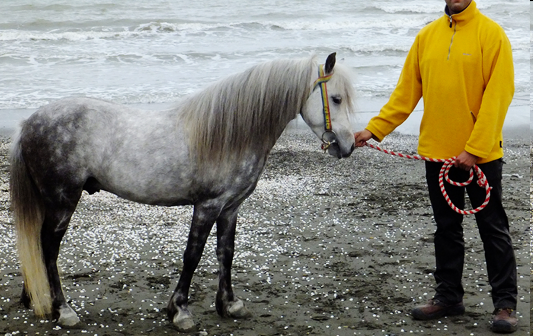
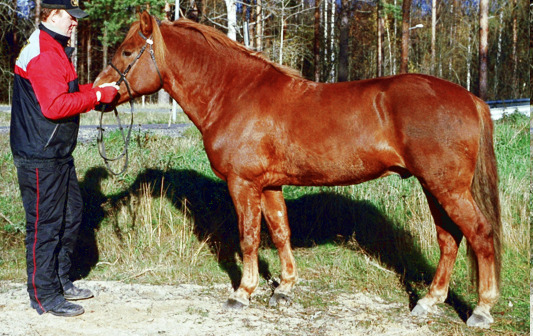
“Primitive”, native breeds all over the globe tend to be only roughly 120-140 cm (12.0 – 13.3 hh) tall at the withers. They all also look a little something like this:
Mongolian native horse (Around 120-130 at the withers, and decendants of the first ever domesticated horses from central Asia. Still virtually unchanged from Chinggis Khan’s cavalry, ancestor to many Chinese, Japanese and Indian horses, and bred for speed racing and surviving outdoors without the help of humans.)
Carpathian native horse / Romanian and Polish Hucul Pony (Around 120-150 at the withers, first mentioned in writing during the 400s as wild mountain ponies, depicted before that in Trajanian Roman sculptures, used by the Austro-Hungarian cavalry in the 19th century)
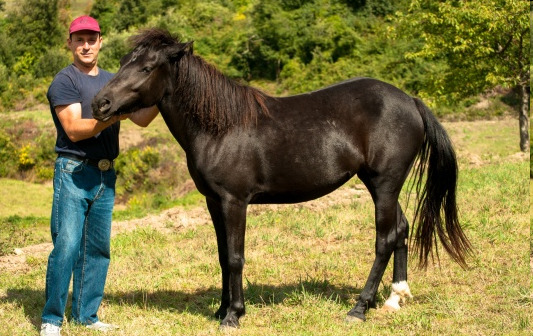
Middle-Eastern native horse / Caspian Pony (Around 100-130 at the withers, ancestor of the Iranian Asil horse and its decendants, including the famous Arabian and Barb horses, likely been around since Darius I the Great, 5th century BC, and old Persian kings are often depicted riding these midgets)
Baltic Sea native horse / Icelandic, Finnish, Estonian, Gotland and Nordland horses (Around 120-150 at the withers, descendant of Mongolian horses, used by viking traders in 700-900 AD and taken to Iceland. Later used by the Swedish cavalry in the 30 years war and by the Finnish army in the Second World War, nowadays harness racing and draught horses)
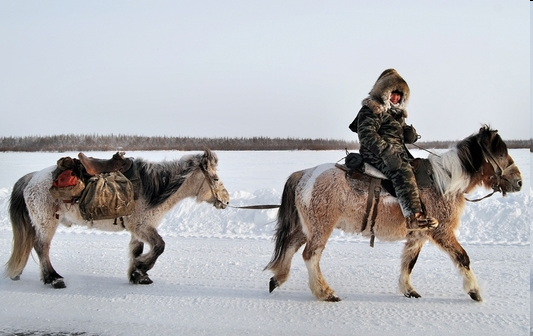
Siberian native horse / Yakutian pony (Around 120-140 at the withers, related to Baltic and Mongolian horses and at least as old, as well-adapted to Siberian climate as woolly mammoths once were, the hairiest horse there is, used in draught work and herding)
Mediterranean native horse / Skyros pony, Sardinian Giara, Monterufolino (Around 100-140 at the Withers, used and bred by ancient Greeks for cavalry use, influenced by African and Eastern breeds, further had its own influence on Celtic breeds via Roman Empire, still used by park ranger officers in Italy)
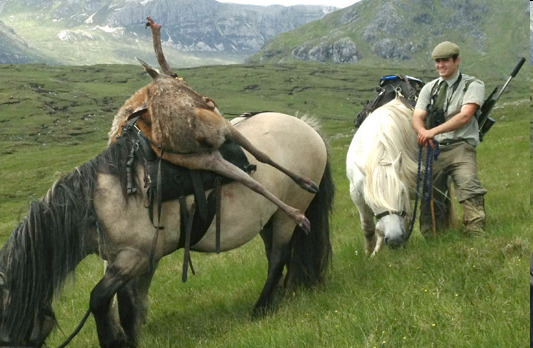
British Isles’ native horse / various “Mountain & Moorland” pony breeds (Around 100-150 at the withers, brought over and mixed by Celts, Romans and Vikings, base for almost every modern sport pony and the deserving main pony of all your British Medieval settings. Some populations still live as feral herds in the British countryside, used as war mounts, draught horses, mine pit ponies, hunting help and race horses)
So hey, now you know!
I love this so much – and now I know why Tall Lanky Thin horses have a terryfying vibe to them, and the “primitive” native pony-like breeds awake in me only hope and trust.
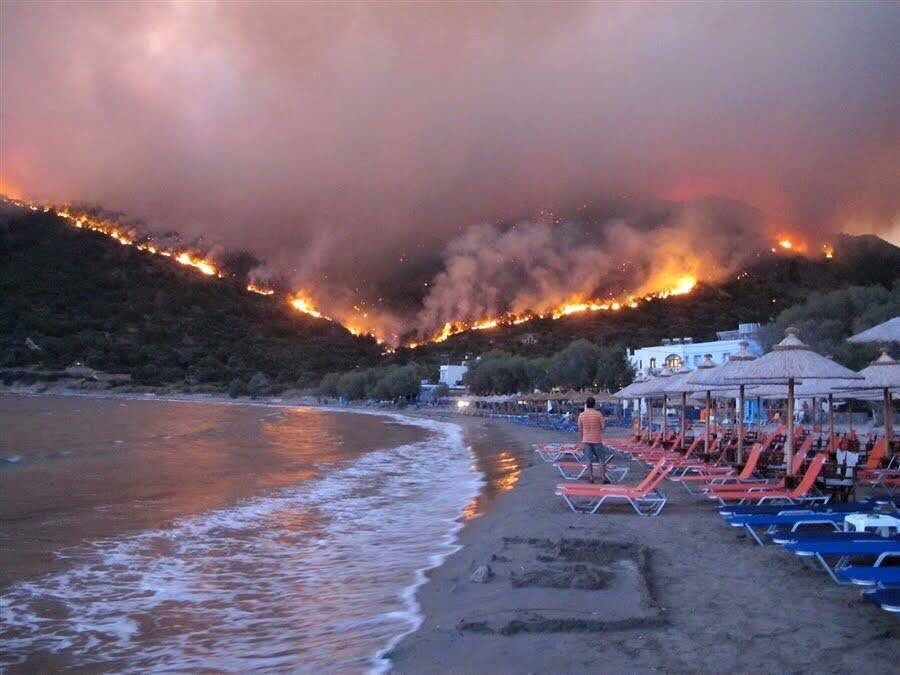
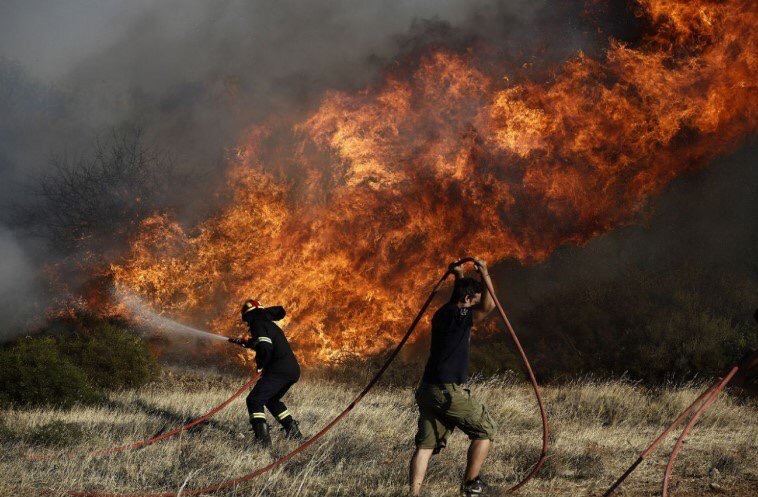
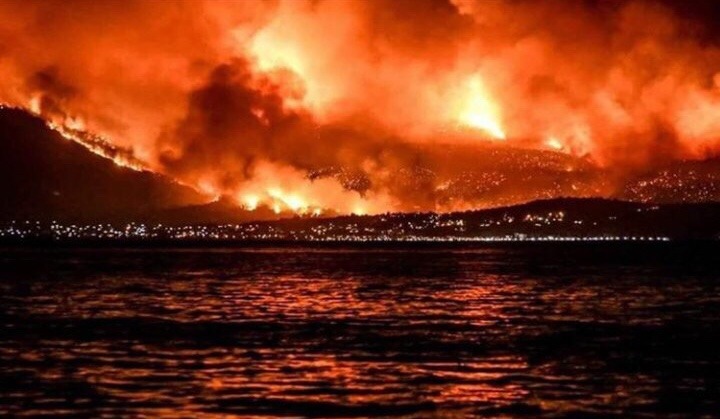
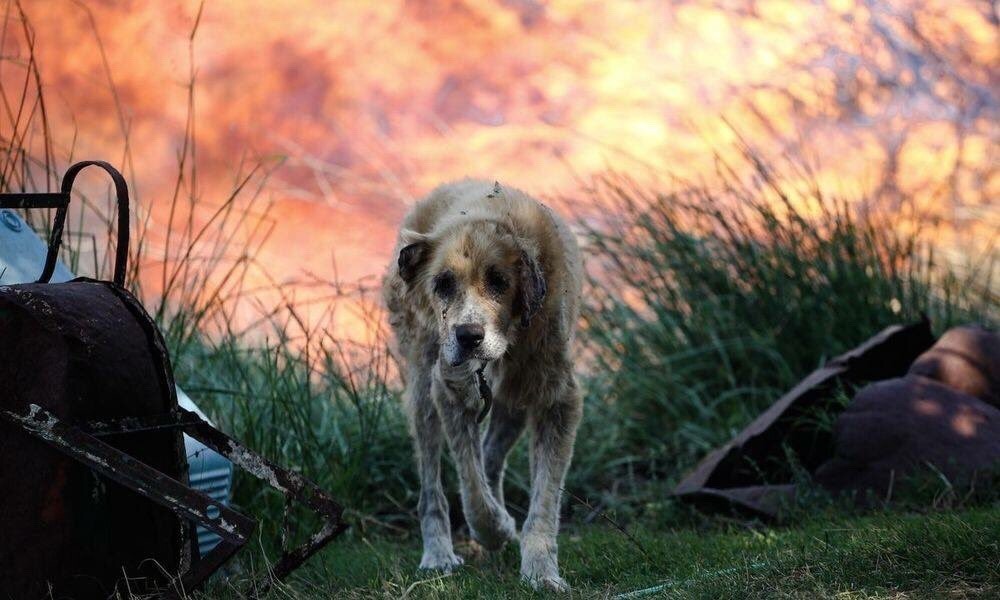
“Whilst the definite cause of the wildfires is unknown, the weather conditions created a deadly environment for a fire to spark. Scorching hot weather in Greece has dried out undergrowth and foliage, making any flames easily able to spread. Wind speeds of up to 50mph have also contributed to the spread of fire. Authorities are also employing a drone to scan the area the fires have come from, to rule out any suspicious activity. How far have the fires spread? The fires are on the east coast of Greece and have spread across residential areas and towards beaches. It is not yet clear how many acres of land have been covered by the flames but strong winds have fanned flames stretching as wide as four miles near Kineta, local officials said. An Association of British Travel Agents (ABTA) spokesman said: “The wildfires in Greece are northeast of Athens in the Penteli area and 50km west of Athens.“This area isn’t a main destination for UK tourists. People on holiday in the region are advised to monitor news reports and follow any advice or instructions issued by the local authorities, their travel company or their accommodation providers.“
You can try to donate here if you want, though the source isn’t actually very known, I actually saw that right now. They haven’t said anything about that in the news, though I believe it may be trustworthy.
btw a relief fund is being set up by the hellenic red cross http://www.redcross.gr/ which you can donate to through the following bank account:
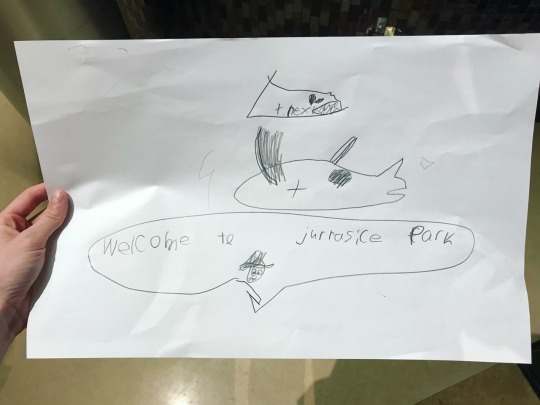
Children’s art in media: fully-colored, stylized but recognizabke figures with backgrounds and aesthetically textured and messy crayon coloring that
Children’s art in real life: an anguished disembodied head floating on one side, a massive sea of amorphous red scribbles taking up half the paper, ‘SAM’ written in enormous shaky letters overlapping everything, partial figure of a dinosaur abandoned before drawing the legs
in a movie this would be a fully-colored crayon drawing of a ranger standing in front of an arch that said “Jurassic Park” but instead it is two dinosaur skulls floating in the abyss while a ranger’s head is swallowed by his own enormous speech bubble and I adore it
Part of my job is literally making those dumb kids drawings in film/tv AND LET ME TELL YOU, the reason why they’re never like actual kid art is because 1. None of us art goblins remember what weird shit kids think of when they draw so we rely on bad reference images and the random stuff we remember drawing 2. We have so much muscle memory that it’s legit difficult to make ‘bad’ art 3. It’s a legal nightmare to use actual kid art most of the time so one of the dept art goblins makes it 4. The colour is because it adds contrast and draws the eye; usually we’re working with nice art supplies with a full spectrum of colours and trying to tone it down to look as bad as possible but failing miserably because it’s just not in us to do it.
This is the funniest fucking professional problem I can imagine.
I’d love to see the results of like… trying to commission children to make art for film and TV. “Draw a happy family!” “Okay!” [chird churns out three weirdly proportioned humans and a yellow amorphous blob with a speech bubble shouting something unintelligible] “Oh uh… it’s very. Nice. Can you tell me who the yellow person is?” “That’s Spongebob. The family is happy because he came to their party.”
Let’s do a thought experiment. Say you are a white racist politician, and you want support from white racist voters, but you cannot afford the backlash that would occur if you started talking about immigrants from a non-white country as a pack of subhuman barbarians. How do you get the support of racists?
The traditional solution to this problem is called a dog whistle. You use rhetoric which is not racist on the surface level where everyone can hear it, but between the lines where only your “dogs” can pick up on it. This gives you some plausible deniability, so it is quite popular.
But if that is too subtle for you, you can just say the racist rhetoric, and then put a fig leaf over it, in much the same way painters from antiquity would paint naked men and women and then cover their genitals with conveniently placed foliage. To put a fig leaf over racist rhetoric is to use racist rhetoric, and then hedge it or qualify it to a subset of the population of the race that you think that you can get away with smearing. Instead of calling all people from a non-white country animals, call the members of a gang from that country animals. Instead of saying that all the immigrants from that country are murderers and rapists, say that immigrants from that country are murderers, rapists, and, you assume, some good people.
The fig leaf works because people in general only want unambiguous racial bigotry to be treated as racist, when that is not strictly necessary to turn people against members of that race. When you reserve the moniker of animal for non-white criminals, and when you mention murderers and rapists whenever you talk about non-white immigrants, you are creating an atmosphere where people openly associate non-white people with criminality and animalism, even if you qualify your statements every time.






 Urocyon's Jaunts 2.0
You must be logged in to post a comment.