one of the more valuable things I’ve learned in life as a survivor of a mentally unstable parent is that it is likely that no one has thought through it as much as you have.
no, your friend probably has not noticed they cut you off four times in this conversation.
no, your brother didn’t realize his music was that loud while you were studying.
no, your bff or S.O. doesn’t remember that you’re on a tight deadline right now.
no, no one else is paying attention to the four power dynamics at play in your friend group right now.
a habit of abused kids, especially kids with unstable parents, is the tendency to notice every little detail. We magnify small nuances into major things, largely because small nuances quickly became breaking points for parents. Managing moods, reading the room, perceiving danger in the order of words, the shift of body weight….it’s all a natural outgrowth of trying to manage unstable parents from a young age.
Here’s the thing: most people don’t do that. I’m not saying everyone else is oblivious, I’m saying the over analysis of minor nuances is a habit of abuse.
I have a rule: I do not respond to subtext. This includes guilt tripping, silent treatments, passive aggressive behavior, etc. I see it. I notice it. I even sometimes have to analyze it and take a deep breath and CHOOSE not to respond. Because whether it’s really there or just me over-reading things that actually don’t mean anything, the habit of lending credence to the part of me that sees danger in the wrong shift of body weight…that’s toxic for me. And dangerous to my relationships.
The best thing I ever did for myself and my relationships was insist upon frank communication and a categorical denial of subtext. For some people this is a moral stance. For survivors of mentally unstable parents this is a requirement of recovery.
“I think it’s very uncommon in the First World. This is not a sight that one normally sees. I’d have to say that I haven’t seen this,” Philip Alston, the U.N.’s Special Rapporteur on extreme poverty and human rights, told Connor Sheets of AL.com earlier this week as they toured a community in Butler County where raw sewage flows from homes through exposed PVC pipes and into open trenches and pits.
The tour through Alabama’s rural communities is part of a two-week investigation by the U.N. on poverty and human rights abuses in the United States. So far, U.N. investigators have visited cities and towns in California and Alabama, and will soon travel to Puerto Rico, Washington, D.C., and West Virginia.
Of particular concern to Alston are specific poverty-related issues that have surfaced across the country in recent years, such as an outbreak of hookworm in Alabama in 2017—a disease typically found in nations with substandard sanitary conditions in South Asia and Subsaharan Africa.
The U.N. investigation aims to study the effects of systemic poverty in a prosperous nation like the United States.
90% of the poorest areas in America are in Republican Red zones.
B-b-b-b-b-b-but poverty in the Red States isn’t all that bad, right?
Right?
Errrrr
Jesus christ, and to think how many billionaires we have in the US while this is happening
How is anyone surprised by this though?
Do people not look around?
Or is this really not prevalent anywhere but the South? It’s damn near everywhere you look in the South. I had friends in the high school with houses that when you flushed the toilet it went from a pipe in the trailer out to a ravine out back. I remember burning our trash. And it wasn’t unusual. I mean I’m in my thirties and it’s not uncommon for me to meet people in my generation who are the first in their family to have indoor plumbing.
The republicans aren’t blind. They aren’t naive. They’re just greedy. You can’t amass that kind of wealth by giving it away to the less fortunate. And don’t be tricked into thinking the wealthy Democrats are any better. Politicians will say whatever it takes to get voted into a position, and then they’ll vote however they need to in order to keep the money rolling in.
1. When eurasian nomads first started making pants in the first millenium BC, they didn’t cut the cloth to shape, they wove the shapes they needed on the loom. Mostly rectangles, but still interesting.
2. Pants were a very elaborate garment at the time! When humans first started weaving and wearing cloth, clothes were pretty much “giant rectangle that you wrap around your body and sometimes a belt”. Then, people started making tunics and tunic derivatives, which is basically another rectangle, but this time with a hole for your head and sometimes sewn up the side. Now you have TWO pieces of clothes: the rectangle with a hole, and the bigger wrappy rectangle. This covers like 90% of ancient clothes, including the Roman toga and tunica. So pants, which covered your legs individually, were very ???? to ancient mediterranean people.
3. Otzi, an austrian guy who lived ~3300 BC, was found frozen in the Alps, wearing “pants”, consisting of two individual leg-sleeves made of animal skins with the fur inwards, and a loincloth. The legs of the “pants” tied on to a belt.
4. This is a similar setup to European medieval hose, except that hose didn’t have fur, and also had footies. Also, the whole separate-legged pants things is why our modern word ‘pants’ is plural, even though today it’s one garment.
5. Pants enabled a big leap in military technology- chariots to cavalry. Pants means you can ride a horse and still have your genitals intact afterwards. Turns out, sticking people on top of horses is much more effective than having the horses drag the people around behind them.
6. In like ~300 BC, the Chinese were having massive amounts of trouble with the pants-wearing, cavalry-having Eurasian nomads. Then, some guy had the brilliant idea of making everyone wear pants instead of robes, and proceeded to drive back the nomads and unite China.
7. The Romans and Greeks considered pants to be barbaric and feminine. But having muscular legs was very masculine. Some men were known for wearing ridiculously short tunics to show off their thighs. Marc Antony once mooned everyone by accident because he was wearing a miniskirt and no pants. Very manly.
8. Peter the Great decided that Russia had to be more like the rest of Europe, so he implemented some really strict policies, including a beard tax and mandatory pants. Yes, you could be punished if you didn’t wear pants.
9. The fashion designer Yves Saint Laurent was a major factor in making it acceptable for women to wear pants in public, which wasn’t really a culturally accepted thing until almost the end of the 60′s. In 1966, he debuted on the runway the first women’s tuxedo, which was met with a very ‘meh’ critical reception at the time, but is now considered one of fashion’s most influential works.
10. In the UK, ‘pants’ specifically refers to underpants.
bonus fact: it’s really not that hard to put pockets on pants, but so many designers seem incapable of figuring it out.
10. In the UK, ‘pants’ specifically refers to underpants.
Writer Note: The outer garments are “trousers” or “jeans”, less commonly “slacks”, “twills” or “flannels” (white cricketing trousers are sometimes called that).
Another underwear-as-outerwear word: US “knickers” (short for “knickerbockers”, knee-breeches or plus-fours) are usually worn for golf…
…but were once everyday stylish (and despite protests, unisex) street attire.
However “knickers” in the UK means specifically “ladies’ underpants”, so they’re not unisex
(at least not widely admitted as such), and they’re definitely not street wear except in unusual circumstances.
That said, a lot of modern men’s “shorts” (a word which in the US often means “underwear” even without the prefix “boxer”) are so long that a way to close the hems over a pair of high socks would turn them into knickerbockers – or even their larger cousin “plus-fours”, which extended “plus-four inches” past the knee and were baggy with it.
Names for early-mid 20th century trousers also included “bags” (AFAIK the word’s still used) derived from “Oxford Bags”, extravagantly loose trousers worn by the same Uni students and young men-about-town who wore plus-fours.
These are extreme even for bags, but there was a reason:
These more sensibly proportioned bags are worn by my Dad in about 1939 (the car is a 1938 Morris 8 series II). About 6 months later he was in a fireman’s uniform for the duration…
This is very interesting! One thing, though: I’ve lived in the US my entire life and have never heard anyone use “shorts” to refer to underwear, with “boxer shorts” being the one exception. (Though I hear just “boxers” more often.) So this is either a highly regional thing or a twentieth century thing that hasn’t passed on to modern day.
Some of the bigger Endler Boys doing what they do best: chasing each other around, and just generally acting like nuts.
The male fry have been getting separated out into that tank as I spot them, to join their uncles. (The original two males from one LFS.) There are maybe 10 in there so far, with the others lurking back in the plants somewhere.
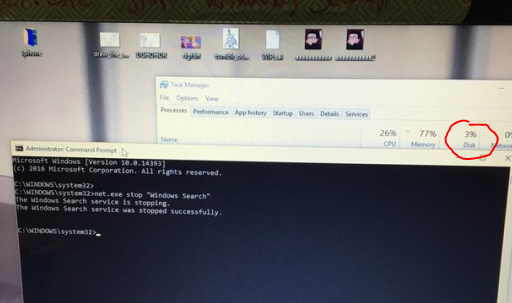
y’all didn’t even add a tutorial of how to do this so imma put one right here
1. type in cmd.exe into your windows search and right click on Command Promt search result and select “Run as Administator”. 2. Type/Copypase in
net.exe stop “Windows Search” and make sure Windows Search is in quotations. It should then respond saying “The Windows Search service is stopping” and then tell you it’s stopped.
This is only a temp fix though, if you want it switched off permanently then do THIS:
1. Press the Windows key + R at the same time and type in services.msc.
2. Scroll until you find Windows Search and double click it to enter its Properties window.
3. Change the Startup type to Disabled. Apply this change and you can exit out.
VOILA, NO MORE TAKEN UP DISK SPACE
Reblog to save a fucking life, FUCK CORTANA.
I actually removed Cortana by doing this:
-Type Regedit into the search box in Windows
-open the Registry Editor.
-Navigate to: HKEY_LOCAL_MACHINESOFTWAREPoliciesMicrosoftWindowsWindows Search.
-(If Windows Search is not an option, add it by right-clicking the Windows directory and select New > Key. Name it Windows Search.)
-Select Windows search
-In the right hand window, right-click and select new DWORD and name it AllowCortana. Then right-click that value and make sure it’s set to 0. (0 means “off” so you are turning AllowCortana off)
-Reboot your computer.
Cortana should be gone now and there should be just a regular windows search bar where she once lived.
This requires messing in the registry though so maybe don’t do that if you aren’t absolutely sure you want to, and maybe back ur shit up first if you aren’t experienced.
Tbh I’m not sure how i feel about turning Windows Search off….wouldn’t that turn the windows search function off completely? I use it too much to risk disabling it.
Also, Cortana really shouldn’t be taking up that much processing power iirc but then again the first thing I did when I installed Win10 was get rid of all the built in apps and Cortana and I also have a fairly powerful CPU and about 12GB of RAM.
The young bronze corys have been particularly frisky since their last water change. I was sitting by the tank when they started into this orgy, right in the main filter outflow.
No wonder I keep finding eggs on that crinum plant. Not even going to try to save any of these, with the small batch of 10-day-old fry to raise already in the only suitable setup on hand.
The little ones also keep trying to chase the lone remaining older bronze cory lady, who has lived in that tank for over 10 years now. Even one of the C. schulzei ‘Venezuela Black’ was trying it earlier. But, she just hasn’t wanted to get involved so far.
At least these fish must be fairly happy and well settled in, with the amount of spawning going on in that tank recently.
(The Book “To Siri With Love” by Judith Newman) maligns the autistic community in general. In certain scenes, she describes her son as “Batsh*t Crazy Kid” and “mutant.” Throughout the book, she also references the work of known eugenicists Alfred Hoche and Karl Binding, and writes that she does not believe her son should have children of his own.
As an autistic parent, I have to agree with the critiques of this book circulating on Twitter. I read the book after receiving a copy for review from the publisher, and it made me vomit twice. I cried myself to sleep after finishing it. To know, without any hedging, what people like that think of people like me — it almost broke me.
It may come down to this troubling reality, new research suggests: Work done by women simply isn’t valued as highly.
That sounds like a truism, but the academic work behind it helps explain the pay gap’s persistence even as the factors long thought to cause it have disappeared. Women, for example, are now better educated than men, have nearly as much work experience and are equally likely to pursue many high-paying careers. No longer can the gap be dismissed with pat observations that women outnumber men in lower-paying jobs like teaching and social work.
A
striking example is to be found in the field of recreation — working in
parks or leading camps — which went from predominantly male to female
from 1950 to 2000. Median hourly wages in this field declined 57
percentage points, accounting for the change in the value of the dollar,
according to a complex formula used by Professor Levanon. The job of
ticket agent also went from mainly male to female during this period,
and wages dropped 43 percentage points.
The
same thing happened when women in large numbers became designers (wages
fell 34 percentage points), housekeepers (wages fell 21 percentage
points) and biologists (wages fell 18 percentage points). The reverse
was true when a job attracted more men. Computer programming, for
instance, used to be a relatively menial role done by women. But when
male programmers began to outnumber female ones, the job began paying more and gained prestige.
This is the stark reality. The pay gap exists not because of women’s “inability” but because they are viewed as inherently less valuable human beings.



 Urocyon's Jaunts 2.0
You must be logged in to post a comment.